Vusumuzi Dube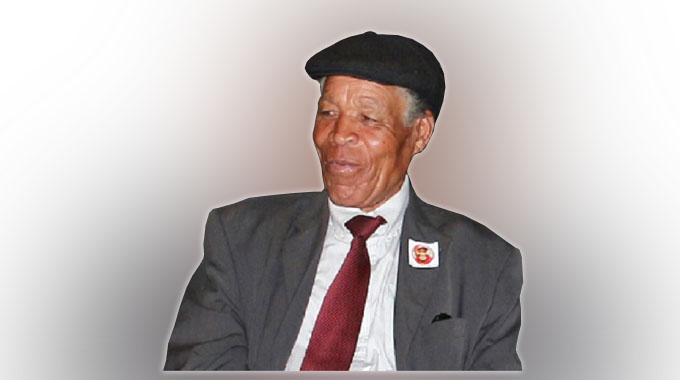
Lovemore Dube, [email protected]
‘BRILLIANT’
That is Lawrence Phiri’s description of former Highlanders player, manager and chairman Silas Ndlovu, who was a success story in all three capacities in an association that started in the late 1950s when he was a student at Dadaya Mission in Zvishavane.
Bosso elders used to drive to Zvishavane to pick up their star player for crucial fixtures. He would, upon his retirement as a player in 1972, be the agent that branded Highlanders, making it the household name the club is today.
Highlanders is celebrating 100 years of existence and service to the society with its footprint having been felt in the US, Canada, Europe, Asia and Africa.
In an interview on Friday, Phiri, also a club legend who is associated with some of the landmark moments of the institution, said Ndlovu’s contribution to Highlanders should be etched in bold letters at the institution.
He narrated how Highlanders had refused to join the Rhodesia National Football League in 1963, not trusting the move, opting instead to stay put in the Bulawayo Amateur Football Association structures.
The three Bulawayo teams, Matabeleland Highlanders, Mashonaland FC, later to split into two, with the other Mashonaland United going on to be Zimbabwe Saints and Northern Rhodesia, remembered for its outstanding goalkeeper John “Walker” Chipukula Phiri, were invited.
At one stage, there was a proposal that the so-called “Big Three” form one team or go as individuals, Mashonaland FC went on it alone while some players ditched the three to form Cobras.
Highlanders eventually joined Football Association structures in 1969, playing in the Second Division for two consecutive seasons, with promotion coming at the end of 1970.
Once again, Highlanders were suspicious and decided to retain the amateur league franchise with Lawrence Phiri and Kainot Luphahla among the players staying behind at a club christened Matabeleland High City, which was in existence until recent times.
Phiri eventually joined Highlanders in 1972, a year after the club’s elite division excursion ended in disaster, with the club picking up just seven points all year.
He was called to the first team at a time when first choice, Ananias Dube, was having a bad season in between the goalposts.
An injury to right-back Nehemiah Dube in 1973 saw Phiri launch an 18-year-long career as an infield player.
On his arrival, Ndlovu had taken over the management of the team, doubling as a coach with no assistant.
“Players in those days were very powerful. We dictated what had to be done and we suggested as players that we do away with the 15-member executive. Each post had an assistant and that was causing problems in favour of a leaner structure, adherence to a constitution, and a manager who is a coach like in Britain, that proved a masterstroke,” said Phiri.
He described Ndlovu as a genius, a man of character who changed Highlanders and left a legacy that fans are feasting on decades later.
“He had a big impact on the Highlanders we have today. It is his first year in charge, 1973 when Highlanders became a household name after the Chibuku Trophy win over Mangula (Mhangura). He had great tactical ideas and man-management skills that were second to none, and he carried his executive along,” said Phiri, who, upon retirement, became a successful club manager winning a lot of major silverware from 1983 to 1992.
Josiah Nxumalo, another of Ndlovu’s 1973 heroes, with three regional titles, two Chibuku Trophy triumphs from three finals, speaks highly of the man who brought him from Sables to Highlanders.
“He was a genius in football, very intelligent. He brought his education into the game and ran Bosso in an enlightened way, far different from other clubs, and as a result we were successful. He was a kingpin, a bold character, very organised and articulate in his views, it is no surprise he did so much for Highlanders and even brought South African clubs to Zimbabwe because of his charismatic character and tact,” said Nxumalo, a former top-scoring forward.
Ndlovu masterminded the formation of the South Zone Soccer League when Highlanders pulled out of the Rhodesia National Football League at the end of 1976 and was unanimously made general manager.
Ndlovu returned to Highlanders in 1989 and the following year Bosso won the league and couple double.
Prior to his arrival as manager at the end of 1971, Ndlovu, who edged Chris Mhlanga in a vote for the coaching job, Highlanders had only been successful in Bafa tournaments and the annual Stanley and Livingstone Trophy, contested annually and featuring Hwange and Zambian clubs across the Victoria Falls Bridge.


 Online Reporter