admin
admin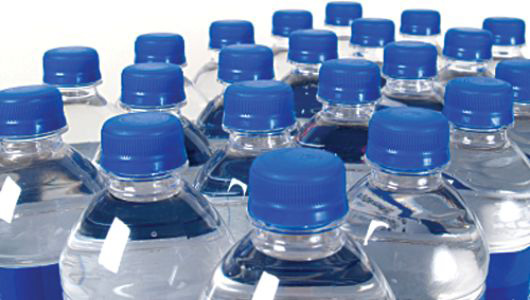
Innocent Ruwende Harare Bureau
SEVERAL companies are selling contaminated bottled water to unsuspecting Zimbabweans, with their product containing high levels of nitrites that are responsible for cancer, new research reveals.
A team of University of Zimbabwe and Masvingo Polytechnic researchers has concluded that at least five brands of bottled water on the market are unfit for drinking. The study showed that the brands of bottled water were contaminated with nitrites, viable bacteria and heavy metals to levels that exceed limits set by the World Health Organisation Guidelines for Drinking Water Quality.
“Nitrites are transformed to amines and amides resulting in the formation of nitrosamines which have been found to cause gastric and oesophageal cancer,” the academics said.
“In infants, nitrite competes with oxygen for active sites on haemoglobin resulting in oxygen deprivation. For the safety of consumers, the nitrite levels in water should fall below the recommended maximum limit.”
The researchers included Professor Mark Zaranyika, Power Ernest Gombiro, Kudzai Mugadza, Joe Mukaro, Gerard Ashley and Chakare Benhura from the UZ departments of Chemistry, Food, Nutrition and Family Sciences, Biological Sciences and from Masvingo Polytechnic.
The research, titled Drinking Water Quality Assessment in Zimbabwe: A Case Study of Bottled Drinking Water from Selected Retail Outlets in Harare, has been published in the Journal of Chemical, Biological and Physical Sciences.
The academics did not name the water brands sampled because research ethics bar them from doing so.
“The water from some brands considered for the study may be condemned as unfit for consumption on the basis of lead, cadmium and chromium which exceeded set health-based limits,” the academics said.
“Three of the five brands had cadmium concentrations well above the set limits. The concentrations of lead and chromium in all brands exceeded the limits stipulated by WHO Guidelines for Drinking Water Quality.
“The nitrite levels for four brands were also found to be exceeding the limit set by WHO guidelines for drinking Water Quality.”
The academics noted that the unchecked proliferation of bottled water brands posed a threat to consumers’ health, and urged bottling companies to uphold good production practices.
The academics said the bottled water in question may be contaminated by micro-organisms like pseudomonas, aeromonas, flavobacterium, pasteurella, xanthomonas and staphylococcus.
Chemical contamination of bottled water may arise from contaminated water or materials used in making the bottles, they observed.
Toxic metals, the academics said, could be released from polyethylene tere-phthalate (PET) into the water.
The consumption of bottled water in Zimbabwe increased from 2008 because of inadequate supplies of tap water, especially in big cities like Harare and Bulawayo.
In 2011, the government condemned and banned 40 bottled water brands, saying their products were unsuitable for consumption because of contamination, unsuitable packaging and wrong labelling among other factors.
The government, however, did not name the brands fit for consumption.
But the Standards Association of Zimbabwe certified 12 water bottling firms after independent surveillance.
The companies SAZ certified in 2011 were Schweppes Zimbabwe Ltd, Tanganda Tea Company Ltd, Century Ice, ZLG, Brackenridge T/A Kanyerere Investment, Reichmark, Aqua Crystal, Chromopak Investments, Somerby, Chilruff T/A Springvale, Mukati Investments and Blester Marketing.



 Online Reporter