Online Reporter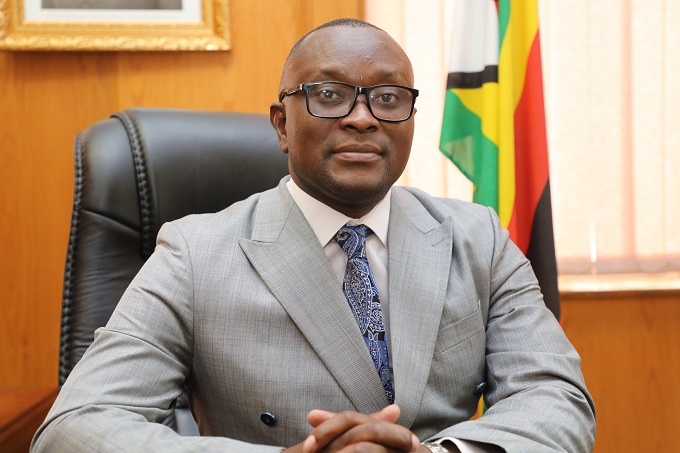
Ranga Mataire-Group Political Editor
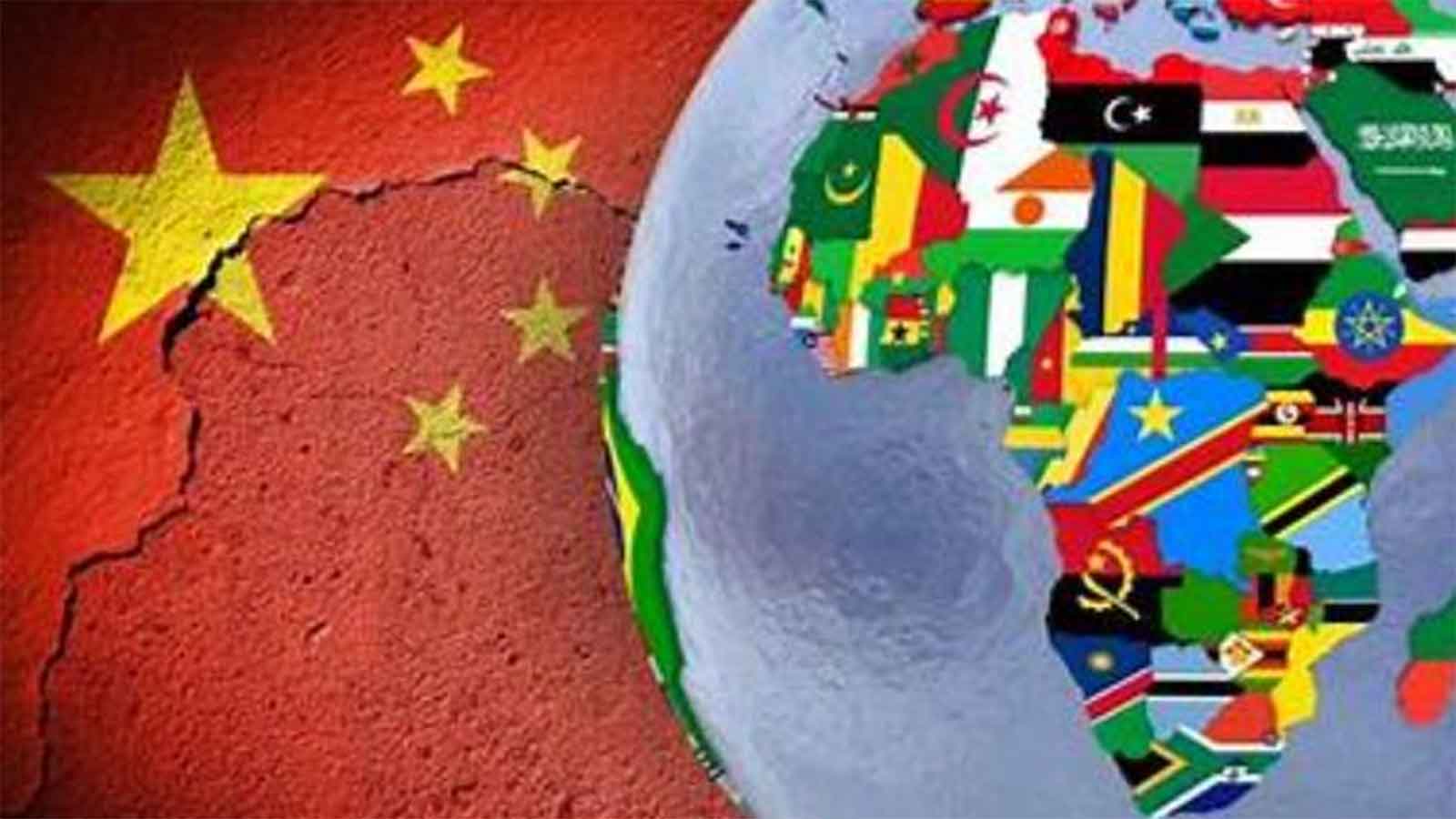
A new wave of “Winds of Change” is blowing across Africa as leaders are questioning the current maladjusted state of trade in natural resources and advocating for value addition of minerals before exporting them to other countries.
From Harare to Francistown and Accra to Ouagadougou, cacophonic calls for value addition of minerals are growing louder as African leaders are re-awakening to the reality of the need to upend a long legacy of unjust global trade in minerals.
It’s a unison re-awakening call typical of one described by former British Prime Minister, Harold Macmillan in a speech delivered in apartheid South Africa at the height of the rise of African nationalism.
The “Winds of Change” speech was delivered in the South African Parliament on February 3, 1960 in Cape Town.
Macmillan had spent a month in Africa visiting a number of British colonies and experienced first-hand the depraved conditions of blacks and the unparalleled agitation for majority rule by nationalists.
The British Prime Minister’s speech is regarded as one that signalled the beginning of the decolonisation process initiated by the Labour government (1945-1951).
His speech gave a clear indication that the British government would no longer impede independence for many of its territories.
Macmillan’s speech was embraced by many African nationalists who instrumentalised it as a galvanising tool to instigate uprisings against colonial administrations across the continent.
In his speech, Macmillan acknowledged that; “The wind of change is blowing through this continent. Whether we like it or not, this growth of national consciousness is a political fact.”
He was right. It did not take long for the British Somaliland to get independence in 1960.
Along with the “Wind of Change” delivered in South Africa earlier that same year, the independence of Somalia marked the start of a decade in which the dismantling of the British Empire reached its climax, with 27 former colonies in Asia, Africa and the Caribbean becoming independent nations.
Decades after the dismantling of colonial existence, it appears another “Winds of Change” has again gripped the African continent.
It has now taken a new dimension. It’s a call for economic emancipation through fair trade. Endowed with an array of mineral wealth including the rarest ones used in modern technology industries, Africa has for years been the supplier of raw minerals that are lowly priced than the polished end products.
While the regional bloc SADC has for years been calling for beneficiation of minerals, the issue was often left to individual countries to implement policies that push forward this agenda.
It now appears many countries even beyond the region are now pushing forward with the agenda of beneficiation and calling for fair trade, especially on mineral resources.
Several African nations, including Zimbabwe, Botswana, Mozambique, Angola, South Africa, Ghana and Burkina Faso have in recent times actively advocated for and implemented beneficiation policies to process minerals within their borders.
In a recent Cabinet briefing, Minister of Information, Publicity and Broadcasting Services, Dr Jenfan Muswere said the Government is implementing a “use it or lose it” policy, urging holders of unused mining titles, particularly in chrome, to take the necessary actions to align with new regulations.
“With immediate effect, the issuance of new chrome mining title above 100ha has to be linked to the expansion or development of new furnace capacity,” said Dr Muswere.
On lithium, Dr Muswere said starting January 2027, the export of the mineral concentrate will be prohibited, further emphasising the Government’s commitment to local processing.
“Zimbabwe lithium bodies are multi-element as they contain a number of minerals. Bikita Minerals and Arcadia Lithium are in the process of establishing lithium sulphate value addition facilities in order to beneficiate the lithium ores produced locally.”
Similarly, the President of Botswana, Duma Boko recently told a meeting in Ramatswa that his government is working to reconfigure the country’s minerals and mining landscape by implementing a robust local beneficiation programme set to transform the national economy.
“We are moving to a point where no mineral will leave this country without being processed. No diamond will leave this country raw, all will be cut and polished here. No copper concentrate will be exported without local value addition,” said President Boko.
He explained that the country was losing out by exporting raw concentrate. He said his government would introduce the necessary legislation to ensure that the new policy is implemented and followed.
“We will bring the laws required to make this happen and when we do, nothing will stand in our way. We are going there,” President Boko said.
And in Ghana last week, President John Dramani Mahama made a bold declaration that Ghana’s mineral wealth will no longer serve foreign interest at the expense of its citizens.
The president was speaking at the Mining in Motion Summit 2025 in the capital Accra.
“Our gold will not enrich others, while leaving our people in poverty. Africa’s mineral wealth will no longer be a curse, but a blessing,” President Mahama said.
Ghana’s colonial legacy, particularly under British rule, shaped its economy to focus on exporting raw materials, especially minerals like gold, diamonds and manganese, without significant domestic processing.
This historical pattern of raw material extraction left Ghana dependent on global markets and limited its ability to develop a more diversified and value-added economy.
This is set to change.
In a major policy shift, the President outlined plans to refine gold locally, develop the jewellery industry, process bauxite into alumina and aluminium, convert lithium into battery components and use iron ore to support domestic steel industry.
These steps, the president said were critical for industrialising the economy.
Interim Burkina Faso leader, Captain Ibrahim Traore declared that his country will no longer export 80 percent of her raw materials and import over 90 percent finished products, but will instead start using her raw materials to produce everything Burkina Faso needs and export finished products.
Despite their citizens being among the continent’s poorest, Mali, Niger and Burkina Faso boast mineral riches beyond the dreams of most nations.
All three Sahel countries have sizable gold deposits and minerals increasingly important for renewable energy production.
Mali has gold, oil and gas, and recently opened two lithium mines. Niger’s natural resources include uranium, tin, oil, phosphates and gold. Burkina is one of Africa’s largest gold producers, but has also has copper, zinc, manganese, and phosphates.
Given their rich mineral resources, it boggles the mind why the three countries are regarded as the poorest in the world.
Analysts have said the main issue for Africa is on implementation of otherwise progressive policies. For every policy discouraging the export of raw minerals, experts believe certain supplementary steps need to be taken for African people to derive more out of their resources.
The first step should be making it mandatory for foreign investors to set up processing and manufacturing plants in Africa. One way of doing this is by signing MoUs linking export to debt servicing with countries interested in these resources.
Like the “Winds of Change” alluded to by Prime Minister Macmillan in the 1960s, the current wave re-awakening or consciousness on the need to value add mineral resources appear to be unstoppable.
The immediate past president of the African Development Bank (AfDB), Akinwumi Adesina, made a compelling case in his farewell speech when he said Africa needed to transition from a raw material exporter to an exporter of value added products to boost economic growth and prosperity.
This shift, he said is crucial for the continent to break free from the cycle of poverty and reliance on external economies.