Vusumuzi Dube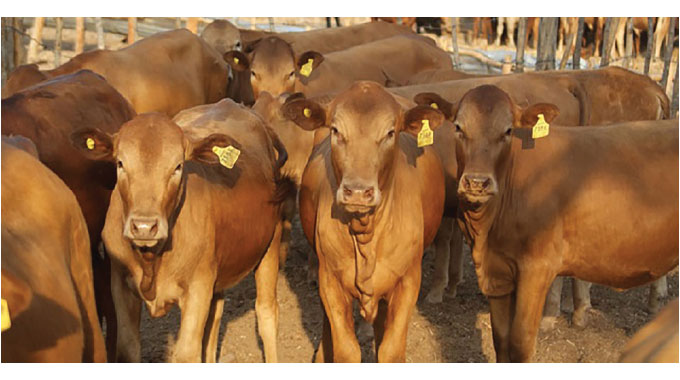
ONE of the things that come to me naturally because of being a livestock specialist and farmer, is that there is hardly a day that will pass without me engaging in a conversation that one way or the other touches on issues to do with livestock.
It could be a random call consulting on this or that about their animal or a professional in the same field who is seeking an opinion on anything livestock.

It is also other livestock farmers or potential farmers that seek an in depth understanding on the industry. More often that not, the conversation always gravitates towards which breed will give them better returns or how they can get the breed that they prefer? Also, I get a lot of testimonials of farmers that have moved from poorly framed animals to bigger or medium frames and they are enjoying the returns or the market.
Occasionally I get genetic preservation zealots who will motivate for preservation of some of the lowly regraded livestock breeds, solely so that the nature does not lose important genetics attributes that those animals posses such as hardiness and high fertility.
Invariably these genetic preservations tend to be university persons or researchers from the country’s research stations.
However, what is not in doubt is that the appetite for better performing breeds in terms of production traits and consequently returns from the market, is increasing and reach far and wide within the community.
You will find some smallholder livestock farmers deep in some remote rural areas, now seeking information on where to get some of these exotic breeds and how much it will cost them.
They will ask you the husbandry issues about such breeds especially breeding bulls and one is left without any doubt they have serious intentions of changing the completion of the breed in their kraal. What this attest to, is that smallholder livestock farmers are beginning to embrace the value that is in their animals, and they now understand that they could get more by infusing a certain bloodline in their herd.
A bloodline which will give them fast growing calves and heavier weaners that can fetch big in just over a year in age. The changing in paradigm which is seeing an increased embrace of improved breeds, is a result of protracted farmer education by government and stakeholders in the development sector which has helped to bring to the fore what farmers are losing out by rearing animals with inferior production traits.
The demonstrated positive trajectory in terms of appreciation of breed improvement will grow the livestock industry as more farmers join in as the notion about this industry being very slow in returns is reversed.
My advice to farmers therefore is that, get a breed that will grow fast, give you a got price in the market while also being able to survive in your environment.
It is inefficient to raise an animal for six years before it can attain weights that enable you to sell it, and still get far less from it compared to someone who has just a one and half year-old heifer from a good breed!
Yes, keeping animals takes into consideration a number of factors and parameters such as your environment, but the principal reason why we all keep animals is that we want to get good money when we decide to sell them. This to me ranks high among the reasons to consider when you are venturing into this sector.
The question to answer is very simple, is this going to pay me well when time to sell comes?
If it is not what can get you the best from the market, then you need to keep looking.
I have said it before that farmers to do keep animals because they what to preserve some genome and contribute to the longevity of the breed, they simply want something they will sell and get the best returns from their investment.
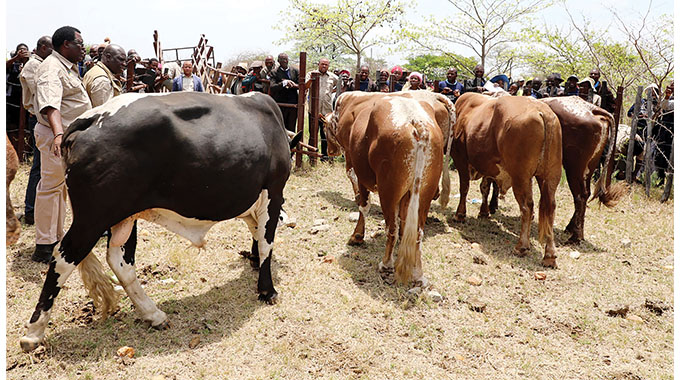
It is my view that funding organisations and financial institutions should design packages that suit smallholder livestock farmers out there who need to be supported to invest in breed improvement.
It is no secret that good breeds are expensive but worthy it, and hence funding packages that can be designed to enable farmers to procure bulls and/or heifers with softer payment terms, can go a long way in building the livestock industry.
Older farmers will remember that Cold storage commission, then had heifer loan schemes that did not only help farmers to build their stock but do so with better breeds.
They provided farmers with softer payment schemes and because of that, some of the now established commercial livestock farmers are beneficiaries of such schemes.
The smallholder livestock farmers contribute to about ninety percent of the national herd and this means there is a huge potential market for financing institutions, all they need to do is come up with a product suitable for the kind of clientele.
Uyabonga umntaka MaKhumalo.
Mhlupheki Dube is a livestock specialist and farmer. He writes in his own capacity. Feedback [email protected] <mailto:[email protected]> cell 0772851275


 Online Reporter