

 happiness Chikwanha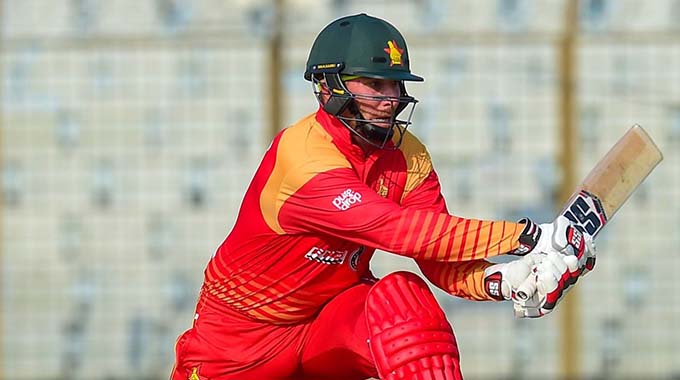
WHEN Zimbabwean cricketer Brendan Taylor walked out to play against Ireland in September 2021, he knew three things: his career was over, he had failed a drug test, and he had waited too long to report an approach to fix matches.
The last of those earned him a three-and-a-half year ban from the game, but it was failing the drug test that changed his life in ways he could not imagine.
“The walls were closing in,” Taylor says, talking about the consequences of his addiction to drugs and alcohol.
“It was an absolute pressure cooker because I was dealing with the ICC and I knew there was a ban looming, so the fact that I was retiring and I’d had a failed drugs test — I was just totally defeated.”
Over the next four months, Taylor waited for confirmation of the ICC sanction and then began to tell his wife, Kelly, the extent of his indiscretions. She didn’t believe him, not even when he told the world and then checked himself into rehab.
“I said to Kelly, “Everything is coming to a head and I’ve really got to get some help.” And she was infuriated. She thought I was running away from the problem but only knew about 5-10 percent of what I was really getting up to.”
Three days before the ICC announced Taylor’s ban, he checked himself into a 90-day programme at a rehabilitation centre in Zimbabwe’s Eastern Highlands, four hours away from Harare.
For the first two weeks, he chose to give up access to his cellphone so he would have no outside noise as he started the 12-step recovery programme and discovered the depth of the work he had to do.
Struggle with alcohol
The first of the 12 steps is admission of a problem, which Taylor had already done publicly but still needed to explain to himself. It all started with alcohol.
Like many people in a country where casual drinking is part of middle-class culture, Taylor had often a few drinks and didn’t see much wrong with that. He subsequently discovered his grandmother was an alcoholic. “Alcohol is so accepted and almost encouraged. Everything is geared towards it. It’s like, “Let’s play golf and have a few drinks’, or, “Let’s have a braai and have a few drinks,” or, “Come around this afternoon and we’ll have a few.”
“I was convinced that if I only drank on the weekend, then I didn’t have a problem, but I didn’t know what two beers was. I could hide behind the binge-drinking culture, but the reality was that I couldn’t actually predict how much I was going to drink.”
With that, came drug use. Taylor first tried cocaine around 2007 or 2008, “quite heavily during periods out of international cricket,” he says but stopped in 2010. When he met Kelly, he stayed off cocaine for six years, but still drank.
Though he can’t pinpoint the exact reason, he says he felt the rot starting to set in when he was on a Kolpak deal in England, away from the family and susceptible, playing for Nottinghamshire between 2015 and 2017.
“I didn’t have the courage to tell my family I had a problem. I didn’t have the willingness to go to them. I was too proud and I was too ashamed.
“My wife and kids were at home and then Kelly fell pregnant with the twins. I saw the twins once for a week and then not again for seven months,” he says. “I loved the club so much and I loved the people in the club, but I’d get to my home and I was surrounded by four walls. Just felt down in the dumps but I can’t really tell you how I got back into it (drug use). That’s what the disease of alcohol and drug addiction does — it’s cunning and baffling and it sneaks its way back in.”
Taylor failed two drug tests while in England, where there was a three-strike policy before a player’s records are made public.
“The first one, the doctor came in and asked me if there was a problem, but I convinced him there wasn’t. And then the second time, I failed, the punishment was that I lost 5 percent of my gross income and got a three-week ban.”
But no one knew because he’d split the webbing on his hand, and managed to hide the absence behind that.
“I missed the pre-season tour in Barbados. The club protected me, but if I failed a third one, it would have been in the press. By then, I was already gearing up towards returning to Zimbabwe.”
Back home, it was easier and cheaper to get his fix and he knew how to avoid being caught.
“I was very careful and meticulous about who I did [drugs] around, who I could trust. I wasn’t out there in nightclubs or pubs and bars, but I was living a double life. It’s an exhausting way to be.”
And that exhaustion fuelled the need for more cocaine.
According to the World Anti-Doping Agency’s (WADA) Substances-of-Abuse guidelines, cocaine produces a “euphoric rush”, which wears off fairly quickly, leading to “a depressed mood”.
Taylor experienced both ends of that spectrum and classified himself, around 2018-19, as an addict.
“Out of competition, cocaine is not a banned substance, so that was music to my ears,” he says. — ESPNcricinfo/Sports Reporter.



 Online Reporter