Zimpapers Business Hub
Securing full membership of the BRICS bloc will bring significant economic and financial benefits to Zimbabwe, with its recent admission to the Shanghai-headquartered New Development Bank, marking a major milestone in that journey, economic analysts said.
The New Development Bank (NDB), formerly referred to as the BRICS Development Bank, is a multilateral development bank established by the BRICS states (Brazil, Russia, India, China and South Africa) to mobilise resources for infrastructure and sustainable development projects in emerging markets and developing countries.
BRICS is an intergovernmental organisation of major emerging economies established to amplify the geopolitical sway of the Global South (developing nations) and challenge Western dominance in global financial and political institutions.
Zimbabwe’s bid for full BRICS membership—and its formal admission as a borrowing member of the BRICS New Development Bank —serves as an institutional anchor for a trade structure that is already heavily reliant on the bloc.
With China, the United Arab Emirates (UAE) and South Africa ranking among the country’s primary export destinations and import hubs, full membership translates bilateral economic dependencies into a multilateral economic architecture.
The three BRICS member states already dominate Zimbabwe’s external trade, together accounting for nearly 90 percent of the country’s total export earnings and a large share of its imports.
Following the country’s admission to the NDB, the Government is now actively leveraging this momentum to push for full membership in the main BRICS bloc.
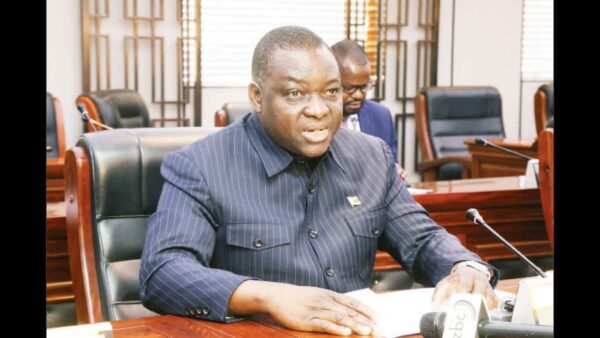
Foreign Affairs and International Trade Minister Professor Amon Murwira told the Senate yesterday that Zimbabwe was preparing to submit its instruments for full BRICS membership in Brazil.
While the country has already achieved a major stepping stone by joining the BRICS’ financial arm, the NDB, graduating to full political membership in the main bloc would offer several distinct macroeconomic and geopolitical advantages.
Zimbabwe stands to gain alternative development finance, reduced reliance on the Western financial architecture and expanded trade and technology partnerships within a multipolar global economy.
Unlike traditional Western lenders like the IMF or World Bank, BRICS financing does not carry stringent political or economic conditionalities.
The new capital is earmarked for vital national infrastructure projects, including energy generation and power transmission grid upgrades, modernisation of roads, rail networks and border posts to lower regional transport costs and value-addition plants for the mining and agriculture sectors, such as local lithium processing.
Analysts said that while full membership in the bloc carries significant political weight, the primary economic benefit lies in becoming a member of the NDB.
Admission to the NDB as a borrowing member will unlock essential long-term capital for crucial infrastructure projects and industrial retooling.
Economic analysts noted that the BRICS-backed multilateral lender offers critical financing without the political hurdles and strict conditionalities historically attached to Western multilateral institutions.
The move is expected to open up crucial non-Western credit lines, which will become fully operational once Parliament ratifies the agreement and the government fulfils its capital subscription requirements.