admin
admin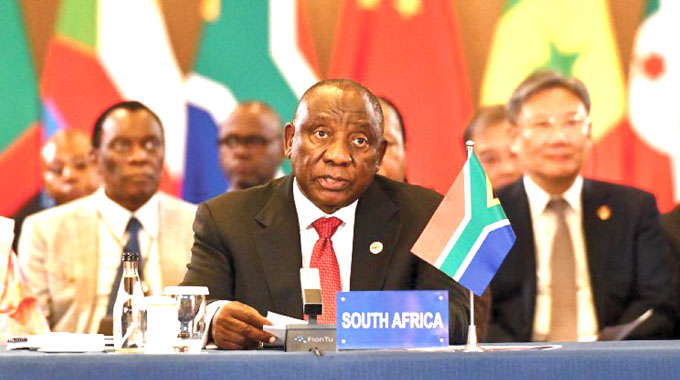
The watershed 15th Brics Summit in Johannesburg had, to its credit, several runs on the scoreboard by the time it concluded last week. While the outcomes were inevitably a complex amalgam of politics, economics and business, the overall Brics profile and agenda have been taken to the next level.
Brics wants to enlarge its sphere of influence in the global economy. Hence, apart from the addition of six new members — Argentina, Iran, Saudi Arabia, Egypt, Ethiopia and the UAE — the summit’s broad aspirational goals and decisions are signalling a potential new era for Brics in the years ahead.
On the Brics expansion there remains much uncertainty as to the criteria used to select the additional members. The economic rationale for the choices is not immediately apparent. It seems the Brics consensus on the “six pack” of new members was inevitably the result of heavy political horse-trading during the summit proceedings, which is liable to stoke political controversy.
In any event, such an enlarged Brics group of eleven members is indeed likely to be a very different collaborative “mix” from the present Brics five constituents, and with its decisions being determined by consensus.
Behind the headlines, though, serious technical work now needs to start to bring about the economic diversification and recalibration envisaged by the Brics Summit declaration.
The rhetoric must now be matched with reality. The pace of progress may well be determined on an incremental basis in various technical forums, which are “below the radar” but are essential for narrowing the gap between symbolism and substance.
Achieving this balance between legitimacy and effectiveness remains a big challenge for any global formation today.
Leaving geopolitical considerations aside, the Brics Summit can be regarded as a valuable enabler and facilitator of new trade and investment opportunities. — Moneyweb.



 Online Reporter