Online Reporter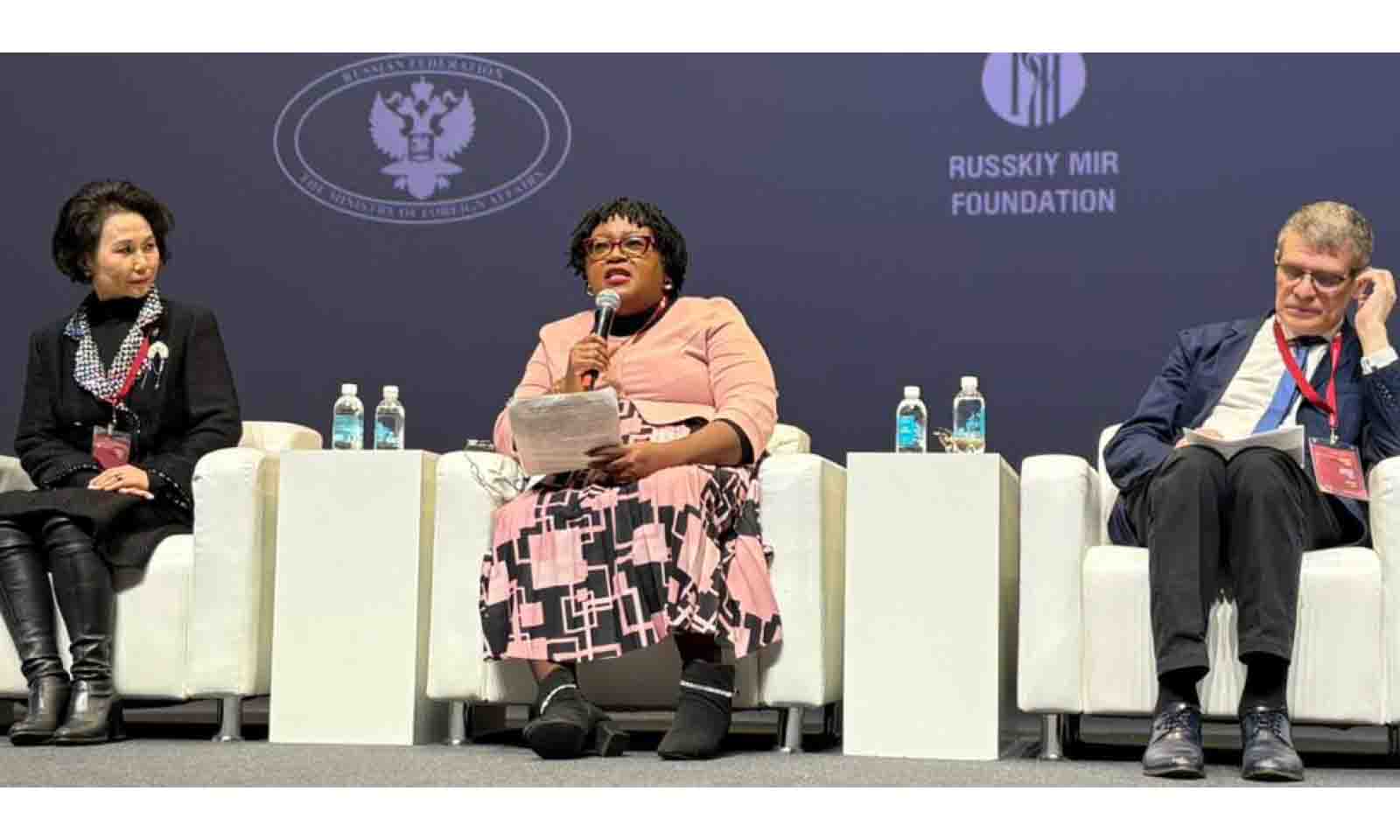
Herald Reporter
A UNIFIED BRICS media space is crucial to strengthening dialogue, building trust and shifting the global narrative to focus on development stories.
Speaking at the 17th Russia World Assembly in Moscow yesterday, Herald Editor Victoria Ruzvidzo said BRICS countries needed to tell their own stories. She highlighted profound changes in the media landscape over the years.
“About 25 years ago, there was just the newspaper, television and radio. Today, digital platforms such as Facebook, YouTube, blogs and vlogs have transformed how people consume information. This is a progressive development but it has brought with it fake news, misinformation and disinformation, among other challenges that we need to look out for in the development discourse,” Ruzvidzo said.
She emphasised the need for BRICS countries to adopt strategies that would allow their media to become a formidable force in global reporting.
A unified BRICS media space would provide an avenue for member countries to tell their own stories rather than having them filtered through the lenses of Western media.
“A shared BRICS media space offers a chance to tell our own stories and to balance global narratives. Real dialogue is not just about officials talking to each other. It’s about connecting newsrooms, journalists, researchers, and audiences across our countries. Joint reporting projects, content-sharing arrangements, and newsroom exchanges can help us understand one another better. Translating each other’s work, and celebrating linguistic diversity, can also open up new audiences and perspectives.”
Ruzvidzo said technology could be harnessed to facilitate collaboration through ideas such as the BRICS digital news exchange, AI-powered translation of content, and shared digital archives which could help connect countries and make verified news accessible across languages and borders. She stressed the importance of placing development stories at the centre of BRICS reporting.
“Too often, global news focuses on crisis and conflict. BRICS cooperation could help shift that lens towards stories of progress: renewable energy, innovation hubs, women entrepreneurs, or local health breakthroughs. Sharing these development stories builds mutual respect and shows that our societies are solving problems, not just facing them.”
Practical structures to sustain such collaboration, including a BRICS media secretariat or joint news networks that would allow journalists to share data, verify facts and learn from each other, were necessary. “The goal should be practical: help journalists share data, verify facts, and learn from each other. Public and private media can both have a role in this ecosystem,” said Ruzvidzo.
She underscored Zimbabwe’s commitment to promote balanced media narratives and strengthening cooperation among nations from the Global South, in the evolving global media landscape.
Media industry representatives from over 40 countries are in Moscow for the 17th Assembly of the Russian World. The assembly, which was opened by Russian President Vladmir Putin, with an official reading the speech on his behalf, ends tomorrow. It is being hosted by the Russkiy Mir Foundation, with the support of the Russian Ministry of Foreign Affairs.
For the first time, a special session titled, “New Media dimension: strengthening dialogue — confidence-building”, will be held for foreign and Russian specialists in the field of mass communications.