admin
admin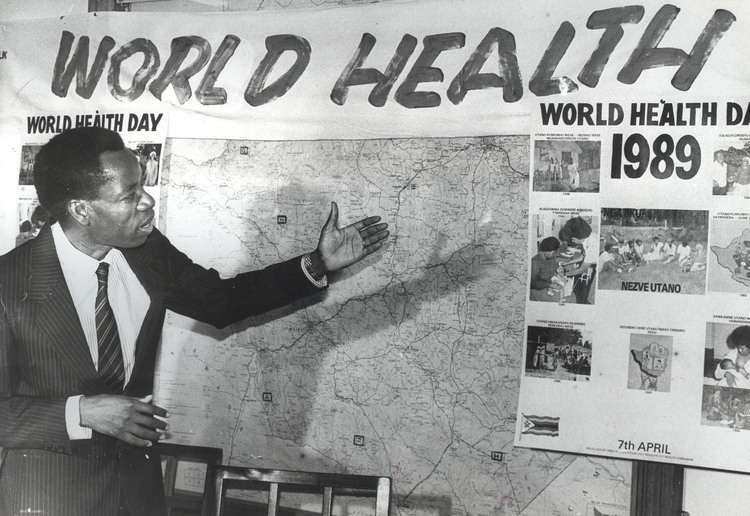
Shingirayi D Charangwa Correspondent
ON the morning of June 14, 2016 the nation learnt with deep sorrow the passing on of Brigadier-General Dr Felix Ngwarati Muchemwa, one of Zimbabwe’s most decorated and post-independence military general officers who served the nation both as guerrilla commander and medical doctor during the liberation struggle. Born in Mhondoro on April 22, 1945 in a family of four boys and three girls, Brig-Gen Muchemwa said although his parents settled in Mhondoro, he was of the royal Nyati Makoni clan in Chief Makoni area, Manicaland.
He did his primary schooling at St Michaels Primary in Mhondoro before proceeding to Kutama Mission and Fletcher High School for his secondary education. It was at Fletcher where the young Felix started his political activities by organising other students into discussions about oppressive colonial governments, especially when he noticed that the neighbouring Guinea Fowl High School in the Shurugwi farming area was an all-white school.
Having been identified as of the best brains of his time by the settler regime, the young Felix was enrolled at the then University of Rhodesia on a full state scholarship to study medicine. It was not long after enrolling at the university that the young Muchemwa was in trouble with the university authorities for his involvement in student politics when he was elected Student’ Representative Council president in 1969.
He organised student protests against racial discrimination not only at the university, but also in the country at large.
During one of his many episodes of clashes with the white government as a student, the young Muchemwa organised a protest march to disrupt an all-white political meeting at the Margolis Hall along Moffat Street (now Leopold Takawira Street) where the late and last Rhodesian Prime Minister Ian Smith was due to address the meeting.
He said when they got to the hall, white youths started to sing “Bhubhujani go to the mountains”, a derogatory racial song by whites that equated Africans to baboons. This infuriated the students such that, with their leader Muchemwa in the lead, they stormed the hall, grabbed the microphone from the master of ceremonies, smashed it on the floor and all hell broke loose.
By the time police sent in reinforcements to stop the fight, a good number of whites had been injured and lots of property destroyed. This was the last straw with the white government on the young and militant Muchemwa, he was expelled from the university and declared a prohibited person in Salisbury without express and written police permission.
In 1970 he was to leave Zimbabwe for Britain on a scholarship to continue his medical studies at Birmingham Medical School where he qualified with an MBChB and an FRCs (Glas) (Part 1) in May 1975. He later on got a job as a medical lecturer and researcher in anatomy at the prestigious Birmingham Medical School’s Department of Anatomy.
In 1976 the young Muchemwa obtained his Master of Science degree in Anatomy, his specialist area, a high qualification in medicine at his age. While in London, the young doctor did not stop his political activities, linking up with other exiled political activists such as Dr Simba Makoni who was the Zanu London chairman at the time.
They could recruit other students to join the party and the struggle, source money and materials for the party. These items and money were sent to Zanu headquarters in Mozambique via a secret courier system that they had devised to avoid interception by the Rhodesian CIO who would poison the materials, particularly food and clothes.
They also hosted visiting Zanu delegations to London who came for meetings with donors or campaigns to force the British government not to recognise the illegal government of Ian Smith as well as those who were in transit to other parts of the world to seek war assistance.
It was during one such Zanu delegation’s visit to London, led by the late Zanu Chairman Advocate Herbert Chitepo that the young Muchemwa made up his mind to leave his well-paying job in the comfort of London and join others in the bush to fight.
He recalled the late chairman lecturing them about the struggle, his vision of a free Zimbabwe and his delight in seeing a lot of young professionals willing to work for the party and the struggle. ‘‘We could spend whole nights listening to Chairman Chitepo speaking hours on end about Zimbabwe, challenges in the party and the struggle and how he wished Zimbabwe would be free in his lifetime.
“He encouraged us to work hard in our various capacities to support the struggle, to be disciplined and committed to the people’s freedom. He warned us that if we did not exercise discipline in the governance of Zimbabwe, we were not going to govern it properly and we would have betrayed the people of Zimbabwe and those dying at the war front.
“He said if Zimbabwe was to be free in his lifetime, he wished to ensure that it will be a non-racial society that gave every citizen equal civil rights regardless of one’s race. He spoke highly on the land issue and said that should he die before Zimbabwe was free, he told us that we must push the land question and make it a constitutional issue. People must have their land back, otherwise the struggle will be a play game.”
The decision to leave his well-paying job and the comfort of London’s lifestyle at the time did not come that cheap. He spent sleepless nights thinking over it until he convinced himself that if people like Chitepo, Dr Parirenyatwa and others with well-paying professions at the time were sacrificing themselves for Zimbabwe, what would stop him from doing the same.
“I said to myself, if I am to die in the bush that’s it, Zimbabwe will eventually be free anyway. I said to him ‘General, didn’t you think about your parents, girlfriend or at least leave a child behind?’. He looked at me with narrowed eyes and said, ‘Iwe, young man, izvozvo zvakange zvisina basa that time, if the spirit to liberate your country was on you that time, you could answer to the calling without a second thought.
“Of course, I thought about my mother and others close to me, but what about Zimbabwe, what about Chitepo and others already fighting, some in prisons, didn’t they have families as well to think about?”
In 1977, the young doctor got on the plane heading for the bush camps in Mozambique where Zanu had moved its headquarters from Lusaka Zambia, around 1975.
On arrival in Maputo, armed with two small bags, one with his personal clothing items and the other with medical tools, he was met by some senior Zanu and Zanla commanders who included General Josiah Magama Tongogara.
Some doubted if he was a real medical doctor given his tiny body and the general suspicion that he could be a Rhodesian spy on a mission although they knew that he was coming.
After some questioning on this and that, passing the security vetting system, General Tongogara separately asked him if he was prepared to live in the bush with fellow comrades and if he was aware for the hardships that go with guerrilla life.
“I said to Gen Tongo, who had already started to refer to me as ‘comrade Doctor’, shefu, the more you hold me here in Maputo, the more people who need my medical service will be dying in the bush camps. I want to go there and do the job that I have come to do.
“He laughed off and said I was to be on the next vehicle to Chimoio and he wished me well. That was my first encounter with Cde Tongo and I found him a source of strength for some of us who were coming in to the struggle for the first time.
“After some talking with other comrades about the life of a guerrilla, fighting the enemy and so on, one of the comrades laughed and frankly told me that the life of a guerrilla was not that rosy. He said according to what he understood, he was not going to go to the front to fight, but rather he was to be at the camps treating guerrillas coming from the war-front with injuries and those in the camps. That is where your job was most needed not at the war-front. I must tell you I was so disappointed, I did not understand it though because I was looking forward to be trained on how to shoot and be deployed at the front to fight. But when I got to Chimoio Camp, I then realised how serious the situation was, how critical my services were needed”.
Then came the day to travel to Chimoio Camp and the young doctor was excited to be at the camps. He collected his belongings and jumped onto trucks that were taking supplies to the camps. Along the way, they met some comrades in cars going to other camps and to Maputo and some again doubted the young Muchemwa’s medical doctor “claims”.
When they finally got to Chimoio, it was late and they were hungry and tired after the long journey.
“When we got to Chimoio it was late in the day and we were all tired, dusty and hungry. I remember the late Comrade Rex Nhongo coming to the trucks asking the drivers which truck the doctor was on. When he was shown the truck I was in, he ordered me to jump down into his hands because I was seated on top of some materials at the back of the truck. I hesitated because it was that high, you know those Frelimo Scania trucks common in Mozambique that time. He called on me to jump into his arms which I did and he caught me in mid-air, saying in his usual stammering ‘yes my doctor welcome kuhondo comrade’. He then turned to the driver and said ‘who made the doctor to sit at the back of the truck, look he looks dirty with all this dust?’. The driver mumbled some words blaming the vehicle commander who had by then disappeared behind the trucks.”
The night was long with briefings from Cde Nhongo and others on what was to be done.
Life took a dramatic turn for the young doctor, from a comfortable London lifestyle, working in one of London’s best hospitals, to a bush hospital with little and at times not enough drugs and medicines, people sleeping on the bare ground crying for help, some dying before treatment.
It was a difficult time for the young doctor, but because of dedication and answer to the struggle call to serve Zimbabwe, he was ready to take up the challenge.
At Chimoio Zanla Camp, Dr Muchemwa found Dr Sydney Sekeramayi, now Defence Minister, and the late Dr Herbert Ushewokunze already working there where they had established a bush hospital called Parirenyatwa named after the late nationalist and Zapu Vice President Dr Samuel Parirenyatwa.
The three, with the help of other medically-trained persons like the late Comrade Ziso, went out on a programme to improve health facilities in the camps.
It was so overwhelming for the three doctors having to cope with the pressure of handling thousands of people with different ailments, bullet wounds and the like.
People were dying almost daily from various diseases until they devised a system to contain disease outbreaks which included enforcing the use of toilet facilities on all the various Chimoio Base sub-camps.
“The situation at Chimoio and other camps was terrible that time, especially during the rainy season where we were losing lives almost on a daily basis on health matters. Drugs were scarce because we could not just take in drugs donated to us by well-wishers for fear of taking in poisoned drugs. So even if drugs came we could not just administer them like that without proper vetting. There was also the problem of malnutrition, and other health-related diseases. Yet the determination to fight on that the comrades showed kept us going”, Dr Muchemwa recalled with an emotional facial expression, stopping at times to recover himself.
The real war experience for the young doctor came on the morning of November 23, 1977 when Rhodesian fighter bombers struck Chimoio Zanla HQ followed by a ground attack by the Rhodesian Light Infantry.
The battle broke out with such lighting speed that the majority were caught off guard.
“I could have died during the Chimoio attack in that ambulance wreckage that you see on the Chimoio pictures with dead bodies scattered around it. The first bomb struck as I was walking from the bathing area to my quarters so that I could change into clean clothes for my journey to Chimoio City Hospital where I intended to take those comrades for better medical attention as well as collect some drugs and other medical supplies for our bush hospital.
“I had instructed the driver to first go to Parirenyatwa Hospital and collect some injured comrades that were to leave for Chimoio town for further medical attention, then pass through the fuel dump and fill up the ambulance with enough fuel for the journey. So, as the ambulance was driving towards my quarters to collect me, that’s when I saw the first jet fighter fly above the camp at low-level. By the time I was trying to get what was going on, the bomb struck a position near my quarters and all hell broke loose. It was chaos all over the camp as people ran for cover, some shooting back. Somebody was shouting at me to lie down and take cover but I was still in a state of shock trying to understand what was going on. This comrade came rushing towards me and pulled me down and pulled me to a nearby bush and we started to crawl out of the target area. I still had my gun with me but these comrades kept on saying don’t fire your weapon we risked shooting other comrades. After some distance of rolling and crawling, we stood up and ran further away from the battle centre along with other comrades. We dived into a drain and stayed there for some time. In the meantime I could see comrades running past with various injuries and this forced me from my hiding place to see if I could assist them. I then realised that there was nothing much I could do because I had nothing on me in terms of medical equipment. It was so painful to see people dying in front of me, some with intestines hanging out, some with broken limbs hanging by the ligaments. It was such a terrifying experience especially for some of us who had no combat experience,” said Dr Muchemwa.
“In the meantime, the bombing and shooting was going on especially at the main camp. After some time of running and crawling we got to the main highway road to Chimoio where some Red Cross vehicles were ferrying the injured to Chimoio town hospital. I jumped into one of the ambulances and told the white Portuguese doctor in the ambulance that I was a medical doctor and needed to go along with him and attend to the injured comrades at the hospital. I don’t know what he said in Portuguese but he was shouting at me to get out of the car because he thought I was lying so that I get away from the battle area. I simply started to grab some medical equipment in one of the ambulances and started to attend to some injured people. I remember some comrade who spoke Portuguese telling the Portuguese doctor that I was indeed a medical doctor. When we got to Chimoio Town Hospital, the situation was just chaotic, the injured and dying were all over the place on ward floors, corridors and outside on the verandas. I teamed up with other medical people at the hospital including some Chinese and Portuguese doctors to attend to the injured. More kept on coming from the battle front. For a good two days I could not sleep or eat, it was so overwhelming. I remember the Portuguese in broken English telling me ‘go and sleep at least for an hour and resume work later’. I tried to sleep but the cries and groaning of the dying comrades in wards kept me awake. It was not until the third day that I was really feeling worn out that I took sleep and asked for clothes to change because my clothes were torn up during the bush skirmishes and had blood from the injured comrades. I will live with this horror for life,” he said as he stopped talking to regain his composure.
The Chimoio attack was something else for the young Muchemwa who had sacrificed all he had for the service of the struggle.
His dream for the freedom of Zimbabwe is what mattered most for him.
In December 1979 when the peace talks in London were concluded, the young Muchemwa who was now a member of the General Staff was recalled to Maputo to assist in the preparation for the command to travel to Salisbury to meet the Commonwealth Monitoring Force command deployed to monitor the ceasefire transition period to independence as agreed at the Lancaster House talks.
The death of the Zanla Commander General Tongogara was to worry him for life.
He recalled the day he got to Maputo to see other commanders already gathered there to start preparations to fly to Zimbabwe ahead of President Mugabe.
“When I arrived at the late General Tongogara’s house where other members of the Zanla High Command were gathered, somehow I was feeling uneasy about the atmosphere, especially when I met Comrade Tongogara. Hana yangu yaingorowa when I looked at him as if I was afraid of him or meeting him for the first time. He summoned me and instructed me prepare his medical kit for his journey to Chimoio Base to brief the commanders there about the ceasefire arrangements and the outcome of the London talks. He told me that I was to remain in Maputo and wait for him on his return from Chimoio Base and be part of his delegation to Harare. Comrade Rex Nhongo was to lead the advance party and prepare the ground for the President’s arrival and rest of the command and Zanu leadership. So as I was preparing the kit, I felt this uneasiness in me but could not figure out what it was about. I later lent that word had come in from some Frelimo commanders that the late Mozambique President Samora Machel had instructed that all senior commanders were not to travel by road to Chimoio but by air as this was the most dangerous period of the war. The enemy will be all out for a final kill. So I approached the late Cde Tungamirai with what the commander was saying about it, to which he told me that he had refused and that he was insisting on going by road early the following day. Cde Tungamirai told me to try my luck and try and talk to the General about it. When I went to give him his kit, I raised it with him and he said newewo doctor waakuita bête here, (and you too you are becoming a coward like a cockroach). Don’t worry I will be back, just get everybody ready for the journey to Zimbabwe. That was the last time I spoke to the late General Tongo, when they left early that morning with his delegation I was asleep since I had gone to bed late at night. The next thing we got news the General had died in a car crash. It was so devastating to lose our commander at the last minute like that. I personally went down crying like a baby. The whole world went crumbling around us; Comrade Tongo’s death was so disturbing to the whole system. How could it have happened at the most critical time when Zimbabwe needed him most? How could he not see the Zimbabwe that he had worked so hard for? All these questions ran in the minds of many people. I remember the President going mute for days, no eating no anything. It was so devastating I tell you”.
When the general elections campaigns were in progress across the country and Zanu was poised to win the elections, the notorious Rhodesian Selous Scouts continued to try and cause trouble and blame it on the guerrillas so as to justify their demands to have it banned from the elections. In Shamva where the guerrillas were assembled at one of the assembly points, the Rhodesian Selous Scouts advanced to close provocative positions of the assembly point camp to which the area guerrilla commander ordered his men to brace for a showdown with the Rhodesian Selous Scouts. When word reached the guerrilla command centre in Salisbury, the late Cde Rex Nhongo ordered Dr Muchemwa to quickly assemble a unit of guerrillas and rush to the area and cool down the tempers.
“When we got in Shamva there was a standoff between the guerrillas and the Rhodesians and the Commonwealth Monitoring Officers manning the place were besieged and did not know how to handle the situation. So I quickly located the regional guerrilla commander and negotiated my way out at the same time the Rhodesian army commanders were ordering their men to back-off. The situation was so dicey, anything could have happened and I think if we had delayed by an hour or so, that was going to be the end of it all. If those guys had clashed, that could have triggered a chain of events across the country and messed up the whole election campaign program, thus derail the independence process. This is what the Rhodesians wanted, cause problems and make the country ungovernable”.
After independence the late Brigadier General Muchemwa was attested in the national army as a Colonel and appointed Director of Medical Services. He held several appointments in the army including commander Presidential Guard. He was to leave the army with the rank of Brigadier General, on his appointment as the Minister of Health and an elected Member of Parliament for Mhondoro. At the time of his death he was Minister-Advisor in the President’s Office on Disability Issues. In between he was working on his book, The Struggle for Land in Zimbabwe (1890-2010) published late in 2015. A well researched piece of work, book looks at the in-depth analysis of the land question in Zimbabwe. The land question is what he remembers the late Chairman Chitepo emphasising that it was the centre of the liberation struggle when he met him in London.
Brigadier General Felix Ngwarati Muchemwa’s name will be written in the history books of Zimbabwe alongside those of his fellow comrades, the living and the departed, remembered for ever in the history. Go well comrade, you fought a good fight for Zimbabwe and land is with the people.
Shingirayi D Charangwa is a freelance journalist, can be conducted on [email protected]


 Online Reporter