Chronicle Editor
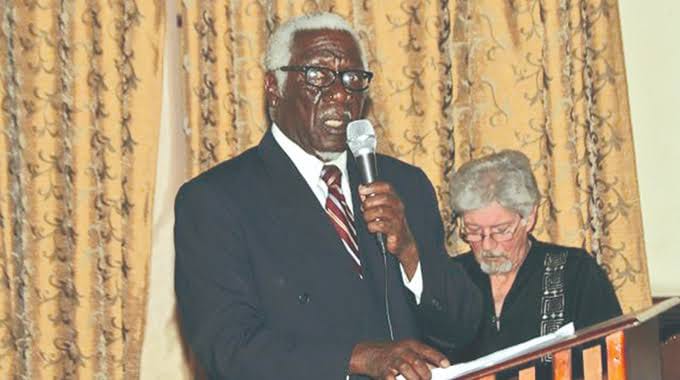
Colonel (Rtd) Cde John Nyamupingidza
AT the height of our armed struggle I was recalled from the front to undergo a cadet officer training course at the famous military academy school, Kohima in Zambia. It was the world standard military academy course of 18 months and that was in 1977.
As fate would have it I was to meet freedom fighters who went on to play a crucial role in modernizing ZPRA (Zapu military wing) and after we attained our independence worked their socks off in different sectors of the economy among them the security organs of our young nation. Among the youngsters I met at Kohima for the first time was now Brigadier-General (Rtd) Milton Siziba pseudonym Cde Jerry Mchinga who unfortunately passed on, on Tuesday last week in Bulawayo.
Before talking about Brig-Gen Siziba let me start off by giving a background of how the contingent that went for officers cadet training at Kohima was constituted. In a move to modernize ZPRA, the command element led by the now late Rogers Alfred Nikita Mangena recruited the officer cadets from four layers. The first consisted guerillas who had seen action at the battle from of which I was one them having been withdrawn from the Livingstone operational zone which later on fell under Northern Front One (NF1) following the reconfiguring of operational zones. The battle hardened guerillas included myself, Barbeton Mwambila (Sibhona) and Carlos Mudzingwa, among others. Some of us despite seeing action had also been to Mozambique under the Zimbabwe People’s Army (ZIPA), which was the amalgamation of ZPRA and ZANLA, but that move did not last.
The second layer consisted of fresh guerillas who had just completed their training at Mwembesi in Zambia and had within its ranks, the now Zimbabwe National Army (ZNA) Chief of Staff Administration, Major-General Emmanuel Matatu and Cde Peeps Gonde, who the last time I heard about him was an academic based at the National University of Science and Technology (Nust) in Bulawayo. The third group was made up of cadres who had trained at Morogoro in Tanzania under the Group of 800 but had no field experience.
The fourth group was “poached” from recruits who were awaiting their departure to undergo military training under the first group in Angola. The subject of this article, Brig-Gen (Rtd) Mliton Siziba was part of that group. Now Brig-Gen (Rtd) Siziba came together with other youthful cadres such as the also now late, Brigadier-General Todd Mpala and Cde Musonda. Each of our four groups were of platoon strength. All in all ZPRA sent 95 cadres to Kohima.
From the Brig-Gen (Rtd) Siziba group were cadres who had been to secondary school and these are the “boys” who went on to form the crème da la crème of our command element. I should admit those “boys” were gifted academically and the decision by the ZPRA commanders to “fish out” them from the thousands others so that they go for cadet officer training was a master-stroke. During the 18-month long officer cadet training Brig-Gen (Rtd) Siziba, Maj-Gen Matatu, Gonde, Musonda and others stood out. I am just mentioning these four for the sake of this article, there were others who were as gifted as them.
After our pass-out parade or graduation in October 1978 we were sent to the Freedom Camp (FC) where the commanders took away our notes from Kohima for “safe keeping,” which, however, proved not to be safe after all as the camp was bombed and all that stuff consumed by the inferno. The commanders being commanders then decided that we reproduce the notes. It was that group yabo Siziba led by Maj-Gen Matatu which went on to reproduce the notes. Maj-Gen Matatu in particular wrote the notes in a chronological and logical manner much to the surprise of many.
It was also Brig-Gen (Rtd) Siziba and his ilk that rang changes in the command structures. It was good that we had commanders who listened to their suggestions. They suggested that members of the High Command should have staff officers and also came up with suggestions that modernised our army. They modernised ZPRA from a guerilla army to a proper regular force, much to the chagrin of some sections of the army who were still stuck in the past or viewed such changes as selling out.
After Independence when we went to the then Zimbabwe Military Academy for an officer standardisation course, Brig-Gen (Rtd) Siziba was one of the top performers alongside some of his peers from Kohima. Some of us were not surprised.
Col (Rtd) Tshipa was during the armed struggle commander of Northern Front One (NF1) that covered Bulilima, Tsholotsho and Hwange Districts. After Independence he diligently served in special forces of the Zimbabwe National Army.


 Online Reporter