

 admin
admin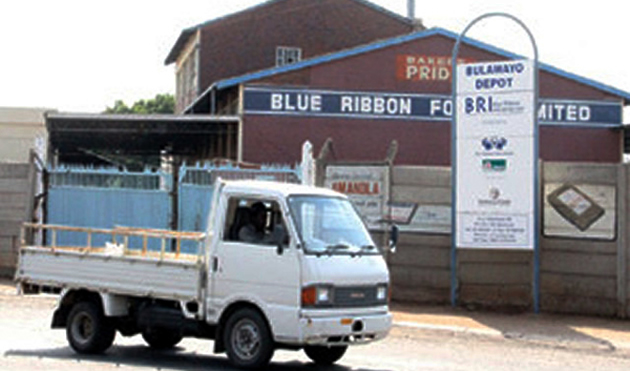
Golden Sibanda Senior Business Reporter
Attempts by the Affirmative Action Group to scuttle the appointment of a foreign chief executive at Blue Ribbon by new investor, Bakhresa, has stoked fears the Tanzanian miller could pull out of the $40 million deal.
This comes at a time Zimbabwe is battling to attract foreign investment to revive companies crippled by lack of access to affordable long term funding to increase production and replace old equipment. Sources said the appointment of its own CEO was part of the conditions Bakhresa is waiting to be fulfilled before immediately injecting $20 million for recapitalisation, clearing liabilities and arrears to workers.
Bakhresa Group vice president Mr Ramesh Kumar said after signing the transaction last month another $20 million would be invested over the next five years. AAG has already written to Home Affairs Minister Ignatius Chombo imploring him to back its position to prevent Bakhresa from appointing a foreign national as chief executive at the milling company.
AAG president Chamu Chiwanza said they were fully behind the Immigration department’s refusal to issue a permit to the CEO, as this was both improper and unfortunate, given the abundant human capital in the country. Mr Chiwanza said no company in the local grain milling industry has been managed by a foreign chief executive since independence from Britain in 1980.
The Herald Business understands that other interested parties have since written to AAG president querying why the pressure group is trying to throw spanner in the works to derail the $40 million investment to revive the firm.
The correspondence has been copied to Minister Chombo, Indigenisation Minister Patrick Zhuwao, Industry and Commerce Minister Mike Bimha and Blue Ribbon Industries judicial manager Mr Reggie Saruchera.
“May we ask you sir, where were you and your grouping when the company was slowly folding up? Perhaps you could have seconded an individual from your pool of abundant human resources in the country, but you failed dismally during the hour of need.
“If an investor pours their millions into a company, don’t you think sir he deserves to appoint an individual who can manage his millions in order for him to generate profit in the venture?” part of the letter reads.
Bakhresa is expected to inject about $40 million toward recapitalisation, working capital finance and clearing of Blue Ribbon’s catalogue of debts, which forced the company to briefly shut down a few years back. Reached for comment Mr Saruchera said he was positive that the work permit would be granted as there was no basis or reason why the request should be turned down for an investor injecting millions of dollars.
“I am positive that the Immigration Department will approve. I do not see why they should decline the request, we are waiting for them to complete their formalities,” he said.
The letter sensationally insinuated that former chief executive Mike Manga was involved in the shadowy attempts to scupper the appointment by Bakhresa of a foreign CEO to head Blue Ribbon’s operations.
The CEO was allegedly involved in previous schemes that resulted in the departure of former CEO only identified as Chissen who packed his bags in a huff in the early 2000s after he failed to get a work permit to continue at the helm of the group.
Mr Manga, who was group production and procurement manager back then, was elevated to group CEO following the departure of Mr Chissen, a South African. The authors of the letter, who requested not to be identified, said the current CEO could be playing the same tricks as he also stands to lose his job.
The incumbent CEO is part of a consortium that lost all its shareholding in the group after the takeover by Bakhresa.
“Suppose Bakhresa decides not to pour his millions, if their representative is denied a work permit, are you prepared sir to down in history as an individual who derailed this transaction and subsequently caused hundreds of workers to be unemployed?” the letter says.
They also pointed out that collapse of the deal with Bakhresa would also result in many creditors of the company failing to recover their funds owed by the group. BRI is saddled by liabilities amounting to $30 million.
The parties said the investment by Bakhresa was sanctioned by the Government after it considered the merits and demerits of giving the deal its blessings. The deal has faced sustained pressure from local pressure groups who have opposed it arguing that the sector was reserved for indigenous investors only.



 Online Reporter