


 Online Reporter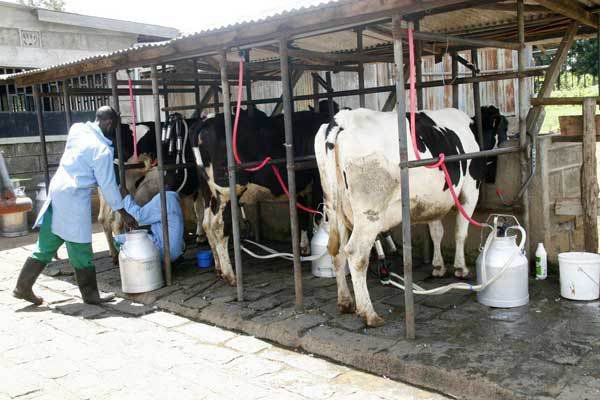
Zimpapers Business Hub
DAIRY FARMERS in Bubi district, Matabeleland North province, are grappling with the problem of low milk prices offered by processors, with the high cost of supplementary feeding adding to their burden.
This is a common issue in many farming communities, where farmers feel they are not getting fair compensation for their produce.
Dairy farming is important to Zimbabwe’s economy. However, several challenges affect the growth, viability and competitiveness of the sub-sector.
These include low productivity, a limited number of dairy animals and weak genetics in the herd, high production and processing costs, limited access to affordable finance and foreign currency, high compliance costs and the effects of climate change.
In an interview, smallholder dairy farmer Ms Sibongumusa Mthethwa said they were being affected by the low milk price at which processors are buying the commodity.
“Milk processors are buying milk at a price as low as 40 US cents per litre despite the increase in production costs,” she said.
“The cost of feed and other inputs has gone up, but we are still selling the milk to the off-takers at between 40 US cents and 55 US cents per litre, yet the processed milk on the market has increased to about US$1,40 per litre.”
Ms Mthethwa said even while working as a cooperative with other farmers, they continue to record a drop in milk collections.
According to her, they are now collecting 400 litres of milk per day, against their initial target of 700 litres to 1 000 litres.
Another farmer, Mr Xolani Moyo, said supplementary feeding was weighing them down and they also needed more boreholes to ensure their animals had sufficient clean water for drinking.
“We are calling for increased investment in borehole drilling to ensure our cattle have reliable access to clean water, a critical factor in milk production and herd health.
“As farmers, we struggle to provide enough water for our livestock, leading to reduced milk yields, poor animal health and financial loss,” he said.
Mr Francesco Marconati, owner of Queens Dairy Farm, said they were planning to expand their current herd of 338 dairy cows to more than 2 000 by the end of 2026.
“This is our target; however, we must say the cost of supplementary feeding is affecting us.
“Currently, we are buying from local farmers here, and it’s not enough. In a day, for the current herd that we have, 338 dairy cows, we are feeding them close to 7 tonnes of silage a day.
“If we are to expand to about 2 000 dairy cows, it will mean we need close to 90 tonnes of silage per day, which will not be possible to source from local farmers here,” he said.
He said they were appealing to the Government to assist them in acquiring additional land so that they can set up centre pivots to irrigate pastures for their own silage.
Mr Marconati added that they were building a dam to hold water pumped from their mine so that they could assist nearby farmers in accessing water for their livestock and crops.
Processors acknowledge farmers’ sentiments
Meanwhile, dairy processors said they were aware of the sentiments expressed by farmers on current milk prices.
“The issue of milk price is always a difficult matter.
“Talking from a processor’s point of view, we also have costs associated with bringing the milk and processing it to good quality.
“We have the Government; their eyes are on us.
“When we process milk that is substandard, they will come to us to say why are we processing it this way?” said one representative from a leading dairy processor in the country.
“We have to process milk sufficiently so that we do not transmit diseases.
“We are not defending our position, but we also have costs that we cater for, so we understand the farmers’ point of view.”
The representative said the high cost of production does not only affect the farmers but the entire value chain, adding that processors import most of the ingredients needed in the production of milk.
Echoing the same sentiments, Mrs Clementine Maregere, of the Dairy Processors Association of Zimbabwe, said processors also incur high costs of production.
“For one litre of milk packaged in a Tetra Pak, 65 US cents go to the producer, who is the farmer.
“The processor, when they get the raw milk and process it and it’s at dispatch, at the factory level, it’s going for US$1,05.
“The milk then goes to different retail chains, which also put their mark-ups,” she said.
She said distributors of the milk had different prices, ranging between US$1,20 for wholesalers and US$1,60 or more in supermarkets.
To address some of the challenges farmers were facing, Mrs Maregere called on them to work together and consider joint ventures, especially when it comes to supplementary feeding.



