admin
admin
Golden Sibanda and Martin Kadzere
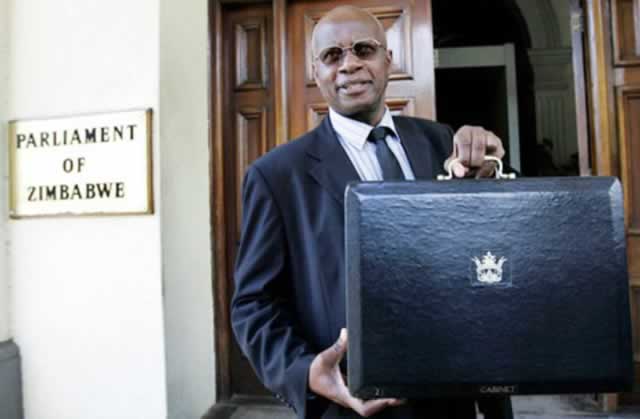
Finance Minister Patrick Chinamasa faces the perennial daunting task synonymous with his portfolio when he presents the 2014 National Budget next week seeking to spread his thin purse across listless competing interests and inject pace in a tiring economy. The much-awaited Budget will be presented on December 19, but considering the resource constraints, economic analysts believe the fiscal plan should do more to inspire confidence in the economy in order to attract investment.
Only through increased investment can Government achieve the main objectives set out in its new economic blueprint, Zimbabwe Agenda for Socio-Economic Transformation, covering the period 2014 to 2018.
Minister Chinamasa, as has become the norm, has the unenviable responsibility of carrying the entire nation’s hopes of performing a special balancing act of allocating little available resources to rejuvenate economic growth and allow the creation of new jobs.
The economy certainly requires a significant dose of fresh capital to spur productive sectors yet the country faces one of its worst liquidity crises since dollarisation.
Very little is flowing in terms of foreign direct investment due to a number of reasons including perceived country risk profile, debt arrears and reservations about some of Government’s policies, characteristic of the cynicism among Western investors.
Other sources of liquidity such as lines of credit have also not been performing well due mainly to almost similar reasons while inflows from the Diaspora are too little to create the liquidity required to drive the economy.
Following a decade of economy instability characterised by hyperinflation, local industry also cannot export to generate liquidity required to boost economic activity as the firms themselves also need fresh capital.
With the main sources of funding or liquidity largely constrained, the responsibility solely lies with Treasury to manoeuvre ways that create the liquidity needed to oil the economy and return the economy onto a growth path.
More than ever, Zimbabwe ill affords to remain a pariah state in global socio-economic and political affairs and without necessarily abandoning the ideals of its historic liberation struggle, Zimbabwe should find ways to inspire confidence into the economy to register growth.
Economist Dr John Robertson said the country faced serious deficit in terms of financial resources required to rejuvenate the economy, and the option would have been to borrow, but this was not feasible for Zimbabwe.
“We need to build productive capacity and attract investment, but investment will not come when they do not feel comfortable. Some have been telling investors around the world that Zimbabwe is the least friendly country and they have not come,” he said.
“We need to change our political policy; the economy cannot work when investors are discouraged. There are linkages between economic sectors and when you talk of recovery in agriculture you cannot do it because you have got to revive industrial confidence first.”
He said after creating confidence, the country could then revive agriculture to feed raw material into manufacturing, which would reduce imports, create new jobs and create more tax revenue for the Government. Dr Robertson said that the Budget would simply indicate what ministries will get and how it will use the funds, which would mainly be paying salaries, but leaving the ministries without capacity to fulfil their mandates.
It is mind boggling how Minister Chinamasa will be able manoeuvre available space to ensure liquidity in the economy after growth slowdown in 2012.
The economy registered an average 7,1 percent recovery growth after dollarisation, simply reflecting the little growth in a stable environment, but production remained subdued by Zimbabwe’s potential.
The situation appeared to get better, masked by ready availability of goods because imports filled up supermarket shelves as people chased the greenback.
Barring any surprises Minister Chinamasa will present a National Budget that will be plus or minus US$4,3 billion, which he intimated on during a pre-Budget seminar for parliamentarians in Victoria Falls last month.
The minister is also expected to announced a projected economic growth for 2014 of around 6 percent and increase capital expenditure from 10 to 20 percent from, though he has hinted he might move towards off-budget financing of capital projects to joint ventures and public private sector partnerships.
The Budget comes at a time when Zimbabwe’s economic sectors are performing below par, largely as a result of biting liquidity constraints, the effects of illegal sanctions, fall in prices of commodities on global markets and the poor performance of agriculture.
Zimbabwe’s economy is expected to grow 3,4 percent this year, having been revised from 5 percent projected earlier. The manufacturing sector is struggling, under pressure from lack of capital, high cost of utilities, finance and lack of competitiveness. According to the Confederation of Zimbabwe Industries, activity at manufacturing firms fell from 44 percent in 2012 to 35 percent this year, signalling the need for s stimulus package to help the firms find their feet.
Many companies have closed down while some are scaling down. Agriculture was initially projected to grow by 11,6 percent this year, but the rate was revised to -5,8 percent, while mining is expected to expand from an initial projection of 17,1 percent to 5,3 percent.
The country is experiencing severe power cuts and poor social services. There is huge infrastructure backlog. The minister will also be under pressure to improve salaries for civil servants who for a long time have been demanding Poverty Datum Line-linked salaries.
A summary of areas which need quick (funding) attention include: manufacturing, which needs US$2 billion for sector; agriculture sector US$2 billion; national debt (over US$7 billion) and current account deficit, which stands at an unsustainable US$1,5 billion.
These funding requirements exclude other pressing issues such as electricity imports and infrastructure rehabilitation and food imports after a poor agricultural season and other safety net obligations in an economy where most people are not gainfully employed.
“These miracles can come through borrowing from friendly countries. Government must also moot other policy strategies aimed at mobilising resources such as public private partnerships and luring Foreign Direct Investment by creating a conducive environment for business,” economist Mr Gift Mugano.
Economic analysts said the upcoming Budget should seriously address recapitalisation of critical sectors such as agriculture and manufacturing for sustainable recovery.


 Online Reporter