

 admin
admin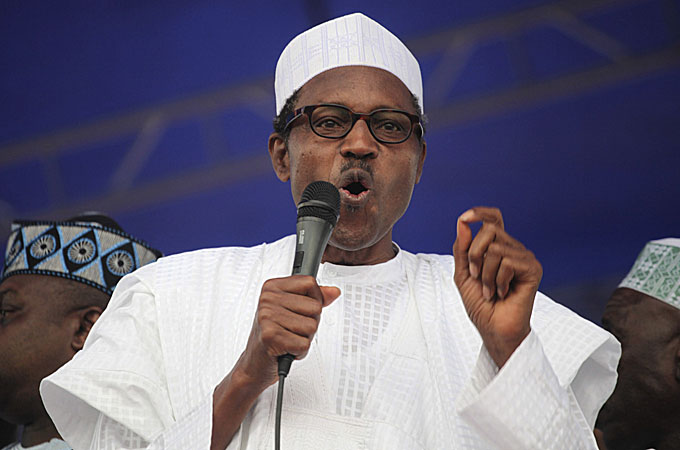
Johannesburg — Nigeria’s president Muhammadu Buhari is planning to visit Cameroon to cement a regional fighting force against Boko Haram, he has said. Buhari met his counterparts from Niger, Chad and Benin at a summit in Abuja last week but Cameroon’s leader Paul Biya was noticeably absent and represented by his defence minister.
The two countries have long had strained ties, in part over a bitter territorial dispute but also after Boko Haram mounted cross-border raids into northeast Nigeria from Cameroon’s far north.
Buhari visited Niger and Chad in his first week in office and said he would have gone to Cameroon’s capital Yaounde for talks with Biya had he not been invited to attend the G7 summit in Germany.
“But on my return to Nigeria now, I’ll try to go to Cameroon,” he said on the sidelines of the African Union summit in Johannesburg.
Last week’s Abuja summit rubber-stamped an 8 700-strong regional force involving the five countries to replace an ad hoc coalition of Nigeria, Niger, Chad and Cameroon.
The current force came into being after Chad’s president Idriss Deby sent troops to assist their Cameroonian counterparts against a wave of attacks by the Islamist militants.
Troops from Niger and Chad have crossed into Nigerian territory but those from Cameroon have not, in an indication of the strained relations between the neighbours.
But Buhari indicated last Thursday that soldiers from the new Multi-National Joint Task Force (MNJTF) would not be restricted in terms of movement.
The MNJTF will be headed by a Nigerian officer for the duration of the mission, with his deputy from Cameroon for an initial 12 months once troops are deployed from July 30.
Buhari has made crushing Boko Haram his immediate priority since coming to power on May 29 and he said that foreign support was vital.
“The most important support is intelligence. What we’re looking for from the G7… is intelligence. We want help in terms of logistics,” he said.
“Boko Haram declared that they’re in alliance with ISIS, so terrorism has gone international. They’re in Mali, they’re in Nigeria, they’re in Syria, they’re in Iraq, they’re in Yemen . . .
“It’s an international problem now,” he said.
In the interview, Buhari also addressed concerns he had not yet appointed a cabinet more than two weeks after he came to power following his victory in March polls. “I don’t know why people are so anxious to have ministers, but eventually we’ll have,” he said.
Buhari said that audits were currently being carried out in various government departments – and the finance and petroleum ministries in particular – to try and establish what situation they were left in by the previous administration.
“I’m not in a hurry to get ministers,” he said.
“I want to get ministers after at least I’ve seen this report, so that I don’t have to appoint a minister today and sack him next week.”
Meanwhile, the United Nations’ top human rights official called on Buhari to investigate and prosecute “horrifying” allegations of executions, rape and amputations of children by Islamist insurgents Boko Haram.
Zeid Ra’ad Al-Hussein also said reports of violations committed by Nigerian armed forces should be investigated and perpetrators brought to justice.
“Civilians in northeast Nigeria have been living through horrifying acts of cruelty and violence by Boko Haram. These include wanton killings, summary executions, forced participation in military operations – including the use of children to detonate bombs, forced labour, forced marriage and sexual violence, including rape,” Zeid said, citing eyewitness testimony gathered by his office.
l The United States plans to provide $5m to help support a regional military force fighting Nigeria’s Islamist militant group Boko Haram, a state department official said on Tuesday.
The United States is already providing bilateral aid to Chad, Niger and Cameroon for logistics and other equipment worth about $34m, the official said.
The additional funding for the new force, composed of troops from Nigeria, Chad, Niger, Cameroon and Benin, will be channelled via the African Union. — AFP


 Online Reporter