admin
admin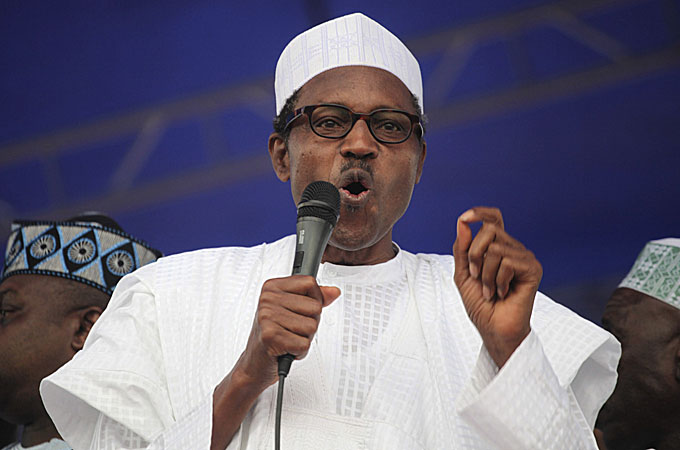

Lagos — Nigeria’s president Muhammadu Buhari said that he will not appoint cabinet ministers until September, having taken office on May 29. “Nigeria must first put new rules of conduct and good governance in place,” Buhari wrote in an article published in the Washington Post on Monday. In the article, he outlined his plan for defeating the militant Islamist group Boko Haram and rooting out corruption.
Boko Haram has killed thousands of people in a six-year insurgency, during which it has attempted to set up a state adhering to strict sharia law in the north-east of Nigeria, Africa’s largest economy.
Since taking office, Buhari has replaced his defence chiefs and dissolved the board of the state oil company but is yet to appoint a cabinet, prompting questions from some in the Nigerian media. “When cabinet ministers are appointed in September, it will be some months after I took the oath of office,” wrote Buhari. “It would neither be prudent nor serve the interests of sound government to have made these appointments immediately on my elevation to the presidency.”
Meanwhile, Barack Obama welcomed Nigeria’s freshly elected president to the White House on Monday, lending a personal endorsement after the country’s first ever democratic transition.
Obama praised the March vote as “an affirmation of Nigeria’s commitment to democracy.”
He said the people of the oil-rich and diverse nation “understand that only through a peaceful political process can change take place.”
Obama — facing criticism for not including the continent’s most populous country and biggest economy on a Africa tour later this week that will take in Kenya and Ethiopia — turned on the charm, lavishing praise on the former military ruler.
“President Buhari comes into office with a reputation for integrity and a very clear agenda,” he said.
“And that is to make sure that he is bringing safety and security and peace to his country.”
Buhari reciprocated the praise, saying US pressure helped ensure the elections were “free, fair and credible. We’ll ever be grateful,” he said.
But Buhari, who ruled as a military strongman between 1983 and 1985, returns to office facing a Boko Haram insurgency that has resulted in the deaths of at least 15,000 people and displaced 1.5 million.
Since 2009 the group has been trying to establish an Islamic state in northeast Nigeria.
US laws banning the transfer of weapons to countries suspected of rights abuses have sometimes pushed a wedge between the two allies.
Obama’s administration last year blocked the sale of Cobra attack helicopters to Nigeria, hampering co-operation amid efforts to find the hundreds of still-missing kidnapped Chibok schoolgirls. Since being elected in May, Buhari has indicated a readiness to address problems in the army he once ran as a general and as Nigeria’s military ruler. Earlier this month Buhari sacked his entire military top brass. — AP


 Online Reporter