Online Reporter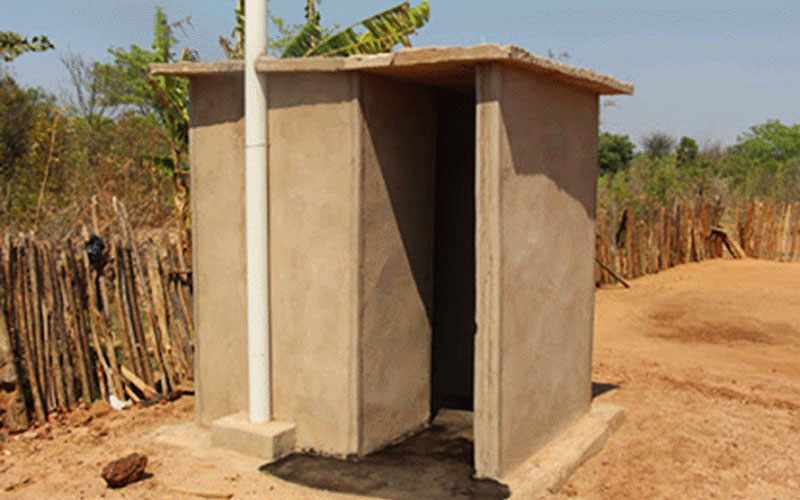
Tendai Gukutikwa
Health Reporter
BUHERA Rural District Council has announced that, starting January 1, 2026, each household found without a standard toilet at inspection will be fined US$50, a move officials say is necessary to check rampant open defecation and its deadly consequences.
In a public notice signed by acting chief executive officer, Ms Patience Dhinda, the council invoked Section 26 of the Public Health Act and Section 71, First Schedule (Part 30) of the Rural District Councils Act, declaring it illegal to reside at a homestead without Blair Ventilated Improved Pit (BVIP), Upgradeable BVIP or a cistern latrine.
The notice further states that: “With effect from January 1, 2026, Buhera Rural District Council shall be fining US$50 to each household without a standard toilet.”
Although Ms Dhinda was not immediately available for a comment, Buhera RDC chairperson, Councillor Thomas Matsenhura said the district can no longer rely on persuasion alone after years of health crises linked to poor sanitation.
In an interview, Councillor Matsenhura said the fine is a response to a startling public health emergency.
“Last year, the district topped the list of cholera deaths. Most households have no toilets and we want to change that. That is what informed this decision, and we expect the fine to influence behaviour change among locals in Buhera District,” he said, while pointing to open defecation as a key factor.
He described the situation as urgent.
“We do not want people to continue dying because of open defecation. The Minister of Health and Child Care, Dr Douglas Mombeshora even visited us and realised that the situation was dire last year. This fine is some form of reinforcement. We want people to build toilets and stop open defecation.
“We tried raising awareness and sensitising our people on the importance of toilets, but still they did not heed our call. We have come up with these local by-laws and punitive fines because went to see change in Buhera,” said Mr Matsenhura.
He said the local authority believes that the threat of financial penalty will force the shift that years of education and aid have failed to deliver.
He also insisted the council is not only punishing, but supporting.
“Beyond fines, as a council, we have supported and implemented help to households so that they construct toilets, especially those struggling financially.
“We had development partners coming in and supporting families with cement, and taught them how to build these toilets, but instead people used that cement to floor their houses.
“They never built the toilets. Trained builders were there to help them, but they had other uses of the cement,” he said.
He said the council also built toilets for the most vulnerable, hoping others would follow.
“We went in thinking that other villagers would emulate, but nothing happened,” said Mr Matsenhura.
Buhera has for years been battling a sanitation gap. The high prevalence of open defecation, coupled with widespread water challenges, has repeatedly placed Buhera at the centre of cholera and diarrhoeal outbreaks.
According to the Zimbabwe Livelihoods Assessment Committee (ZimLAC) 2025 Rural Livelihoods Assessment Report, open defecation remains a pressing challenge nationally, even as it has declined from 29 percent in 2020 to 24 percent in 2025.
It also shows that Buhera has one of the worst sanitation gaps in Manicaland, with 33 percent of the district’s population practising open defecation.
Although this reflects some progress from 37,5 percent in 2020, the report warns that the district remains significantly behind national and provincial targets.