Online Reporter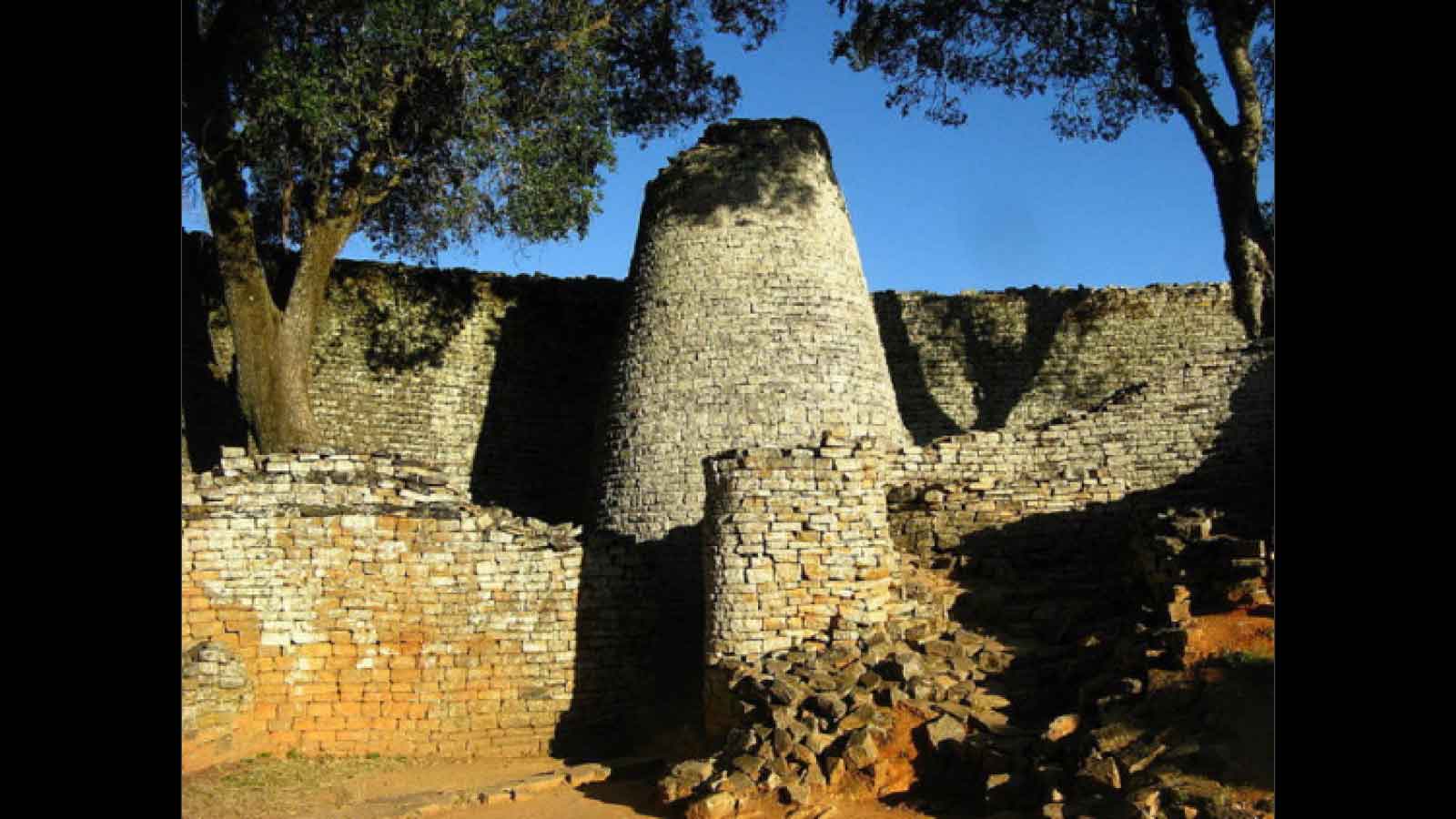
Ambassador Kwame Muzawazi
What does it mean to build a nation?
People often answer that question in the language of infrastructure — roads, dams, power stations, schools, hospitals, factories, digital networks and cities.
These things matter.
But before a society builds structures, it must build something less visible yet infinitely more important: a state of mind.
This means developing a belief in one’s own capacity to solve problems, organise knowledge, master technology, create institutions and imagine a future larger than the present.
This is one of the reasons Munhumutapa matters.
Today, we can stand before the massive granite walls of Great Zimbabwe and admire their beauty.
As we do so, we must ask ourselves: What kind of society was capable of building this?
Great Zimbabwe is a unique testimony to the majesty of an ancient indigenous civilisation that had mastered architecture, engineering, ironworking, trade and knowledge transfer.
In short, Great Zimbabwe is not just about stone walls. The walls are the visible expression of a state of mind.
There had to be people who understood stone and construction; others who organised labour, food production and settlements; others yet to transmit skills from one generation to the next.
And there had to be institutions — whether formal or informal — capable of coordinating all of this.
A Munhumutapa state of mind begins by asking: What problems did our ancestors face, how did they solve them and what can their methods of solving problems teach us today?
The lesson for contemporary Zimbabwe is not that we should abandon concrete and steel and return to dry stone. It is that our relationship with contemporary technology should be rooted in confidence, curiosity and adaptation.
A society that once created complex settlements should be able to imagine world-class cities using available human and material resources.
The historical record should expand our technological imagination, not merely decorate our museums.
This same principle applies to metallurgy and craftsmanship. Archaeological evidence from Zimbabwe’s ancient settlements points to ironworking, mining and the manufacture of a variety of metal objects.
Available documentation records ancient mining of gold and copper, as well as iron production.
This was not technology existing in isolation.
It was connected to production; and production was connected to settlements; and settlements were connected to agriculture.
Agriculture supported populations; the populations developed specialisation; specialisation created artisans, traders and other skilled occupations; and trade connected these communities to wider networks as far as China in ancient times.
This is an important way of thinking about development.
Modern economies are often discussed as sectors: agriculture, mining, manufacturing, tourism, technology and services.
Our own Munhumutapa civilisation reminds us that these things are interconnected.
The challenge today is to build similarly connected systems, but with the vastly greater scientific knowledge and technological capacity available to us.
Perhaps one of the most important lessons from the history of Munhumutapa concerns international relations and trade.
Archaeological discoveries at Great Zimbabwe include Chinese and Persian ceramics, glass beads, and gold and Arab coins associated with Kilwa. These demonstrate that the society was connected to long-distance trading networks.
Mapungubwe, an earlier society that provided the DNA for Great Zimbabwe, participated in trade routes that reached the East African coast and extended to India and China.
This also serves to challenge the debilitating assumption that Africa has no real agency in multilateral affairs.
Africa can and has of its own accord and with its own interests at heart participated in networks of commerce, diplomacy, cultural exchange and knowledge transfer.
We are not passive recipients of civilisation; we are makers of it. That historical understanding should inform how contemporary Africa approaches the world.
International engagement should not be premised on an inferiority complex, nor should it be based on isolation.
The lesson is one of connection from a position of capacity.
There is another lesson hidden inside all of this: Knowledge has value only when societies can transmit it. A wall can survive for centuries; a skill will not. The knowledge of how to construct, farm, forge, trade or organise must pass from one generation to another.
That makes education one of the most important technologies of civilisation.
The challenge for modern Zimbabwe is, therefore, to connect heritage education with contemporary science and technical education.
A child reading about Great Zimbabwe should visualise architecture and engineering.
One who encounters a record of its ancient metallurgy should feel encouraged to master modern materials science and manufacturing. The same goes for agriculture, climate adaptation, food systems, economics, logistics, international commerce, diplomacy, urban planning and environmental management.
This is what heritage-based learning can become when we stop treating history as an academic subject that must be read for exam purposes.
Our history is the bridge between memory and innovation.
And this is what it means to build a Munhumutapa state of mind.
A Munhumutapa state of mind means developing the confidence to believe that African problems can generate African solutions; that our history contains evidence of technological and institutional creativity; that knowledge must be transmitted across generations; and that development should integrate culture, science, technology, education and production rather than treating them as disconnected sectors.
This has direct implications for modern Zimbabwe.
We already speak of science, technology and innovation as drivers of development; with emphasis on STEM (Science, technology, engineering and mathematics) education, digital skills, research, innovation and collaboration between schools, universities, research institutions and productive sectors.
The missing ingredient is not another policy document.
What is missing is the deliberate intellectual integration of these with our own historical consciousness.
We should be able to say to a young Zimbabwean: You are not the first person from this land to solve difficult problems; your ancestors built cities; they worked iron; they mined; they farmed; they engineered monumental edifices; they traded across oceans; they organised societies; and they transmitted knowledge.
Inherit that confidence in human possibility — and then go further!
This is where the Institute of African Knowledge (INSTAK) comes in.
INSTAK is interested not simply in preserving information about Africa, but in interrogating what African knowledge can contribute to Africa’s future.
The African Renaissance requires more than remembering African achievements — it requires converting those achievements into intellectual resources for contemporary development.
That means putting the museum, the classroom, the laboratory, the workshop, the farm, the factory and the technology hub into the same conversation.
It means refusing to place heritage on one side and innovation on the other. They belong together.
In this way, a society can grow from stone walls to space satellites, and from indigenous knowledge systems to the artificial intelligence revolution. That is what it means to build a Munhumutapa state of mind.
Ambassador Kwame Muzawazi is the chief executive Officer of the Institute of African Knowledge, a Pan-African think tank based in Harare. This is a second part of a series of articles that unpacks the significance of the Munhumutapa civilisation.