Online Reporter
Thupeyo Muleya
THE Beitbridge Reception and Support Centre, long regarded as Zimbabwe’s first line of humanitarian response at the country’s busiest border post, is facing growing pressure as the number of returnees from South Africa continues to surge.
Built to accommodate about 1 000 people in transit each day, the centre has in recent weeks been handling up to 3 000 people daily. The strain has prompted renewed calls for Government to permanently upgrade the facility to ensure it can continue receiving Zimbabweans returning through deportation, voluntary repatriation or emergency evacuations with dignity and efficiency.
The centre has been operational since 2005 and has played a critical role during successive migration crises, serving as a temporary refuge for thousands of Zimbabweans returning home.
On Monday, a Joint Parliamentary Portfolio Committee on Peace and Security, Defence, Home Affairs and Security Services visited Beitbridge to assess the response by Government departments and humanitarian partners.
The committee heard that while coordination among agencies has been effective, the facility requires major investment in infrastructure, staffing and equipment if it is to meet future demands.
Minister of State for Matabeleland South Provincial Affairs and Devolution Albert Nguluvhe said Government, working alongside humanitarian organisations, had activated systems to provide food, water, medical care, temporary accommodation and transport for returnees.
“We received our people under difficult circumstances, but as a Government we moved swiftly to ensure no one was stranded. The border teams worked day and night,” said Minister Nguluvhe.
He said the recurring nature of deportations and anti-migrant tensions in neighbouring countries highlighted the need for a permanent solution.
“In the long run, we need to upgrade this reception centre permanently because issues like deportations and recurrent anti-migrant tensions are endless. This centre has facilitated such services in previous years, and hence it must have adequate facilities so that we don’t always wait for help from headquarters; we should be permanently prepared.”
The Minister said vulnerable groups, including women and children, had received targeted assistance and urged stakeholders to support long-term investment in the facility.
Beitbridge Reception Centre Superintendent Miss Nobuhle Ncube told legislators that the centre was operating well beyond its intended capacity.
“The centre has a carrying capacity of 1 000 people in transit daily and hence the need to upgrade it to absorb increased pressure at any given time,” she said.
She said a permanent one-stop facility would improve the delivery of social protection services offered by different Government departments.
“We offer several social protection services working with other government agencies. So we need to create a permanent one-stop shop here,” said Miss Ncube.
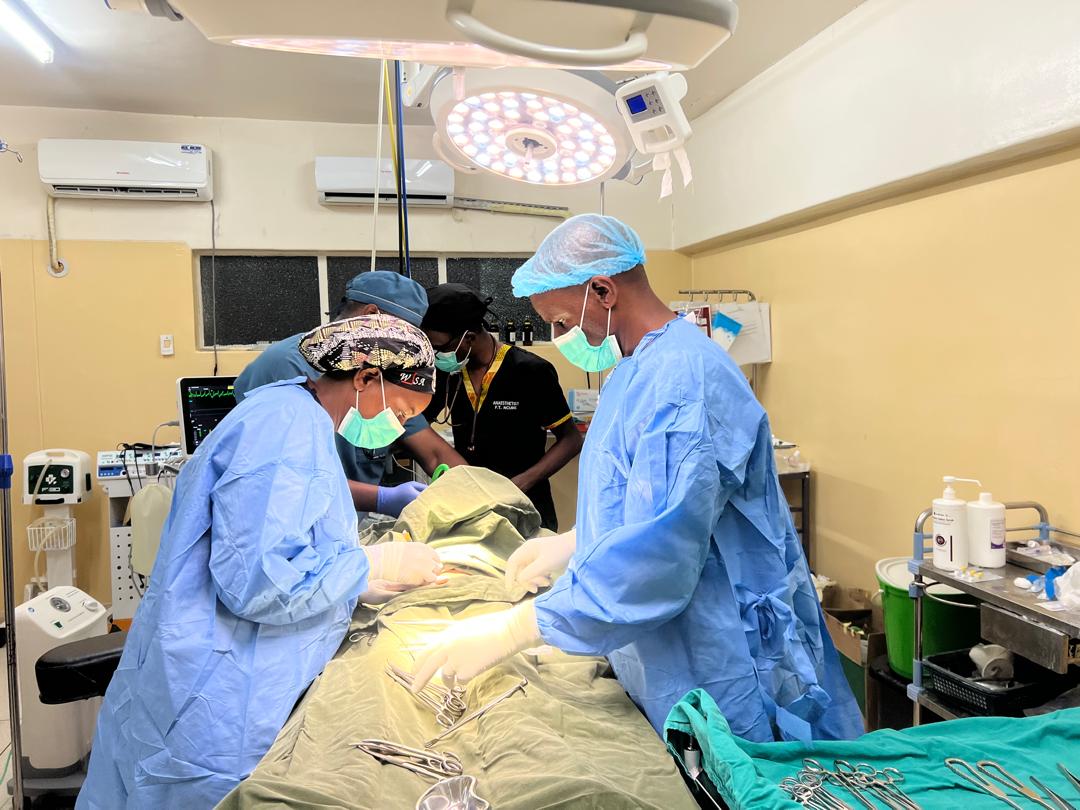
Health services have been among the most heavily utilised since the recent influx began.
Beitbridge District Medical Officer Dr Lenos Samhere said medical teams had attended to thousands of returnees.
“Since tensions began, we have attended to 3 714 patients at the reception centre clinic with the support of other partners. 60 percent were women, while children under 15 years formed 26 percent of those attended,” he said.
According to Dr Samhere, many patients required treatment for chronic illnesses and conditions associated with the stress of displacement.
“Most of the patients sought help to manage hypertension issues, family planning, ARV resupply, headache, and upper respiratory tract issues. So we mobilised resources from our hospital and partners,” said Dr Samhere.
The clinic also provided preventive healthcare services.
“We also did some catch-up immunisation for some children and offered a one-month supply of ARVs for HIV patients and referred them for integration into clinics at their destination,” said Dr Samhere.
Immigration officials told the committee that the scale of movement through Beitbridge had been unprecedented.
Assistant Regional Immigration Officer Mr Lucky Matyora said Government-assisted repatriations had taken place alongside thousands of independent returns.
“During the same period we facilitated the return of 8 944 male minors, and 9 405 female minors, while another 19 948 minors returned independently with their parents,” he said.
Mr Matyora said Government had facilitated the return of 42 343 Zimbabweans, while another 129 117 had returned independently.
The border had also served as a transit route for regional migrants.
“The department had also facilitated a total of 86 969 Malawians to transit to their country via Beitbridge Border Post,” said Mr Matyora.
Civil Protection Unit director responsible for disaster preparedness and humanitarian responses, Mr Farai Hokonya, said a multi-sector response was still in place despite a decline in arrivals.
“We have the Health and WASH, Protection Services, Border Management, Information and Data, Infrastructure, Security, Reintegration and Resource Mobilisation committees all working in unison and coordination to ensure a dignified return of Zimbabweans from South Africa,” said Mr Hokonya.
He said national operations had been scaled down but remained on standby.
Mr Hokonya also revealed that two Zimbabweans died during the repatriation process and were buried with Government assistance.
He said preparations were under way to repatriate another 3 000 Zimbabweans affected by recent anti-migrant protests in South Africa.
To ease the burden on returning families, Government has dispatched trucks to collect property left behind in South Africa and waived most import duties on household goods.
Zimbabwe Revenue Authority (Zimra) Private Imports Manager at Beitbridge, Mr Tawanda Muchena, said special customs measures had been introduced.
“We have been fully implementing a flexible customs regime as directed by the Government to ensure the returnees coming from South Africa at the height of anti-migrant protests,” he said.
“We have created an express lane whereby they arrive through the bus terminal, and the compliance checks are done at the reception and support centre.”
Mr Muchena said Zimra had also waived statutory fees for buses and trucks transporting returnees’ goods.
At district level, Civil Protection Committee chairperson Miss Sikhangezile Mafu said the response had ensured every returnee received assistance.
“As the local civil protection committee, with the support of provincial and national structures, we have all the State actors on the ground ensuring the repatriation and integration processes are seamless.
“Upon arrival, each person is registered and profiled by officials from the Department of Social Development and Immigration, while the Ministry of Health and Child Care checks for medical needs. In addition, the Department of Civil Registry helps anyone with lost or damaged documents and the police ensure safety and security,” said Miss Mafu in a recent interview.
Returnees also receive food, water, counselling and psychosocial support before travelling to their destinations.
“Everyone arriving is assessed and provided with social support to help them reintegrate with their families,” said Miss Mafu.
She said authorities remained prepared for further arrivals.
“We have handled more human traffic before, and we will continue using the same strategies. We are ready to absorb any amount of pressure and make processes seamless,” said Miss Mafu.
The operation is supported by several humanitarian partners. Médecins Sans Frontières has deployed additional doctors, the National Aids Council is providing HIV-related services, and UNICEF is supporting child protection and sanitation programmes, while the Zimbabwe Red Cross Society is helping reconnect returnees with their families.
Buses remain on standby to transport people to destinations across the country, including Harare, Bulawayo, Masvingo, Mutare and Chiredzi.
Members of Parliament who visited the centre praised the response while acknowledging the enormous pressure placed on frontline staff.
“There was a whole lot of work our civil servants did to ensure all services were at the disposal of the Zimbabweans. People did not anticipate such multitudes of people, and as Parliament, we appreciate that the services were splendid. During the presentations, we learnt a lot about the operations here and the coordination across the ministries,” said Senator Irene Zindi.
Cde Exevia Maoneke echoed similar sentiments.
“We appreciate the efforts by the Government in bringing home Zimbabweans who are affected by xenophobia in South Africa. From what we have been briefed and seen here on the ground, we are impressed by the coordination by all arms of the Government and its partners,” said Cde Exevia Maoneke.
“The border also served as a transit point for Zambians and Malawians returning to their countries by road, and we have heard that our civil servants did a great job in facilitating that transition.”
The committee said its mission was to assess whether Government had the capacity to receive and support citizens fleeing targeted attacks and whether the necessary public services and security systems were in place.
The message from officials, aid agencies and legislators was unanimous: the Beitbridge Reception and Support Centre has proved indispensable, but it is no longer fit for the scale of demand it faces.