Vusumuzi Dube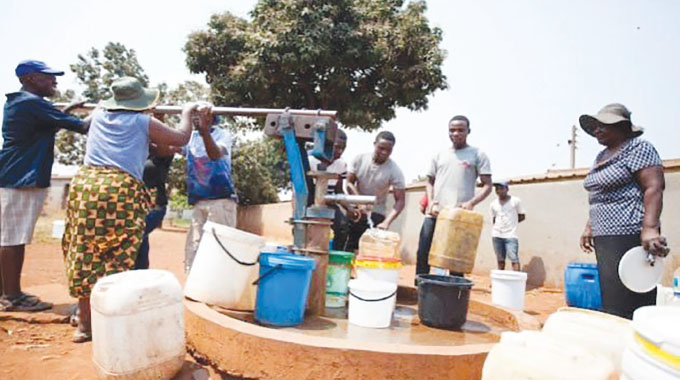
Masimbaashe Mambara, [email protected]
BULAWAYO residents are all too familiar with the hardship caused by persistent water shortages. Despite significant rainfall received annually, silted catchment areas and dams continue to limit water yields, resulting in inadequate supplies for the city. This challenge is worsened by population growth that has not been matched with upgrades to water treatment infrastructure. In addition, losses through leaking systems, burst pipes and unauthorised water connections have compounded the problem. The outcome remains unchanged for residents — water rationing, long queues at boreholes and increasing reliance on unsafe water sources.
The situation has been described as Zimbabwe’s water paradox, where scarcity is driven not only by drought but also by inefficiencies in service delivery by local authorities. At the centre of efforts to resolve the crisis is a critical issue: whether water supply and usage challenges are being adequately measured.
Experts say sustainable solutions depend on integrating environmental monitoring with engineering interventions.
Non revenue water continues to place severe strain on municipal systems. Local authorities lose vital revenue, industries experience disruptions, and households bear the consequences. As one council official acknowledged, “We are treating water we cannot sell.” The impact of these losses is economic, social and environmental, with implications for the achievement of Environmental Social Governance (ESG) standards.
Engineering based interventions offer practical remedies. Rehabilitation of ageing pipeline networks can significantly reduce water losses, while smart metering systems can identify leaks and illegal connections in real time. At source level, catchment management through dam desiltation and wetland protection can restore storage capacity. However, experts warn that without reliable data, such interventions risk being poorly targeted or ineffective.
Environmental monitoring has therefore emerged as a critical component in addressing the crisis.
Currently, Zimbabwe’s monitoring systems are fragmented. Leak detection is largely reactive and pollution monitoring inconsistent. The application of real time Geographic Information System (GIS) mapping would enable municipalities to accurately locate and quantify water losses. Continuous water quality monitoring using sensors could also identify pollutants before they escalate into public health emergencies. In addition, community based reporting systems would empower residents to play an active role in protecting water resources.
The crisis is further exacerbated by widespread pollution. Discharge of untreated sewage, industrial effluent and agricultural runoff continues to degrade rivers and dams. The consequences include declining aquatic biodiversity, reduced agricultural productivity and increased outbreaks of water borne diseases such as cholera and typhoid.
Engineering responses can help mitigate these risks. Upgrading wastewater treatment plants can allow for water reuse in agriculture and industry, while constructed wetlands provide nature based filtration systems. Improved storm water infrastructure can also prevent contaminated urban runoff from entering water bodies.
However, the impacts of pollution extend beyond immediate visibility. Ecosystem degradation affects food systems, while vulnerable communities, particularly children, face increased health risks. These challenges are interconnected and demand integrated responses.
Environmental monitoring underpins such responses. It enables infrastructure performance to be assessed, emerging risks to be identified and informed decision making to take place.
Experts stress that investment in modern monitoring technologies, complemented by stronger institutional coordination and community involvement, is essential.
Zimbabwe’s water crisis, analysts note, is not purely a supply issue but a management challenge. Aligning engineering solutions with robust environmental monitoring could help reduce losses, safeguard ecosystems and protect public health.
Citizens also have a role to play. Practices such as rainwater harvesting, greywater reuse, installation of water efficient fixtures and reporting leaks can collectively contribute to easing pressure on municipal systems. Stakeholders emphasise that water resource protection is a shared responsibility.
As climate change intensifies drought conditions and urban demand continues to rise, the urgency for decisive action is increasing. Addressing Zimbabwe’s water challenges begins with understanding them.
Strengthening environmental monitoring systems will not only guide engineering responses but ensure long term impact. With stakeholders expected to convene in May for a national workshop and exhibition on environmental monitoring hosted by BUMIRA Environmental Consultancy, attention will focus on practical solutions, innovation and cross sector collaboration to strengthen the country’s response capacity. The message, experts say, is clear: effective water management starts with measurement – and every drop counts.



 Online Reporter