Chronicle Editor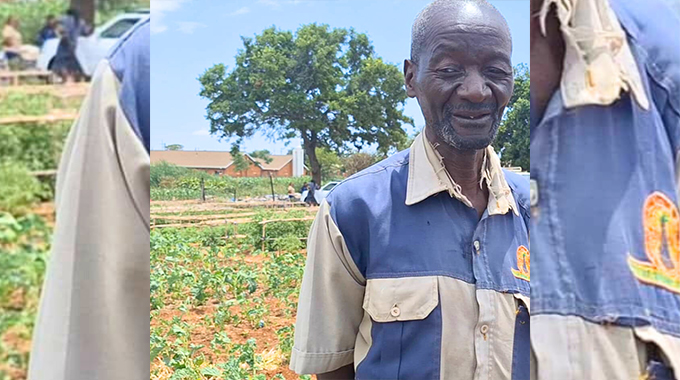
Rumbidzayi Zinyuke, [email protected]
Seventy-four-year-old Mr Sabelo Ndlovu surveyed his garden with a twinkle in his weathered eyes.
Rows of vibrant green okra plants stretched before him, with almost ready green beans on one side and row upon row of tomatoes and kovo vegetables on the other.
He wasn’t always a farmer, but life had dealt him a harsh hand, leaving him to take care of his orphaned grandchildren.
Hunger had gnawed at their bellies, a constant companion that stole their smiles.
Until Mr Ndlovu was chosen to be part of a new community project which sought to establish a nutrition garden where the vulnerable members of the community could grow various crops for their sustenance. They could sell the excess to get an extra income.
For Mr Ndlovu, this wasn’t just any garden; it was a beacon of hope. Where his livelihood became anchored.
And so was it for 58 other residents of Nkulumane suburb who benefitted from the Khulumusenza Nutrition Garden.
The participants were chosen from among the elderly, persons with disability, widows, orphans and youths in this community.

Together, they learnt from extension officers and other development partners how they could transform these small barren patches of land into a vibrant life-giving garden.
“When this garden started, there were only eight men and the rest were women. We got in because the organisations that were assisting us wanted those who were most vulnerable and I had orphans to take care of. We did not mind that there were only a few of us among many women. But we needed to have something to do so that we could have a source of livelihood and not just wait to get food handouts,” he said.
Along the way, many of the original members of this community garden died while some grew older and could no longer continue working the land.
Mr Ndlovu is now the only surviving male founding member but that has not deterred him from working in his garden.
“We grow our vegetables and other cash crops like tomatoes and beans. Whenever we have enough water, we can always sell the excess but we are no longer starving but getting a good balanced meal from this garden on a daily basis,” he added.

Khulumusenza Nutrition Garden is one of 54 community gardens dotted across the city of Bulawayo where residents are nurturing more than just vegetables – they are cultivating hope, health, and brighter futures.
The nutritional gardens, spearheaded by various organisations in partnership with the Government and Bulawayo City Council, are havens of resilience in a landscape often marked by food insecurity.
Mrs Georgina Manda who chairs the Khulumusenza community garden committee said not only had the project made a positive impact on their incomes, but it had ensured that they had nutritious food on their tables every day.

“We started this garden in 2006 after it was identified that most of us had no access to nutritious foods hence it was decided that we should have these gardens so that we grow our own nutritious food. We work with extension officers who assisted us in coming up with a crop rotation schedule so that we maintain the fertility of the soil,” she said.
The impact of the gardens has transcended individual households as they foster a sense of community, bringing people together to learn, share resources, and support one another. Knowledge about sustainable farming practices is passed down, empowering residents to become stewards of their own food security.
This is the same model being implemented at Sizinda Green Garden where 120 members of the community from Sizinda, Tshabalala and Tshabalala extension suburbs are also growing their own food.
The chairman of this garden, Mr Jacob Njiva said the nutrition gardens were achieving their desired target to improve the food security at the household level while also increasing their disposable incomes.
“Since we started this programme, we have seen great change in our livelihoods. We are getting good food from the crops we grow and we also get money from the crops that we sell. Some of our members even get up to US$50 per month just from selling their produce,” he said.

These gardens have come about as a response to the needs identified by the Zimbabwe Livelihoods Assessments which are conducted every year.
The Assessment is key in coming up with estimates of the country’s population that is likely to be food insecure, their geographic distribution and the severity of their food insecurity.
Ms Tatenda Mavhunga, a nutrition officer at the Food and Nutrition Security department of the Council said it was good to note that communities were already coming together to try and address some of the challenges they faced in terms of food security and malnutrition.
“An important source of nutrition is diversified cropping so because most people eat what they plant, they are able to have diversified diets in their households. We are the implementers of the urban food and nutrition security committees which are mostly responsible for coming up with solutions that have to do with food security and malnutrition. In these committees, there are different sectors that are working together, planning, monitoring and evaluating together and providing technical advice on some of the projects that we are seeing here,” she said.
Bulawayo City Council has also been instrumental in availing land for these gardens through its urban agriculture policy
According to Mr Clinton Ncube, a social worker with the Council, the urban agriculture policy had been developed to identify the needs within the communities, particularly the vulnerable populace, and find ways that they could grow any food that would supply the nutrition component within their households.
“We have numerous gardens dotted around the city. The component of these nutrition gardens is mainly made up of a vulnerable populace we are talking about the elderly, persons with disability, child-headed families and families of the chronically ill. We encourage the farmers to plant crops that can provide the basic nutrition but also provide income for other needs like education and health,” he said.
The Zimbabwean Constitution lays the groundwork for the realisation of food and nutrition security by recognising the right to life, water, and promoting sustainable development. Additionally, the state’s responsibility to encourage food production, secure reserves, and provide social assistance further strengthens the commitment to food security for all.
Article 15 states that “The State must: (a) encourage people to grow and store adequate food; (b) secure the establishment of adequate food reserves; and (c) encourage and promote adequate and proper nutrition through mass education and other appropriate means”.
The National Development Strategy 1 (NDS1) seeks to fulfill this clause as it has food and nutrition security as a central pillar, recognising its critical role in achieving the overall goal of becoming an empowered and prosperous upper-middle-income society by 2030.
To achieve this, the Government has implemented a multisectoral approach through which Government agencies as well as non-governmental organisations and other partners work hand in hand to ensure long-term support for nutrition gardens beyond initial setup. They have been bringing diverse perspectives to cater to the specific needs of various communities within Bulawayo.
Mrs Tsvakai Marovatsanga, acting director in the Ministry of Local Government said the set-up of nutrition gardens was being coordinated in a way that encouraged sustainability.
“Through the Department of Social Development, we coordinate these gardens in partnership with the Bulawayo City Council and the Food and Nutrition Security department here in Bulawayo. These gardens have had a great impact on our communities because they keep themselves busy and they sell these vegetables whenever it is possible to sell. With our industries down, the youths also have something to do. We want to make sure that the youth contribute to the development of our nation as espoused in our National Development Strategy 1,” she said.
While challenges of water scarcity, limited resources, and climate change impact negatively on these community gardens back, the spirit of resilience and collaboration prevails. The communities are advocating for improved water systems, seeking partnerships, and adapting their practices to overcome obstacles.
And as these gardens continue to bloom, they offer a glimpse into a more sustainable and equitable future, where even the most vulnerable can flourish.



 Online Reporter