Online Reporter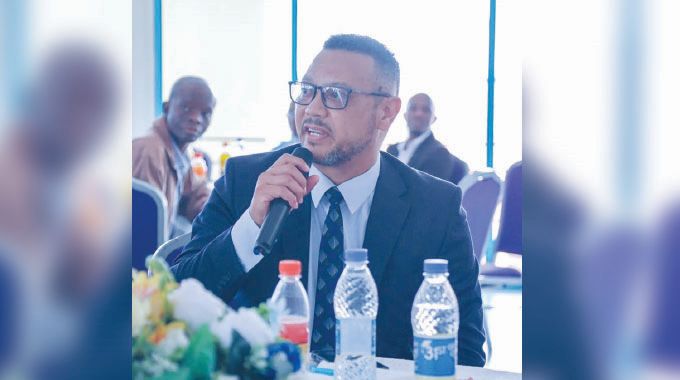
Judith Phiri, Zimpapers Business Hub
BULAWAYO businesses have expressed optimism and are predicting positive revenue growth for 2026 on the back of Government’s ease of doing business initiatives.
A number of initiatives were introduced in 2025 and most of them will start being implemented this year (2026) to simplify processes for businesses, ultimately fostering a more conducive environment for economic growth.
At the beginning of 2025, President Mnangagwa expressed concern over the high level of levies, licences, fees and permits levied by Government departments, saying they raised the cost of doing business in Zimbabwe.
During the course of last year, Cabinet considered and approved the review of levies, licences, fees and permits on business by Ministries, Departments and Agencies of Government.
In an interview, hopeful of a positive business growth in 2026, Zimbabwe National Chamber of Commerce (ZNCC) Matabeleland Chapter past vice-president and businessman, Mr Louis Herbst, said as they move into the New Year, they were cautiously optimistic.
“The recent National Budget, now in force following the President’s assent, has provided a clearer fiscal framework and a degree of policy anchoring that many businesses have been seeking,” he said.

“The tone from Government suggests a continued focus on macro-economic stability, productivity and private-sector participation, which is broadly welcomed.”
Mr Herbst said from discussions and commentary by economists on social and professional platforms, there was a general agreement that stability has improved and that projected growth, while modest, offers a workable base for planning.
He said inflation control and fiscal discipline are seen as positive signals, particularly for longer-term investment decisions, while some analysts also caution that the budget leans heavily toward revenue mobilisation, with limited immediate relief for households and smaller enterprises.
“Overall, the consensus across economists, business leaders and operators is that 2026 presents opportunity, but only for disciplined, adaptive, and well-structured enterprises,” said Mr Herbst.
“The optimism is real, but it is conditionally dependent on consistent policy implementation, improved confidence in the operating environment, and tangible support for productive sectors of the economy,” he added.“The mood is constructive, measured and alert to risk, which in itself reflects a more mature and grounded business outlook going into the year ahead.”
As micro, small and medium enterprises (MSMEs) continue to dominate the economy, Bulawayo Chamber of SMEs has said the year 2026 presented a number of opportunities.
This comes at a time when Bulawayo Metropolitan Province continues to outpace national averages in the formalisation SMEs, boasting a formalisation ratio of 44 percent, double the national average of 22 to 23 percent.
Bulawayo Chamber of SMEs vice-chairperson, Ms Sithabile Bhebhe, said they were optimistic that 2026 will be a better year for business.
“We are optimistic about the new year and looking forward to fruitful production. We also have a number of projects and programmes in the pipeline for 2026 that are critical for the MSMEs as they eye the global market,” she said.
Ms Bhebhe said they will also capitalise on key events that take place in Bulawayo such as the Zimbabwe International Trade Fair (ZITF), Mining Engineering and Transport Expo (Mine Entra) and the Africa Infrastructure and Built Environment Conference and Expo (AfriConfex), among others, which provide MSMEs opportunities to grow their enterprises and generate the much-needed income.
Ms Bhebhe said such events were a major boost for business in the city, as well as businesses in various sectors.
Zimbabwe’s MSMEs are a huge economic force, contributing over 60 percent to the country’s gross domestic product (GDP), employing millions (around 4,8 million full-time) and making up 90 percent of businesses, with recent reports highlighting their critical role in growth, value addition, and employment.
Economic analyst, Mr Reginald Shoko, said Zimbabwe’s business outlook for 2026 is marked by cautious optimism, predicated on the sustained implementation of pivotal economic reforms.
“The Government’s continued transition towards a market-driven foreign exchange system via the Zimbabwe Gold (ZiG) currency is the primary catalyst, aimed at mitigating hyperinflation and reinstating monetary stability,” he said.
“Successful implementation could foster trust, reduce transactional friction and lure foreign investment. Key sectors such as mining (notably lithium and gold), agriculture and tourism offer substantial growth prospects, capitalising on the country’s rich natural resources.
“Moreover, efforts to settle legacy debts and enhance engagement with international financial institutions may unlock fresh credit lines. However, this optimism is precarious, contingent on consistent policy, political stability and tangible improvements in governance and the rule of law.”
Mr Shoko said in 2026, business sentiment will likely follow a dual trajectory, promising opportunities for early movers in strategic sectors, contrasted with a challenging operating environment for the broader economy, while the extent of optimism will directly correlate with the Government’s commitment to irreversible economic and institutional reforms.
Meanwhile, a study for evidence-based policymaking for the resuscitation of Bulawayo’s industrial base and operationalisation of special economic zones (SEZs) is set to be commissioned, Finance, Economic Development and Investment Promotion Minister Professor Mthuli Ncube announced recently.
This comes as plans gather momentum for the proposed Bulawayo Industrial Park, an initiative expected to position the city as a springboard for industrialisation, attract massive investment inflows, create jobs across multiple sectors and drive broader regional transformation.
The project dovetails with the wider industrialisation aspirations of the Southern African Development Community (SADC) and is aimed at contributing meaningfully to socio-economic growth, particularly for Bulawayo and its surrounding areas.