Online Reporter
Raymond Jaravaza, Sunday News Reporter
THE Bulawayo City Council (BCC) can only use the money generated from its parking management system to rehabilitate areas where its partner, Tendy Three Investments (TTI), has jurisdiction over.
This means the local authority can only improve parking bays and patch potholes in the area bound by 3rd Avenue to 15th Avenue and Lobengula Street to Samuel Parirenyatwa Street.
The local authority entered into partnership with TTI on 18 February 2022 in a parking management system under a Build and Operate Transfer facility (BOT) partnership. TTI pockets 70 percent of the revenue while remitting 30 percent to the council.
During the budget presentation last Tuesday, the acting chairperson of the Finance Committee, Councillor Dumisani Nkomo, disclosed that from January to August council recorded income from parking operations amounting to US$558 336, R140 398, Pula 8 107 and ZiG5 267 286 under its partnership with TTI.

To date, 6 978 parking bays have been marked under this scheme.
Clr Nkomo cited the Urban Councils Act (Chapter 29:15), Sections 189–190 as legal guidance for usage of parking fees.
In an interview after the budget presentation, BCC Director of Finance Mr Tennyson Mpunzi, explained how the funds were used.
“We have been able to resuscitate or re-work the parking bays that motorists use in the city every day and are charged for by TTI. The other portion of the money was used for pothole patching in the city centre.
“When Zinara (Zimbabwe National Roads Agency) disburses funds, council does not immediately receive that money, but it’s important to note that council has to meet its obligations in terms of paying suppliers and settling outstanding debts.
“This is where some of TTI money comes in. We take part of that money to pay suppliers to avoid incurring interests, a situation that we try to avoid as council, while waiting for Zinara funds,” said Mr Mpunzi.
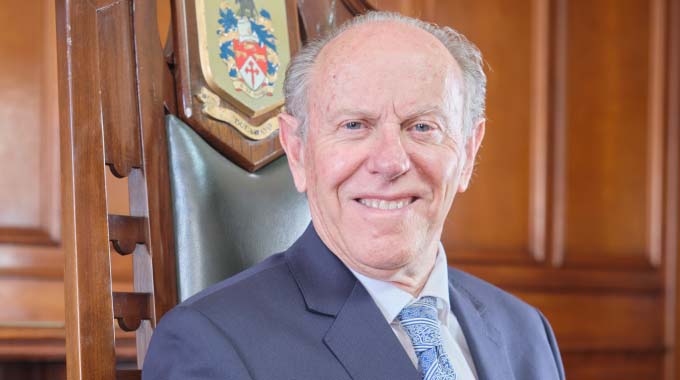
Bulawayo Mayor Councillor David Coltart also chipped in explaining the scope of work that council is allowed to use the TTI funds.
“In terms of the agreement council has with TTI, we can only utilise those funds in the areas where TTI operates. We can’t take those funds and for example, use them in Luveve where TTI doesn’t operate in,” said Clr Coltart.
Meanwhile, in its 2026 budget proposal council said 31 percent of its US$224 million budget will be spent on Water and Sanitation, which translates to US$70 251 504 while Governance and
Administration was allocated US$60 472 704 that translates to 27 percent expenditure.
“On governance and administration council is proposing to utilise US$60 million under this programme.
US$16,7 million will be spent on capital projects while US$43,7 million will be spent on recurrent expenditure.
“On water, sanitation and hygiene council is proposing to utilise US$70 million. US$20million will be spent on capital projects while US$50 million will be spent on recurrent expenditure. Council is proposing to utilise US$50,662 million on social services of which US$22 million will be spent on capital projects while US$28 million will be spent on recurrent expenditure.
“On roads council is proposing to utilise US$18,9 million, of which US$6,4 million will be spent on capital projects while US$12,5 million will be spent on recurrent expenditure,” said Clr Nkomo.
Council has proposed spending US$21,5 million on public safety and security services, which covers emergency services, security services and public lighting and according to Clr Nkomo US$1,7 million will be spent on capital projects while US$19,8 million will be spent on recurrent expenditure.
“Security services and emergency services are labour intensive and most of the recurrent expenditure will address manning levels and maintenance of equipment. On natural resources, conservation and management council has set aside US$2 836 85 to conserve and green the city. The amount will go towards resuscitating council’s parks dotted around the City bringing them back to their glory as well as the sinking boreholes to water the parks,” he said.
In line with Council’s vision of becoming a smart city, US$7,9 million has been set aside to procure hardware such as personal computers, laptops, tablets, printers, servers and other related equipment to enhance council’s digital interaction with stakeholders.
“Over and above the computer hardware council proposes to spend a further US$1,9 million on improving the network connectivity in the city.”