

 Online Reporter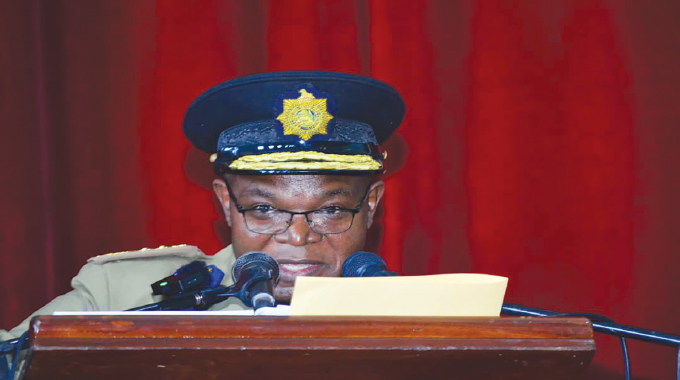
Peter Matika [email protected]
ORGANISED criminal syndicates are increasingly exploiting Bulawayo’s strategic position as a regional transport and commercial gateway to traffic dangerous drugs, smuggle stolen vehicles and prohibited goods and orchestrate armed robberies, prompting police to intensify crime prevention campaigns across the city.
Launching a crime awareness campaign in Bulawayo yesterday, national police spokesperson Commissioner Paul Nyathi said criminal networks were constantly adapting their methods, compelling law enforcement agencies to continuously review and strengthen policing strategies to counter emerging threats.
He said while Bulawayo’s location as a key link to the Southern African region had boosted trade, investment and economic activity, it had also made the city attractive to organised criminal syndicates operating along regional transport corridors.
“Bulawayo remains an important commercial gateway linking the country with the Southern African region. While the city’s strategic location promotes economic growth, it also presents opportunities for organised criminal syndicates,” said Comm Nyathi.
“Criminals continue to change their methods and, as police, we are constantly reviewing and strengthening our policing strategies to stay ahead of these evolving threats.”
Comm Nyathi urged residents to become active partners in crime prevention by reporting suspicious activities, sharing information with law enforcement agencies and participating in community policing initiatives.
“Crime prevention is a shared responsibility which requires active participation by every citizen. We therefore continue to encourage members of the public to work closely with the police by reporting crime, sharing information and participating in community policing initiatives,” he said.
Comm Nyathi identified drug and substance abuse as one of Zimbabwe’s most serious security challenges.
He said the increasing availability of crystal methamphetamine, commonly known as mutoriro, cocaine, cannabis, illicit alcoholic beverages and codeine-based cough mixtures such as BronCleer was fuelling criminal activity.
Comm Nyathi said many of the drugs were being smuggled into Zimbabwe through illegal crossing points and sophisticated cross-border criminal networks.
“These dangerous substances are destroying the future of the country’s youths. Many young people who become addicted resort to theft, robbery, assault and other criminal activities to finance their addiction. Families are being torn apart, schools are losing promising students and communities are living in fear because of drug-related crime,” said Comm Nyathi.
He said Bulawayo had not been spared from the drug scourge, with police regularly arresting suspects in possession of dangerous drugs in suburbs including Makokoba, Mzilikazi, Nkulumane, Pumula, Cowdray Park and the central business district.
“We urge parents, guardians, teachers, churches, traditional leaders and community organisations to play a greater role in protecting young people from drug abuse by identifying warning signs early and seeking professional intervention,” he said.
Comm Nyathi said the city’s proximity to regional transport corridors continued to expose it to syndicates involved in smuggling BronCleer, narcotics, stolen motor vehicles and other prohibited goods.
He said police, working with other security agencies, remained committed to dismantling the criminal networks but stressed that public cooperation was critical to the success of law enforcement operations.
The police spokesperson also expressed concern over armed robbery cases targeting banks, financial institutions, wholesalers, supermarkets, service stations, business premises and individuals transporting large sums of money.
He said organised robbery gangs often conducted surveillance before launching coordinated attacks, with some suspects using firearms and other dangerous weapons.
Comm Nyathi urged businesses and members of the public to reduce the risks by embracing electronic banking, avoiding carrying large sums of cash, requesting police escorts when transporting substantial amounts of money and investing in security infrastructure such as CCTV cameras, alarm systems and adequate lighting.
He said police were also dealing with cases involving unlawful possession of firearms, housebreaking, motor vehicle theft, stock theft in peri-urban areas, cable theft, copper theft and violent robberies.
Comm Nyathi commended Bulawayo residents for maintaining one of the country’s most organised urban transport systems but warned that pirate taxis, commonly known as mushikashika, continued to endanger lives through speeding, reckless driving, overloading and operating from undesignated points.
“We urge motorists to obey traffic laws by avoiding speeding, reckless overtaking, driving under the influence of alcohol or drugs and using mobile phones while driving, while encouraging pedestrians to use designated crossing points,” he said.
Comm Nyathi also urged residents to reject a culture of silence by reporting criminals, drug dealers, illegal firearms and suspicious activities, assuring them that all information would be treated confidentially.
He further urged members of the public to report any misconduct by police officers, saying professional policing must be anchored on integrity, accountability and public confidence.
“We must all work together to protect our children from drugs and substance abuse, combat organised crime, reduce armed robberies, promote road safety and create an environment that attracts investment, tourism and sustainable economic development,” he said.
“We also urge every resident to become the eyes and ears of the police as we pursue innovative policing strategies aimed at building safer communities and supporting the country’s Vision 2030 development agenda.”



![The scope of domestic violence [part 1]](https://www.heraldonline.co.zw/wp-content/uploads/sites/2/2022/03/Violence.jpg)