Online Reporter
Peter Matika [email protected]
THE City of Bulawayo is showcasing its housing and urban development agenda on the global stage after a high-level delegation travelled to Baku, Azerbaijan, for the 13th Session of the World Urban Forum (WUF13), where cities and governments from across the world are discussing solutions to growing urban challenges.
The Bulawayo delegation is part of Zimbabwe’s team participating in the international gathering, which is being held under the theme: “Housing the World: Safe and Resilient Cities and Communities.”
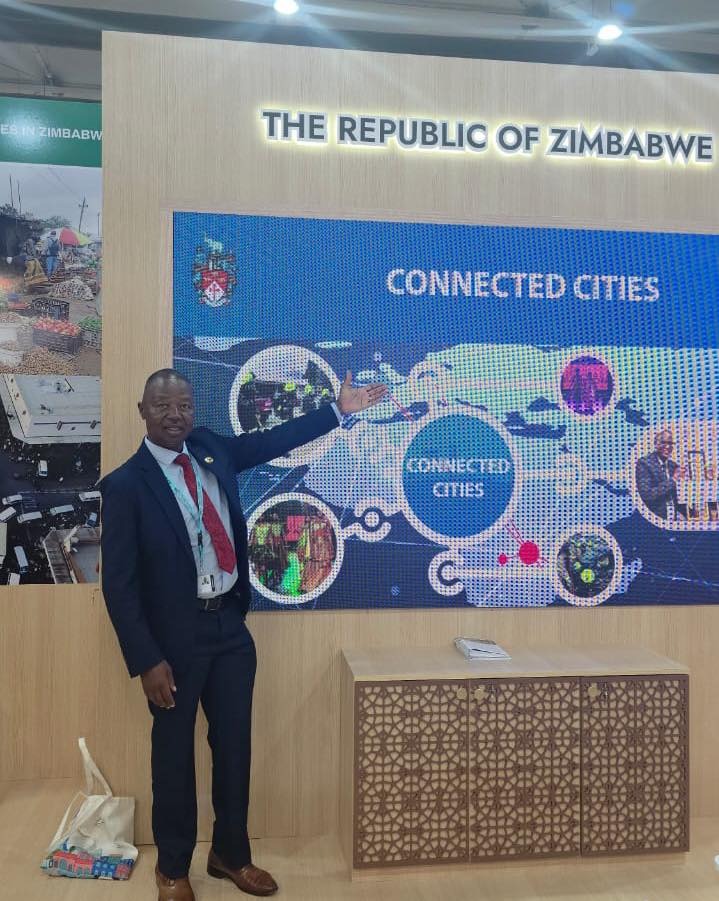
The city is exhibiting alongside other urban local authorities and Government ministries through the Ministry of National Housing and Social Amenities at the Zimbabwe Pavilion under the sub-theme: “Housing Zimbabwe: Building Resilient Communities for the Future.”
The global forum comes at a time when cities across the world are grappling with rapid urbanisation, housing shortages, ageing infrastructure and climate-related pressures, issues that continue to affect many local authorities in Zimbabwe, including Bulawayo.
In an interview from Baku, Acting Mayor Councillor Edwin Ndlovu said the city’s participation presents an opportunity to share experiences and learn from international best practices on sustainable urban development.
“The Bulawayo team comprising the Acting Mayor, Councillor Edwin Ndlovu, the Town Clerk and Town Planning Director is in Baku, Azerbaijan for the 13th Session of the World Urban Forum being held under the theme; ‘Housing the World: Safe and Resilient Cities and Communities’,” he said.
Cllr Ndlovu said discussions at the forum are centred on creating inclusive and resilient urban settlements capable of withstanding future social, environmental and economic challenges.
Cllr Ndlovu said Zimbabwe has already taken major policy steps towards addressing housing and settlement challenges through the development of frameworks aimed at modernising urban growth.
“The Government of the Republic of Zimbabwe officially launched the Zimbabwe National Human Settlements Policy in 2020, creating a framework for coordinated housing and settlement development,” he said.
Cllr Ndlovu said while the country had made policy strides, infrastructure deficits remain a significant challenge.
“Zimbabwe has 92 local authorities, composed of 32 urban local authorities and 60 rural local authorities. In all these local authorities there is a huge deficit of offsite infrastructure, particularly for water and sewer treatment and transmission as well as proper roads and public lighting.
“The high urbanisation rate has put a strain on existing infrastructure, some of which has outlived its useful life expectancy,” said Cllr Ndlovu.
Urbanisation has increasingly become one of the country’s pressing concerns, with cities experiencing rising populations and increasing demand for housing and services.
According to the 2022 Population and Housing Census Report, Zimbabwe recorded a home ownership rate of 58,6 percent while rental housing stood at 19,3 percent, highlighting both the country’s strong culture of home ownership and the continuing demand for housing alternatives.
Cllr Ndlovu said the issue of land governance and tenure security also remained critical in urban development.
“In Zimbabwe, land for human settlements development is owned by Central Government, local authorities and the private sector,” he said.
Experts have often identified land access and tenure systems as key determinants in ensuring sustainable urban planning and investment in housing.
On affordability, Cllr Ndlovu said Bulawayo has maintained programmes aimed at ensuring ordinary residents have access to housing opportunities.
“Bulawayo provides social housing, which is generally regarded as affordable. Land for high-density areas is sold at intrinsic value rather than market price. Prices vary according to location. The private sector, who are the main drivers of housing delivery, normally dispose of land at market value,” he said
Bulawayo has over the years pursued several housing development initiatives as part of efforts to reduce housing waiting lists and improve living standards.
The city has also been under pressure to modernise infrastructure amid growing population demands and recurrent service delivery challenges, including water shortages and ageing sewer systems.
Cllr Ndlovu said participation at the World Urban Forum is expected to expose city officials to global models on urban renewal, housing delivery and resilient infrastructure systems while also providing a platform to market Zimbabwe’s urban development ambitions.
The forum, which brings together policymakers, urban planners, development experts and local authorities from around the world, is regarded as one of the leading international platforms on sustainable urbanisation.
For Bulawayo, city officials say the engagement represents more than just participation; it is an opportunity to position the city within global conversations shaping the future of urban living and community resilience.