Patrick Chitumba in Gweru
PRESIDENT Mnangagwa has called for the continued modernisation of the Air Force of Zimbabwe (AFZ) through advanced training, technology transfer and skills development, saying a highly skilled defence force is critical to safeguarding national security and achieving the country’s Vision 2030 targets.
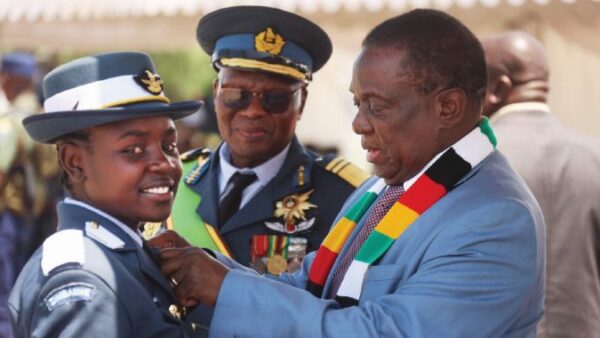
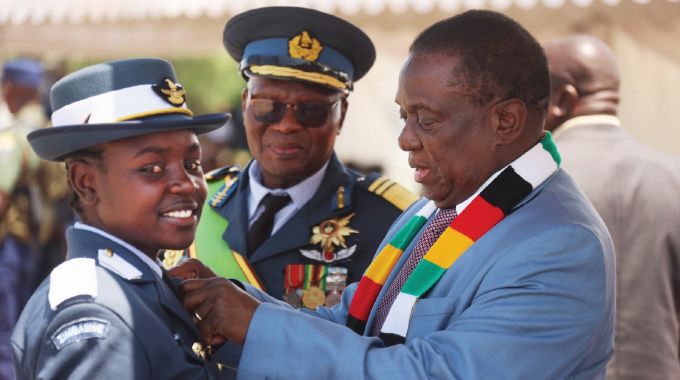
The President, who is also the Commander-in-Chief of the Zimbabwe Defence Forces (ZDF), made the remarks yesterday while conferring flying wings on 10 newly qualified AFZ officers.
The officers, nine males and one female, completed an intensive training programme combining military instruction, academic studies and practical flying, qualifying them to take up responsibilities as combatant pilots in the ZDF.
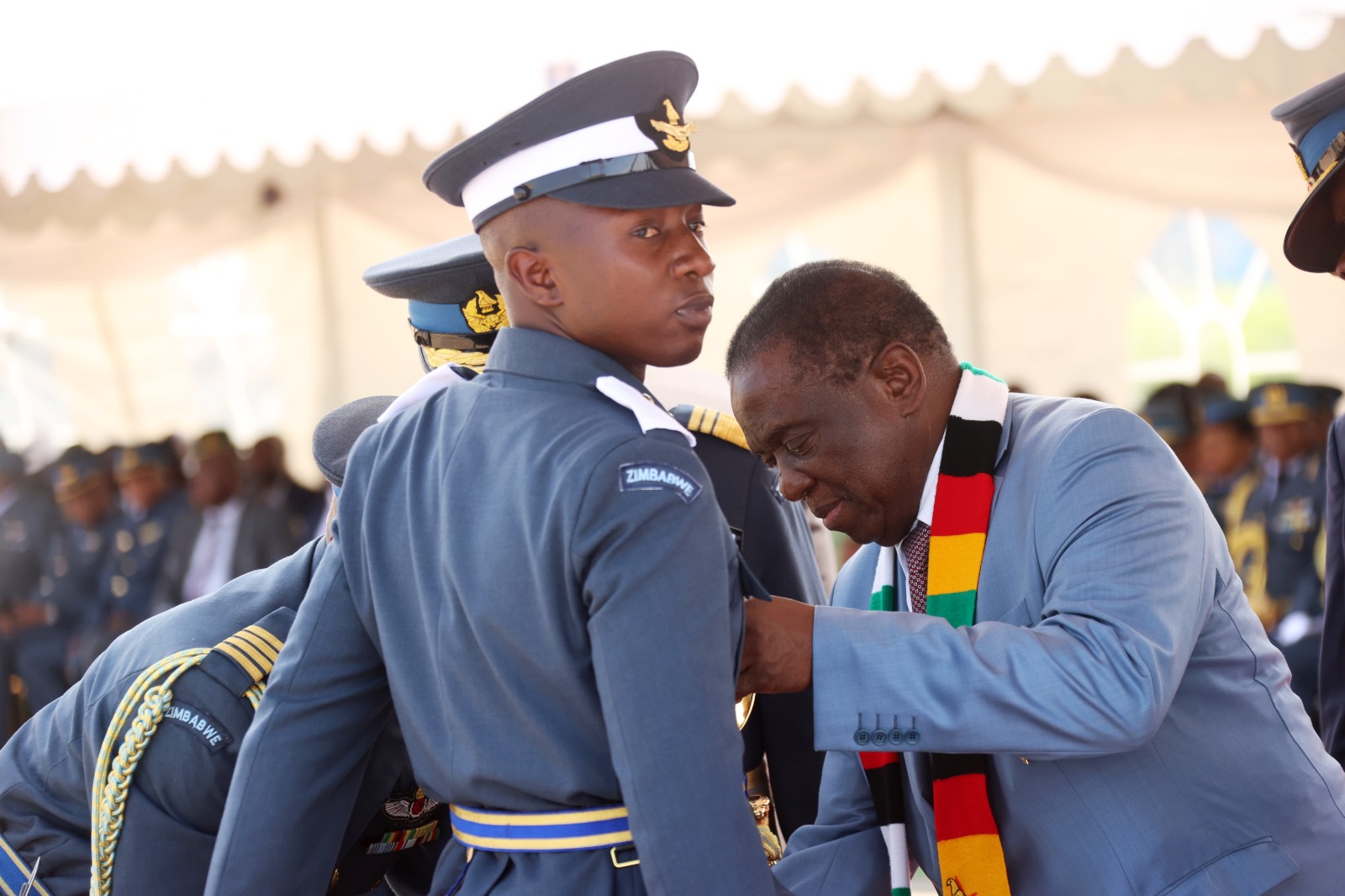
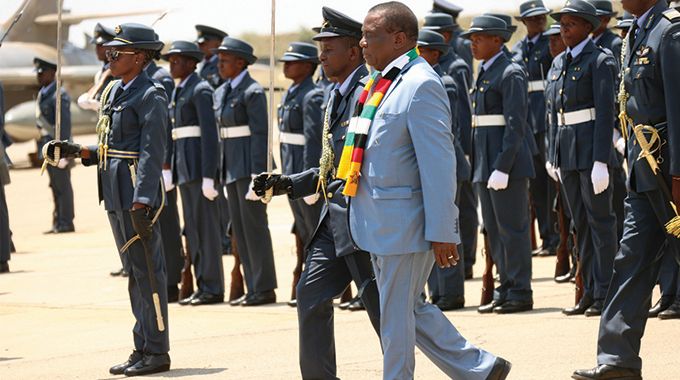
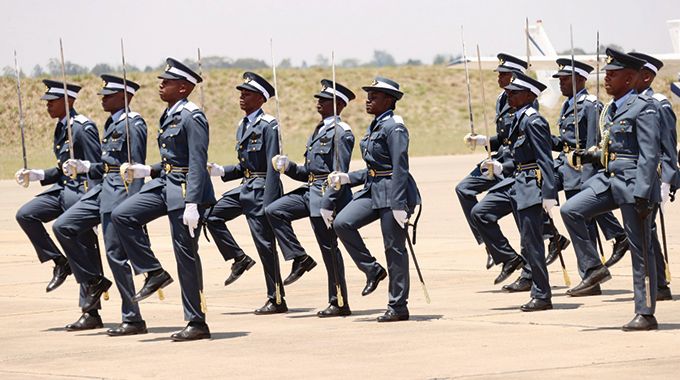
Addressing the commissioning and wings presentation parade for Number 70 Pilot Training Course at Josiah Tungamirai Air Force Base in Gweru, President Mnangagwa said the changing nature of military operations, particularly the growing use of artificial intelligence, required continuous upgrading of training programmes and technological capabilities.
“It is my singular honour and privilege to officiate at this commissioning and wings parade for number 70 pilot training course. I commend our National Strategic School of Flying Training, which is Josiah Tungamirai Air Force Base, for its renowned tradition of excellence and having this time churned out 10 officers whom I have duly conferred flying wings,” he said.
President Mnangagwa said earning a commission as an officer in the ZDF and qualifying as a combatant pilot was a remarkable personal achievement and a major national milestone.
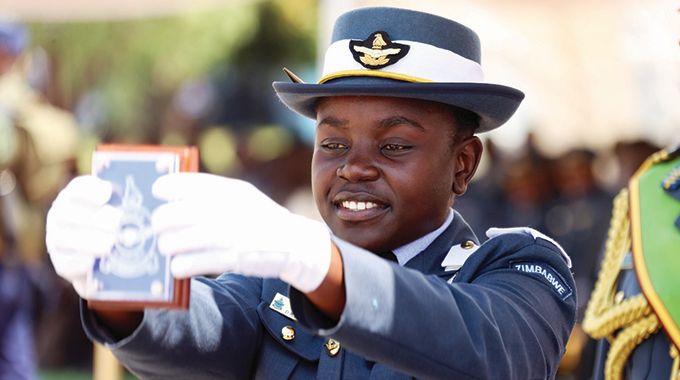
“For the commissioned pilots on parade, this is a proud moment for you and your families. As graduates, you will attest that the journey to earning these wings was a steep and turbulent climb,” he said.
The President revealed the course commenced on 8 November 2021 with 12 flying officer cadets, comprising one female and 11 males.
One cadet was discharged, while another died alongside an instructor pilot in an air crash.
“We pay our condolences to them.
On behalf of government, and indeed on my own behalf, I once again express deepest heart-felt condolences to the families of the deceased instructor and student pilot. May their souls continue to rest in eternal peace,” he said.
President Mnangagwa said the flying training syllabus had been amended and upgraded to a degree programme in response to technological developments, including the use of artificial intelligence and emerging trends in air operations.
The programme is being administered by the Zimbabwe National Defence University, with Number 70 Pilot Training Course becoming the second cohort to complete the degree programme at the School of Flying Training.
“It is pleasing that Number 70 Pilot Training Course is the second cohort to successfully complete the degree programme at the School of Flying Training,” he said.
The President said the course was conducted in three phases, namely ground school, academic studies and basic flying training. He said the structured approach ensured that complex military skills were imparted progressively.
“The ground school phase of the course introduced the officer cadets to basic military knowledge and skills. During this phase, the officer cadets were nurtured to internalize and obey lawful commands, develop psychological resilience under extreme stress, and adapt to the core values of the Air Force of Zimbabwe,” he said.
During the academic phase, the cadets undertook a Bachelor of Science Honours Degree in Aviation Sciences, Aircraft Systems and Operations.
The modules included navigation, air law, aerodynamics, human factors, radar technology and air traffic management.
“Armed with theoretical aspects of aviation, the officer cadets progressed to the practical phase where they were attached to Number 6 Squadron.
During this critical phase, the student pilots were expected to accumulate a total of 120 flying hours, covering aspects such as general handling, circuits, instrument flying, navigation, formation flying, and aerobatics,” said the President.
President Mnangagwa said the recruitment and training of new pilots was in line with the Second Republic’s development agenda, as outlined in the National Development Strategy 2, which identifies human capital development as a critical pillar in achieving Vision 2030.
He commended the AFZ for taking deliberate steps to upskill its personnel through technology transfer agreements, including those with equipment suppliers.
“An overhaul and maintenance facility established here at Josiah Tungamirai Air Force Base must continue to help build a pool of agile, competent, skilled young men and women of our country,” he said.
The President said the AFZ had, over the years, demonstrated gallantry and professionalism through military and humanitarian operations within and beyond Zimbabwe’s borders, contributing to the country’s international standing and supporting its foreign policy objectives.
He said the achievements should reinforce the Air Force’s legacy of excellence, while continued regional cooperation remained important in strengthening military aviation capabilities.
“Guided by the principle, I quote, “Zimbabwe is a friend to all and an enemy to none”, end of quote, it is commendable that the Air Force of Zimbabwe continues to cooperate with other regional air forces under the umbrella of the SADC Standing Aviation Committee.
The mandate of the committee is to enhance the military aviation capabilities of member states.
Under this regional initiative and envisaged mandate, training exercises are regularly being conducted to enhance interoperability of our forces in readiness to respond to any threats,” he said.
As Commander-in-Chief of the ZDF, President Mnangagwa said he was looking forward to the AFZ successfully hosting Exercise Blue Runde in 2027.
“The exercise will allow the air forces to train on strategy, planning, and execution of operations. Additionally, the Air Force of Zimbabwe is also set to perform displays at the Africa Aerospace and Defence Exhibition in South Africa,” he said.
The President said the military, including the newly commissioned pilots, must appreciate the high expectations that came with their new responsibilities.
“The nation expects the highest standards of professionalism, precision, and above all, discipline. I implore you to be patriotic and loyal, upholding the values of exemplary leadership, commitment to duty, and advancement of our national interests,” he said.
He urged the graduands to refrain from self-destructive behaviour, including the abuse of drugs and other harmful substances.
President Mnangagwa also emphasised that the military profession was anchored on teamwork and unity, adding that there were no losers or winners among the graduands.
He commended the Ministry of Defence, the ZDF Commander, the AFZ Commander and the training team at Josiah Tungamirai Air Force Base for supporting the development of military personnel through training and capacity building.
The President was accompanied by Defence Minister Oppah Muchinguri-Kashiri, her deputy Cde Levy Mayihlome, service chiefs and senior Government officials.