Online Reporter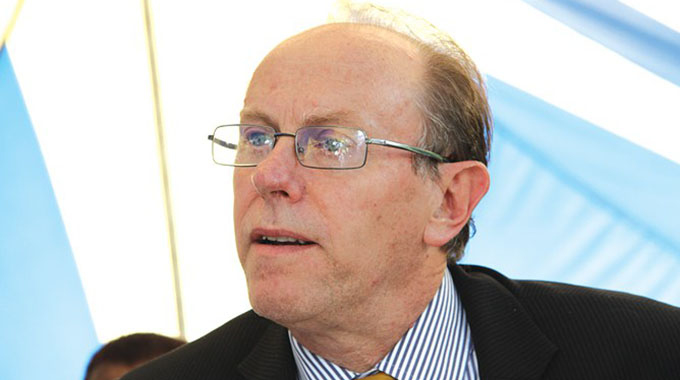
Mthokozisi Ncube, [email protected]
BULAWAYO and Gwanda councillors on Monday declined to sign the “Integrity Pledges” presented by the Zimbabwe Anti-Corruption Commission (Zacc), citing a poor understanding of the documents.
Only Plumtree Town councillors signed the pledge.
“We cannot sign something that we don’t understand,” said one of the councillors.
Bulawayo mayor, Councillor David Coltart, also backed the councillors, stating that the invitation to Zacc had been initiated by management and that councillors were not very clear about what it entails.
“Our invitation was for a training workshop for management and the ethics committee. At no point was the signing of the pledge discussed,” he said. “I was only informed about the signing late on Friday afternoon, and the councillors were in an even worse position.”
Clr Coltart said councillors arrived at the meeting without a clear understanding of what they were expected to sign.
“I understand the principle of caveat scriptor to be cautious about what you sign. The councillors don’t want to sign something they have not read and understood in a calm and unrushed environment,” said the mayor.
He further noted that the ethics committee workshop was scheduled to run until Wednesday, after which councillors would hold their own internal workshop to fully understand the content before signing.
“We are absolutely committed to running this council ethically and supporting Zacc in its work. Part of being ethical is respect.
“Signing something without fully understanding it would be irresponsible,” said Clr Coltart.
However, Gwanda mayor Councillor Thulani Moyo signed the pledge but said those councillors who were unwilling to sign were free not to do so.
“Follow the example of Bulawayo. If you don’t want to sign, do not sign,” he said.
Earlier, officials from the three local authorities had attended integrity committee training hosted by Zacc at a local hospitality facility. The training brought together senior officials and committee members from the three councils and sought to strengthen governance, accountability, and corruption-prevention mechanisms.
Representing the City of Bulawayo, Mr Makhosi Tshalebwa outlined the council’s progress, challenges and expectations regarding the formation and operations of its Integrity Committee. He acknowledged that progress had been slow due to limited and inaccurate information on how integrity committees should be formed and operate.
The City of Bulawayo had four members in its Integrity Committee, namely the Chamber Secretary as chairperson, the Human Capital Director as secretary, the Finance Director, and the Acting Director of Works as committee members.
“Our outline included Integrity Committee membership, terms of reference, the Integrity Charter, the 2026 Work Plan, challenges, opportunities and achievements. We now understand that we can add more members to strengthen the committee and ensure wider departmental representation,” he said.
On the Integrity Charter, Mr Tshalebwa said a draft had been developed and would be circulated to management and departments for input before being tabled at a formal management meeting. The charter was expected to be presented to the General Purposes Committee in March and thereafter to full council for approval in early April.
“Our biggest challenge had been limited guidance. Most of us only knew about the investigations unit, yet prevention was equally important. This workshop helped us understand composition, functions and expectations,” he said.
Gwanda Municipality’s representative, Mr Hlupho Mhlanga, said the concept of integrity committees had not yet fully sunk across the organisation.
“Many employees remained unclear about the committee’s role, as reflected by numerous questions raised on internal platforms,” he said.
He highlighted that Gwanda had developed a detailed risk matrix identifying corruption-prone areas such as procurement, human resources, water provision, estate management and treasury. The municipality had also crafted action plans outlining mitigation measures, timelines, responsible officers and performance indicators.
An official from Plumtree Town Council, Mr Khumbulani Ncube, outlined significant progress in governance reforms saying the integrity committee had conducted quarterly meetings, developed and adopted comprehensive risk matrices for 2024 and 2025, and formulated action plans to guide integrity initiatives.
In his remarks, ZACC executive secretary, Advocate Shepherd Manhivi said the training and integrity pledge signing workshop marks a significant step towards strengthening integrity systems within local authorities, investigations and prosecutions are important.
“Corruption prevention remains equally critical, as it safeguards public resources, protects institutional reputations, and strengthens governance systems before failures occur,” he said.
Advocate Manhivi noted that local authorities were high-risk areas due to their roles in land allocation, procurement, and service delivery and stressed that integrity committees were essential governance mechanisms for identifying risks, strengthening controls, and promoting ethical conduct.
“The signing of integrity pledges demonstrates leadership commitment to transparency, accountability, and zero tolerance to corruption, aligning with the national vision of clean governance, improved service delivery, and sustainable development,” he said.
Responding to the presentations, ZACC officials Ms Memory Tagwireyi and Mrs Clara Nyakotyo commended the councils for their commitment to fighting corruption. They emphasised that the effectiveness of an Integrity Committee depended more on its composition than numbers, stressing the need to select individuals with integrity, professionalism and dedication.
ZACC has said that such training workshops equip officials with the knowledge and practical tools needed to prevent corruption, enhance compliance and improve service delivery, while promoting transparency, accountability and ethical conduct across all departments.