Online Reporter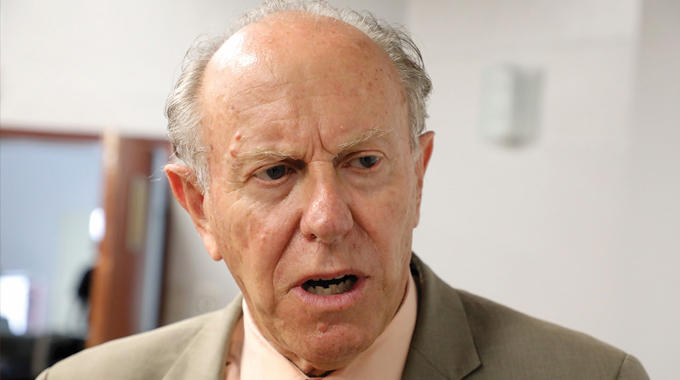
Sikhulekelani Moyo, [email protected]
BULAWAYO Mayor, Mr David Coltart, has said there is need to reimagine the city’s industrialisation focus and anchor it on low-hanging fruit industries after the majority of the yesteryear industrial firms folded.
Once Zimbabwe’s industrial hub, most industries that used to operate in Zimbabwe’s second largest city closed due to the effects of illegal sanctions.
The passage of time has also made some of the industries irrelevant or less competitive in a global village while others migrated to other cities across the country. The demise of many industrial companies in Bulawayo resulted in the loss of jobs for many people, driving unemployment rates higher across the country.
With the Government’s drive to reindustrialise the country, Mr Coltart said some of the industries were no longer relevant or able to withstand stiff global competition.
He said some industries survived in the past because Zimbabwe was a closed economy, with few imports finding their way into the domestic economy.
“The world is now different to that of the 1980s, many of the industries that were present in the city were designed for a closed economy that has been subjected to the United States sanctions. (Back then) it was very difficult to get imports in,” said Mr Coltart.
“Unfortunately, the world has moved on from that and the emergency in particular of China and its manufacturing capacity has affected strong economies like America and many jobs have moved from America to China.
“So, Zimbabwe is no different, and Bulawayo too, we need to embrace that reality as we seek to industrialise the city. We cannot hope to get the same industries we had in the 1970s and 80s as it will be very difficult for us to compete.
“We have to rethink the economy of the city, there is no doubt that there are some industries that can be redeveloped where we have a comparative advantage, where we can beneficiate certain products produced within Zimbabwe.
“For example, the textile industry, assuming we can take cotton production to where it was, there is a potential that we could have a vibrant textile industry.”
Mr Coltart said it would be difficult to bring back companies like Supersonic, which cannot compete with Chinese and Japanese giants in the electronic industry. However, he said the best way to reindustrialise the city was to lure multinational electronic companies to invest in the city and produce for the rest of Africa.
The city, he added, needed to come up with incentives to attract investors. Commenting on reimagining the city’s economy, Mr Coltart said the city had many idle spaces, which could be used as call centers to create new employment opportunities.
Mr Coltart also said new industries could be created in tourism by making the city more accessible through increased flights, which could drive the utilisation of hotels, lodges, and other facilities, creating new jobs.
To drive economic growth, the mayor said the Bulawayo City Council needed to create an attractive environment for doing business. This included guaranteeing the delivery of basic services like water to ensure a healthy and clean city and enforcing the rule of law to curtail vices like illegal vending and corruption.
He also said the Government should entrench devolution to decentralise more essential services so that companies bring back their headquarters to Bulawayo.
With the National Development Strategy (NDS 1) running its course this year, President Mnangagwa is on record saying its successor, NDS2, will focus on value addition and industrialisation, to grow the manufacturing industry from US$4 billion to over US$10 billion.
Bulawayo businessman and former Zimbabwe National Chamber of Commerce Matabeleland Chapter vice president, Mr Louis Herbst, said the city thrived as an industrial hub due to a confluence of factors that fostered a vibrant economic landscape.

The city also benefited hugely from its strategic location at the centre of essential transportation networks that facilitated trade, making it the ideal site for manufacturing and distribution.
Similarly, abundant natural resources that supported various industries, particularly in manufacturing and processing and the presence of key educational institutions that produced skilled labour made the city attractive to industrial firms.
“To effectively reindustrialise Bulawayo, a comprehensive approach is essential, involving collaboration among various stakeholders. One of the initial steps should be a thorough assessment of goods and commodities in demand, conducted locally and nationally and thereafter in partnership with SADC and the African Continental Free Trade Area,” said Mr Herbst.
“This will help to focus and identify opportunities for growth and key areas for improvement. Emphasising technological advancements such as artificial intelligence, robotics, and cybersecurity will be crucial for enhancing productivity and competitiveness.
“Industries must also determine whether to prioritise manufacturing for local market growth or focus on exports, as this strategic choice will guide their retooling efforts to ensure competitiveness in both sectors.”
He also said it was critical to implement stricter border controls to support the consumption of locally manufactured products, bolster the economy, promote industrial growth and create employment.
Mr Herbst also said to promote investment and stabilise the economic environment in Bulawayo and Zimbabwe in general, a minimum taxable wage policy should be introduced.
He said this initiative would not only benefit the Government by increasing its tax revenues but also drive economic growth and improve the livelihoods of citizens.
“Establishing a minimum wage would create a more appealing framework for formal employment, encouraging individuals to transition from informal trading to stable jobs,” he said.
“This shift would foster a more productive workforce and contribute significantly to the overall economic development of Zimbabwe and the region.”