Andile Tshuma, Zimpapers Reporter
THE re-industrialisation drive being spearheaded by the Second Republic is beginning to yield fruit in Bulawayo, with investments in manufacturing and infrastructure expected to strengthen the city’s productive capacity, create employment and open new opportunities in regional markets.
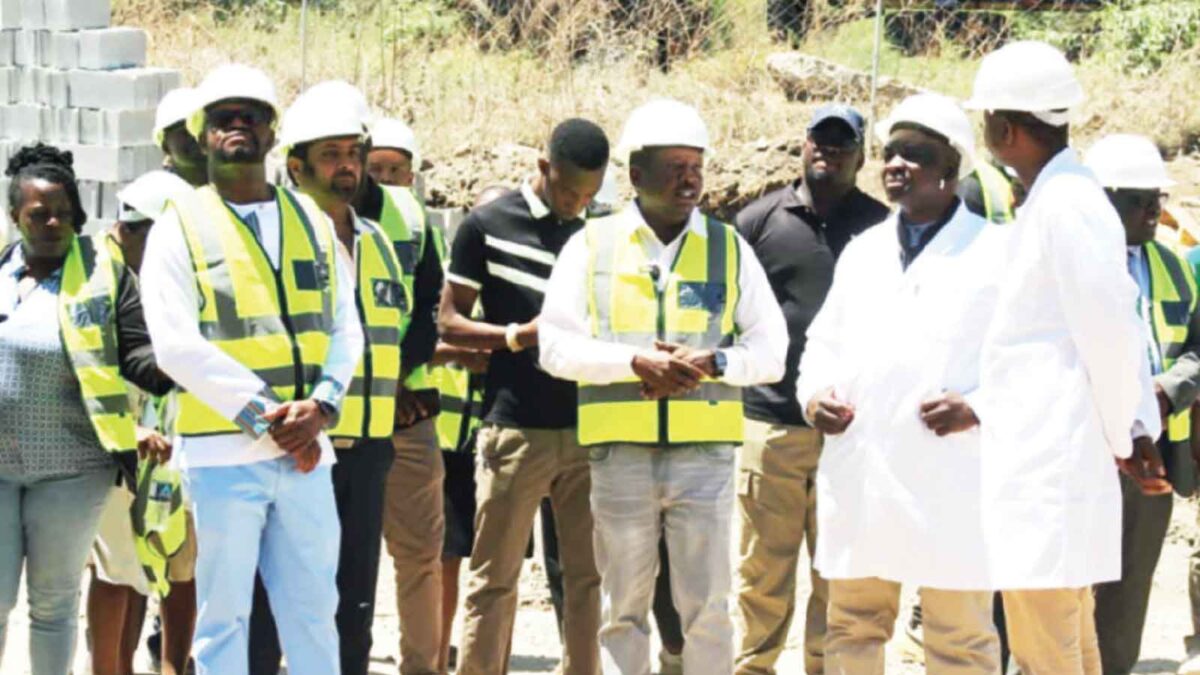
This emerged during a tour of key development projects by the Information, Publicity and Broadcasting Services Minister, Dr Zhemu Soda when he visited the ZITF Smart City Project, Fats and Feed Plant and Shumba Manufacturing to assess progress and their contribution to economic development.
The projects reflect renewed efforts to revive Bulawayo’s industrial base and position the city as a strategic business hub, particularly following Zimbabwe’s assumption of the chairmanship of the Common Market for Eastern and Southern Africa (COMESA).
Already, new investments in Bulawayo’s manufacturing sector have surpassed US$100 million in the past two years, with capacity utilisation rising to 51,2 percent.
Dr Soda said Government was keen to support businesses investing in high-end critical infrastructure in Bulawayo.
“The ongoing projects are a significant milestone in our efforts to strengthen Bulawayo’s industrial base, promote value addition and create employment. Government remains committed to supporting investments that expand local production, stimulate economic activity and contribute to the country’s industrialisation agenda,” he said.
At the ZITF Smart City Project, the minister was briefed on progress towards transforming the exhibition and business precinct into a modern commercial and investment destination.
ZITF chief executive officer Dr Nicholas Ndebele said the under-construction showgrounds retail centre project was part of efforts to modernise the city’s infrastructure and create an enabling environment for business and investment.
“Bulawayo has a long history as an industrial and commercial centre and initiatives such as the Smart City Project are important in positioning the city for the next phase of economic growth.
“We want to create infrastructure that responds to the needs of modern businesses, attracts investment and strengthens our capacity to host regional and international trade engagements,” he said.
Dr Ndebele said the project had also created employment for the local skilled and semi-skilled workforce, saying the contractor, Radx, was keen to offer employment opportunities to local artisans.
“We have been able to generate a lot of job opportunities here and this project will create up to 1 500 jobs by the time we complete. As of now, we have employed more than 400 people, and a significant portion of that number are locals,” he said.
“We have also extended the opportunity to females, while construction is mainly dominated by men. We do have women with various skills working on site, although I’m unable to give current figures.”
The minister also toured Fats and Feed Plant, where a major investment by Zimgold, the parent company, is underway.
Fats and Feed manager Mr Zacharia Mupachiki said the new plant was expected to commence production by December 2026, marking a significant addition to Bulawayo’s manufacturing capacity.
“This investment is an important milestone for the company and for Bulawayo’s industrial development. We are working towards completing the plant so that production can begin by December.
“The project will expand our production capacity and contribute to employment creation and the growth of the local manufacturing sector,” he said.
Engineer Takudzwa Sithole, a director at InkDraughting, the contractor involved in the project, said the company was committed to ensuring that young people benefited from opportunities created through major infrastructure and industrial investments.
He said beyond constructing the plant, projects of that nature provided opportunities for young people to participate in the economy, gain practical experience and develop skills.
“We have seen the importance of involving local young professionals and giving them the opportunity to demonstrate their capabilities in delivering major projects. This is our first time being art of a project of such magnitude right here in the city, and we are proud of the milestone,” said Eng Sithole.
At Shumba Manufacturing, Dr Soda heard how a supportive policy environment was helping local manufacturers expand their operations beyond Zimbabwe’s borders.
Company representative Mr Alex Nyathi said favourable Government policies had created opportunities for the company to grow its operations and export agrochemicals to markets across Africa.
“The policy environment has been important in supporting local manufacturers. We are not only producing for the domestic market but are also taking our products beyond Zimbabwe’s borders,” he said.
“Our exports into other African markets demonstrate the potential of local industry to compete regionally when businesses receive the necessary support and operate in an enabling environment.”
Mr Nyathi said they are exporting to Malawi, Tanzania, Zambia, Mozambique and Botswana among others. The group has also expanded its broader marketing and distribution network to reach strategic regional hubs and larger agricultural markets across East and West Africa, including Uganda, Ethiopia, Nigeria and Ghana.
Bulawayo’s established industrial base, strategic location and links to regional markets give it considerable potential to serve as an economic corridor connecting Zimbabwean businesses to opportunities across the region.
The COMESA chairmanship presents an opportunity for the country to deepen regional economic cooperation, promote locally manufactured products and attract investment, with Bulawayo positioned to benefit from expanded trade and business partnerships.
Permanent Secretary for Bulawayo Provincial Affairs and Devolution, Mr Paul Nyoni, said the city’s industrial heritage and geographical position made it an important player in the country’s economic development agenda.
“Bulawayo is strategically positioned to support national economic growth and regional trade. Its industrial base, infrastructure and proximity to regional markets give it an advantage. We must build on these strengths by attracting investment, supporting existing businesses and creating opportunities for new industries to emerge,” he said.
Dr Soda said Government was deliberate in pursuing the re-industrialisation agenda, with the focus on supporting productive investments that contribute to economic growth and the country’s development objectives.
“Government is intentional about re-industrialisation. We want to see our industries operating, expanding production, creating employment and contributing meaningfully to the economy. These projects demonstrate the importance of implementing policies that support investment and strengthen our productive sectors,” he said.