Peter Matika, [email protected]
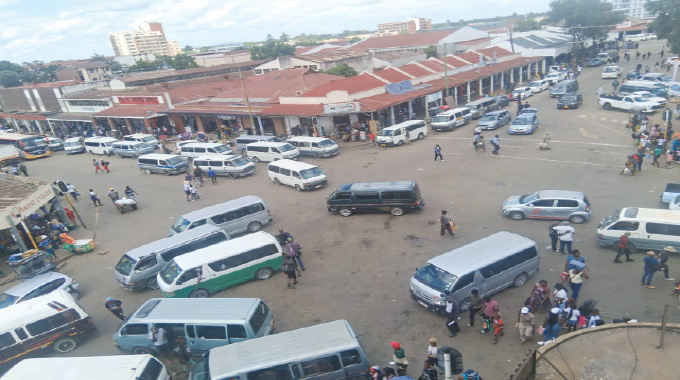
IT is rush hour at Sixth Avenue in Bulawayo’s city centre, and the familiar chaos is unfolding. Commuter omnibuses jostle for passengers, some stopping where they should not, while impatient motorists manoeuvre through congested lanes. Pedestrians weave between moving vehicles, trying to cross safely as drivers compete for road space.
It is an everyday struggle for commuters and a test of patience for motorists. For those relying on public transport, getting into a kombi can sometimes mean boarding in the middle of the road, exposing passengers to danger.
It is precisely this kind of disorder that Bulawayo motorists hope could soon become a thing of the past, following plans to introduce artificial intelligence-powered traffic enforcement cameras in the city.
While many have welcomed the proposed technology as a potential solution to reckless driving and traffic violations, they are also demanding safeguards to ensure enforcement is fair, transparent and supported by functional road infrastructure.
A Bulawayo motorist, Talent Phiri, said the prospect of using cameras to bring discipline to the roads was welcome, but motorists should have a fair opportunity to challenge errors made by the system.
“We need order on our roads because some drivers have become reckless, particularly during rush hour. However, my concern is what happens when the camera gets something wrong,” he said.
“Suppose you receive a message accusing you of jumping a red light when you actually stopped? Will someone listen to you or will you simply be expected to pay because a computer says you committed an offence?”
His concerns reflect wider questions among motorists as Government prepares to extend its automated Electronic Traffic Management System beyond Harare.
The system is already operational at 20 intersections in the capital and is expected to be rolled out to other cities and major highways, with Bulawayo among the urban centres earmarked for expansion.
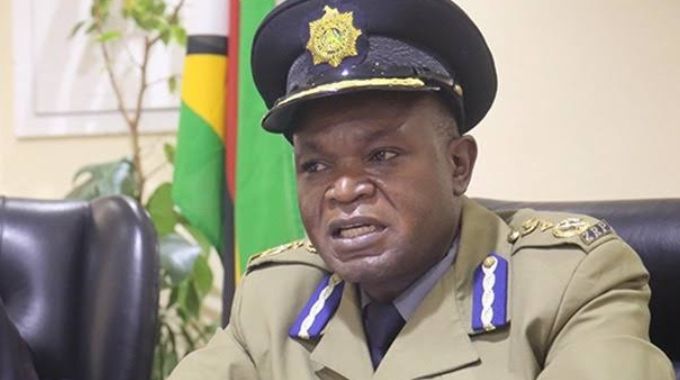
National police spokesperson Commissioner Paul Nyathi said the technology was intended to improve road safety, promote compliance with traffic regulations and reduce human interference in law enforcement.
“The introduction of the Electronic Traffic Management System is aimed at promoting discipline on our roads and ensuring that motorists comply with traffic regulations. The system is designed to identify and deal with traffic offenders, reduce human interference in law enforcement and improve road safety,” he said.
“Motorists should understand that the objective is not to punish people, but to ensure that everyone uses the roads responsibly and abides by the law.”
Comm Nyathi said the system would enable police to monitor traffic violations remotely, reducing reliance on officers physically stationed at intersections.
Cameras and sensors will capture suspected offences involving motorists and pedestrians, with the footage subjected to verification before any fine is issued.
“The recorded footage, vehicle registration details, date, time and location are subjected to a validation process before motorists are notified. This is intended to ensure that motorists are not penalised simply because a camera has flagged their vehicles,” he said.
Comm Nyathi said reducing direct interactions between motorists and police officers would also help minimise opportunities for bribery, extortion and manipulation during traffic enforcement.
Another motorist, Artwell Ndlovu, said the success of the system would depend on authorities first addressing the condition of roads and traffic-control infrastructure.
He said some intersections had malfunctioning traffic lights, while road markings in certain areas were barely visible.
“If the cameras are going to start issuing fines, council must first make sure that the infrastructure is working. You cannot expect motorists to be punished for failing to obey traffic signals that are not functioning,” said Ndlovu.
Thandolwenkosi Sibanda said motorists needed a clear understanding of how the system would operate, particularly how evidence would be presented when an alleged violation was recorded.
“People are not against being held accountable when they break the law. What we want is fairness. There must be clear evidence showing what offence was committed, where it happened and who was driving.
“We should not wake up to messages demanding money without knowing what exactly we did wrong,” she said.
A commuter omnibus operator, who declined to be named, urged authorities to clarify how responsibility would be established when vehicles had more than one driver.
“Some vehicles have more than one driver. The owner might be somewhere else when an offence is committed, so how will the system distinguish between the person who owns the vehicle and the person who was driving at that particular time?
“We also need to know whether there will be a proper process for disputing fines. We cannot have a situation where the vehicle owner is automatically expected to pay for everything without being given a chance to explain,” he said.
For commuters, the proposed cameras could provide relief from dangerous passenger-loading practices that have become common along some of the city’s busiest roads.
One commuter, who declined to be named, said passengers were sometimes forced to board vehicles at unsafe points because drivers stopped wherever they spotted potential customers.
“If cameras can stop that behaviour, then it is welcome. But the authorities must also provide proper places for passengers to board and disembark,” he said.
Under an earlier rollout plan, Bulawayo was earmarked for 20 surveillance sites under Phase Two of the national project, while another 68 sites were reserved for the final phase.
The cameras are expected to detect offences including overtaking at traffic lights, driving without fastening seatbelts, picking up or dropping off passengers at undesignated points and other forms of reckless driving.
The system will also monitor pedestrians and motorcyclists for violations such as jaywalking and dangerous riding.
Under procedures outlined by police, motorists suspected of committing offences will be notified electronically and allowed to view the video evidence before deciding whether to pay a fine or challenge the allegation in court.
Motorists will have seven days to respond, followed by a further seven days to settle the fine. Those who fail to respond within the stipulated period risk being blacklisted and placed on a police wanted list for prosecution.
Electronic ticketing will be integrated with Government databases, including the Central Vehicle Registry, Zinara, police case management systems and payment platforms, to improve vehicle identification and enforcement.
More than 40 000 traffic violations are reportedly being recorded daily in Harare, with over six million offences captured since the introduction of the artificial intelligence-powered traffic management system in June this year.
The violations have been recorded at about 20 intersections in the capital’s central business district. Speaking at a recent High-Level Road Safety Indaba in Harare, Home Affairs and Cultural Heritage Minister Kazembe Kazembe said the figures demonstrated the effectiveness of the technology.