Online Reporter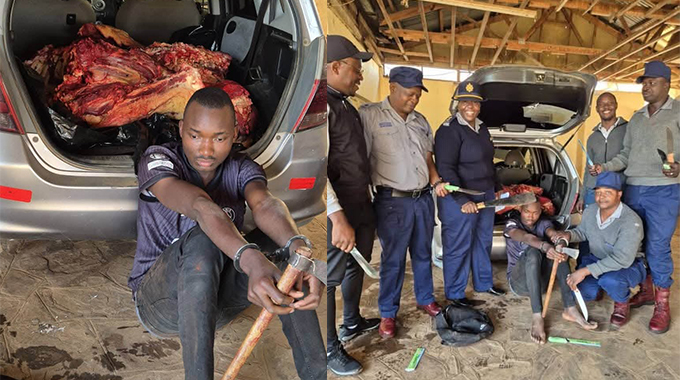
Peter Matika, [email protected]
BULAWAYO Province recorded a 21 percent decline in stock theft cases during the first-half of the year, reflecting the impact of stronger collaboration between police and farming communities in combating livestock crime.
The figures were revealed during the recent launch of a national anti-stock theft campaign, which seeks to strengthen community participation in protecting the country’s livestock resources.
Running under the theme: “Working together to protect our national herd and secure Zimbabwe’s future”, the campaign encourages communities to work closely with law enforcement while promoting smart policing technologies and improved livestock management practices.
Police, however, warned that despite the decline in reported cases, cattle rustling remains a major concern, with organised criminal syndicates increasingly slaughtering cattle in grazing areas before escaping with the meat.

Speaking during the campaign launch, Officer commanding police in Nkulumane District, Chief Superintendent Ernest Machinga, said stock theft was a serious organised crime that extends beyond the loss of livestock, affecting household incomes, food security and national economic development.
“Stock theft is not merely the theft of an animal. It is the theft of a family’s livelihood, children’s education, household income and the dignity of hardworking farmers. Every beast stolen weakens our agricultural sector and ultimately undermines Zimbabwe’s economy,” said Chief Supt Machinga.
He said livestock remained one of Zimbabwe’s most valuable national assets, sustaining millions of people through agriculture while contributing significantly to household incomes and food security.
“Across Zimbabwe, livestock represent wealth, resilience and cultural heritage. Cattle, goats, sheep, pigs, donkeys and poultry support livelihoods, pay school fees, meet medical expenses and provide financial security for families. Protecting these assets is therefore protecting our nation’s future,” he said.
Chief Supt Machinga said Bulawayo Province had recorded encouraging progress in reducing stock theft during the first six months of the year.
“A total of 74 stock theft cases were reported between January and June this year compared to 94 cases during the corresponding period last year, representing a 21 percent decline.

“Reported cattle theft cases declined from 43 to 40, while goat theft cases dropped from 13 to eight. Cases involving poultry also decreased from 29 to 19 over the same period,” he said.
Despite the positive trend, Chief Supt Machinga warned that cattle rustling remains the province’s biggest challenge.
“While we are encouraged by the reduction in reported cases, cattle theft remains a major concern. Criminals have become increasingly organised, targeting grazing areas at night where they slaughter animals before taking away the meat and abandoning the remains,” he said.
“This demonstrates the need for greater vigilance from every member of the community.”
Investigations have shown that rustlers often use snares to trap cattle before tying their mouths with wire to prevent them from making noise.
The animals are then slaughtered onsite, with offenders fleeing with the meat while leaving behind hides, heads, intestines and hooves. Poultry theft from fowl runs also remains prevalent.
Chief Supt Machinga said the campaign forms part of the Zimbabwe Republic Police Strategic Plan and the Moonshot 2030 initiative, which seeks to build a modern, professional and technology-driven police service capable of supporting Zimbabwe’s Vision 2030.

He said police would continue embracing Smart Policing through the deployment of CCTV surveillance systems, drone technology, GPS livestock identification, digital intelligence gathering and data-driven crime analysis to dismantle organised stock theft syndicates.
“The greatest weapon against stock theft remains timely information from members of the public,” said Chief Supt Machinga.
He urged livestock owners to adopt sound animal husbandry practices, including branding cattle, using ear tags for goats and sheep, penning livestock every night, maintaining accurate livestock registers and ensuring movement permits accompany animals whenever required by law.
Chief Supt Machinga also urged communities to establish and strengthen village anti-stock theft committees and neighbourhood watch groups to improve information sharing with police.
Chief Supt Machinga urged butchery owners, abattoirs and livestock traders to buy livestock only from legitimate owners after verifying movement permits, stock clearance certificates and proof of ownership.
He warned that businesses that knowingly create markets for stolen livestock fuel organised criminal networks and undermine the country’s livestock industry.
“Crime does not pay, and we will ensure that those who steal from our farmers face the full wrath of the law,” said Chief Supt Machinga.
Zimbabwe Commercial Farmers union vice-president Mr Winston Babbage attributed the decline in stock theft cases to improved cooperation between police and farmers.
“The decline in stock theft cases is a clear testament to the strong partnership that has been forged between the police and the farming community,” he said.