Online Reporter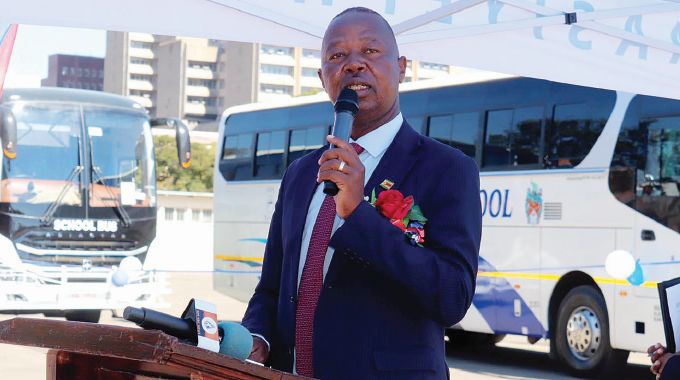
Peter Matika, Senior Zimpapers Writer
Bulawayo recorded notable progress in service delivery, investment promotion and social development in 2025 despite a slow start caused by budgetary delays, acting mayor Councillor Edwin Ndlovu has said.
In his end-of-year message to residents and stakeholders, Cllr Ndlovu said the delayed approval of the city’s 2025 budget disrupted planning, with programmes meant for the first quarter only being implemented in the second quarter.
“Going into the next year, we are hopeful that we will not encounter the challenges experienced this year, which will enable us to implement our programmes timeously and without hindrance,” he said.
Clr Ndlovu commended central Government for sustaining currency stability following the introduction of the Zimbabwe Gold (ZWG), saying price stability had helped council in financial planning and service delivery.
“The stabilisation of the local currency has assisted the city in its financial planning, and we hope for a continued stable exchange rate into 2026, which is key in the provision of services,” he said.
However, Cllr Ndlovu expressed concern over ballooning debt, saying council is owed more than ZWG2 billion in unpaid bills. Domestic consumers account for 61 percent of the debt, equivalent to ZWG1,5 billion, while industry and commerce owe over ZWG500 million and Government departments ZWG143 million.
“If we clear the over ZWG2 billion owed to the City of Bulawayo, we can go far in the development of our city,” said Clr Ndlovu, urging residents and stakeholders to settle their obligations.
On health, council reported significant strides in primary healthcare delivery, including the equipping of clinics with essential medical equipment. The city recently received a vehicle and medical equipment worth US$110 000 from the Government of Korea, while the reintroduction of the Results-Based Financing (RBF) voucher system has improved access to healthcare for vulnerable pregnant women.

In response to persistent water shortages, institutions drilled boreholes at clinics and schools to ensure continued access to healthcare services.
To improve urban sanitation, the local authority commissioned four refuse compactors worth over US$600 000 and hired eight additional units from the Ministry of Local Government and Public Works. More compactors are expected to be procured using devolution funds.
Clr Ndlovu commended the city’s fire and ambulance services, describing them as a beacon of excellence. In 2025, Bulawayo trained 35 firefighters from six rural local authorities in Matabeleland, a milestone in national emergency services.
Illegal vending remained a challenge, with council working with central Government and informal sector players to relocate vendors to designated areas. A draft Micro, Small and Medium Enterprises (MSMEs) policy was produced, while the renovated Dugmore offices now serve as a one-stop trading hub for informal traders.
On investment, Bulawayo hosted its inaugural Khumbul’ekhaya Investment Conference in Harare, leveraging its master plan (2019-2034) and gazetted local development plans to unlock opportunities in property development, waste management and social amenities.
Housing delivery also featured prominently, with 975 high and medium-density serviced housing stands delivered through public-private partnerships. Although demand remains high, with a waiting list of about 144 000, Clr Ndlovu said the achievement demonstrated the local authority’s commitment to quality housing.
Clr Ndlovu announced the adoption of a new Corporate Strategy (2026-2030) under the vision “City of Kings: A Smart and Sustainable City by 2030.” The strategy prioritises digital transformation, with residents now able to pay bills through multiple financial institutions and platforms, including PayNowTopUp for diaspora-based property owners.
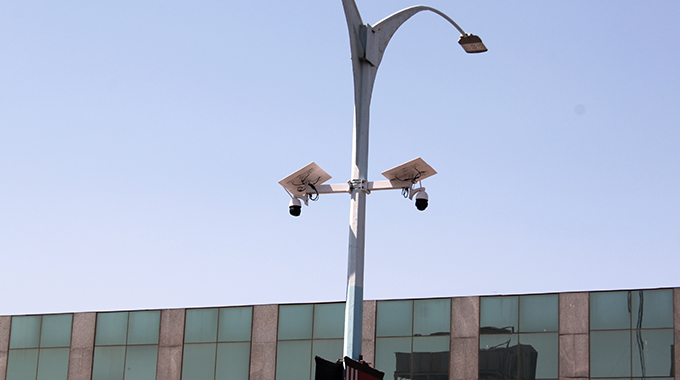
Smart parking partnerships have seen the installation of CCTV cameras in the city centre, while solar-powered streetlights form part of Bulawayo’s sustainability drive.
Road rehabilitation remains constrained by funding, with the city requiring about US$700 million for full rehabilitation. Clr Ndlovu said the local authority continues to focus on maintenance while exploring in-house construction using devolution funds.
On water, Bulawayo City Council approved a Non-Revenue Water Reduction Strategy (2026-2030) aimed at reducing water losses from 48 percent to 25 percent by 2030.
The city also advanced gender and social inclusion initiatives, including the Youth Climate Action Fund Programme, which supported 18 youth-led projects with US$100 000, and the Mayor’s Christmas Cheer Fund, which assisted 17 institutions and 1 400 individuals.
Clr Ndlovu urged local businesses to participate in council procurement processes, saying increased local participation would promote economic development.
He noted that while 2025 was a busy year, they made concerted efforts to improve service delivery.
“The year 2025 has been a busy year, and council has made concerted efforts to improve service delivery. Our aim is to continue improving client satisfaction, guided by the new corporate strategy whose values include ubuntu,” said Clr Ndlovu.
“The city’s strategy aligns with the National Development Strategy 2, as launched by His Excellency, the President, Dr ED Mnangagwa.”