Online Reporter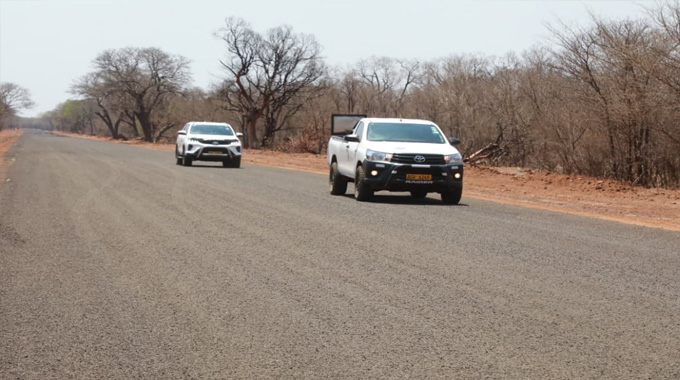
Caroline Mutsawu in Hwange
THE rehabilitation of the Bulawayo–Victoria Falls Highway is gathering momentum, with significant sections opened to traffic just two months after works began — a development expected to ease festive season travel.
The highway, a vital artery linking Zimbabwe’s second-largest city to the country’s premier tourism destination, is being upgraded under the National Development Strategy 2 (NDS2), aligning with Vision 2030’s goal of transforming Zimbabwe into a middle-income economy.
Speaking at one of the construction sites in Hwange yesterday, acting director for infrastructure, planning and environmental management, Mr MacMaster Mthethwa, said the opening of the rehabilitated sections marked an important milestone in improving national connectivity.
“I am glad to say that 10 kilometres have already been opened and today we are paving the way for traffic on an additional 6,8 kilometres,” he said.
Mr Mthethwa said the improved road infrastructure would significantly reduce travel time and vehicle operating costs while enhancing access to Victoria Falls, thereby boosting tourism, trade, and regional economic activity.
“The completion of the Bulawayo–Victoria Falls road will have a ripple effect on the economy. Improved connectivity to the tourism hub will stimulate revenue inflows, facilitate commerce, and contribute to national economic growth,” he said.
However, Mr Mthethwa acknowledged that some pothole-riddled sections were yet to be addressed and urged contractors to prioritise temporary repairs before the festive season.
“I have advised the construction team to fill in the potholes so that the road remains trafficable during the holidays as we prepare to resume full-scale works,” said Mr Mthethwa.
He added that dust suppression through regular watering was also necessary to minimise environmental and health risks.
Matabeleland North Provincial Roads Engineer Xolani Ncube called on transporters, particularly those ferrying coal and heavy goods in and out of Hwange, to strictly observe axle load limits and traffic regulations.
“We have a high volume of heavy trucks in this mining town. Adherence to weighbridge regulations, speed limits, and road rules is critical if we are to preserve the road and, more importantly, save lives,” he said.
Hwange resident engineer Sandra Bwititi echoed the call for road safety, urging motorists and passengers to play an active role in promoting responsible driving.
“We are concerned about the safety of road users. Passengers have a right to ask drivers to slow down if they are driving recklessly,” she said.
Engineer Bwititi said maintenance teams had been deployed in towns along the highway to carry out routine and periodic road maintenance, ensuring sections already opened remain in good condition.
She said the rehabilitation project was on course for completion around August 2026, within a 10-month timeline, adding that the Government had also lined up additional road infrastructure projects in the region.
These include the ongoing Lupane–Nkayi–Kwekwe Road and the planned Tsholotsho Road project, which is expected to commence next year.
Engineer Bwititi said efforts had been made to minimise disruption during the festive season.
“We reduced detours as much as possible. Only about 400 metres will remain under detour during the holidays,” she said.
Bitumen World site manager Mr Leroy Msindo said works on the Bulawayo–Victoria Falls Road commenced on October 1, with 3,5 kilometres opened on the southern side and a further 6,8 kilometres on the northern side.
He said progress had been commendable despite challenges posed by the rainy season and unsuitable gravel.
“The rains slowed us down slightly, and we also encountered difficulties with the type of gravel available. We then engaged Davis Granite to supply more suitable material,” said Mr Msindo.
He said the project underlined Government’s resolve to invest in infrastructure as a catalyst for economic growth.
“As Zimbabwe pushes towards becoming a middle-income economy, projects like this show a clear commitment to development. Improved roads mean improved livelihoods, and the future of this region looks promising,” he said.