Online Reporter
Gibson Mhaka, Features Writer
NESTLED in the heart of Matabeleland South Province, Bulilima District lies in agro-ecological region four, one of Zimbabwe’s driest areas, where the land has become increasingly unforgiving.
The persistent poor harvests over the years have seemingly fostered a sense of resignation among locals, with some joking that even stones appear to thrive more than crops in this arid environment.
Exacerbating this constant struggle against aridity, the shifting patterns of climate change have cast a long shadow, further disrupting the delicate balance and leaving families to grapple with the heartbreaking reality of failing agriculture.
The adverse impacts of these changing climate patterns on agriculture in Bulilima are extensive.
Erratic rainfall, characterised by prolonged dry spells followed by intense, but often insufficient, downpours, makes it extremely difficult to plan and execute successful planting seasons.
Given the poor and unreliable rainfall patterns, there has been a growing recognition among farmers, of the need to shift towards cultivating small grain crops.
These resilient grains, such as sorghum, millet and rapoko, exhibit a remarkable ability to withstand the harsh and dry conditions prevalent in the region.
Their inherent drought tolerance and shorter growing seasons offer a more sustainable and adaptive agricultural strategy, in the face of increasing climate variability, providing greater chances of securing food and livelihoods despite the challenging environment.
It was not until 2020 that the Government, as part of its efforts to address the effects of climate change, introduced the innovative Intwasa/Pfumvudza Programme, specifically designed to climate-proof agriculture, even in regions like Bulilima characterised by low rainfall patterns.
When the Government introduced Intwasa/Pfumvudza, the aim was to maximise productivity per unit area, even during drought periods, to ensure household and national food and nutritional security.
Intwasa involves the utilisation of small plots of land while applying the correct agronomic practices to achieve higher returns. The approach can be implemented in marginal areas and still produce high yields.
Although the introduction of the Intwasa/Pfumvudza model resulted in surprisingly bountiful harvests even in low rainfall areas such as Bulilima, the initiative was initially met with scepticism by some.
This scepticism largely stemmed from the perception that the conservation agriculture techniques promoted by the programme were excessively labour-intensive, requiring meticulous land preparation, precise input application, and careful water management, daunting for farmers accustomed to more conventional, albeit less productive, methods.
Having heeded the Government’s call for climate-smart agriculture and embraced the Intwasa/Pfumvudza Programme, Mr Clive Ncube (67) and his wife, Ms Bongani Dube (57), from Huwana Village in Bulilima’s Ward 8 under Chief Manguba, stand as a shining example of the concept’s successful implementation.
As a direct result of diligently following the principles of climate-smart agriculture and the Pfumvudza/Intwasa model, the couple have yielded a truly bumper harvest from their five plots — two of maize, one of sorghum, one of groundnuts and one of pearl millet.
Their significant success story in Huwana Village serves as compelling evidence that the Intwasa/Pfumvudza model is indeed a viable and highly effective agricultural strategy, even in traditionally low-rainfall areas like Bulilima.
Their productive fields stand in stark contrast to previous years, demonstrating the transformative potential of this climate-resilient approach in ensuring food security and improving livelihoods in a region frequently plagued by drought.
Sharing their Intwasa/Pfumvudza success story during a field day held at their homestead, where they served as host farmers and facilitated the exchange of ideas with fellow farmers, the couple attributed their impressive harvest directly to the adoption of the programme.
They emphasised how the meticulous techniques and climate-smart principles of the programme enabled them to achieve such outstanding yields despite the region’s typically challenging dry conditions.
The event was held under the theme: “Promoting Conservation Agriculture, Small Grain Production and Crop Diversity.”
“Initially, we were hesitant about Intwasa/Pfumvudza, finding the concept of conservation agriculture labour-intensive. However, the persistent visits and explanations from agricultural extension officers in our area eventually convinced us to give it a try,” said Mr Ncube.
“Through their dedicated support and extensive training from Agritex officers, who have been instrumental in promoting the uptake of conservation agriculture, we have managed to perfect the art of these techniques.”
He elaborated on the specific guidance they received, stating, “We have actually perfected our skills in Intwasa through the training provided by our local agricultural extension officers.
“For our five plots — including two of maize, one of sorghum, groundnuts and pearl millet, we meticulously followed their guidelines. This included ensuring that for our plot size of 52 by 28 metres, the planting holes were 15 by 15 centimetres deep, with spacing of 75 by 60 centimetres between them.”
Mr Ncube emphasised that adherence to these precise instructions was key to their success.
His wife concurred, urging fellow farmers to prioritise the Intwasa/Pfumvudza Programme, highlighting its transformative potential as a game-changer in the face of climate change.
Expressing her optimism, she added that she was now looking forward to a profitable season and was “ready to smile all the way to the Grain Marketing Board”.
“Despite the initial perception that the concept is labour-intensive, it has undeniably yielded positive results, and as farmers, we should wholeheartedly embrace it.
“We worked as a team, diligently digging the planting holes and ensuring the correct spacing, guided by the expert advice of the Agritex officers.
“We have learnt that deviating from these guidelines would only be to our own detriment. Our teamwork extended to weeding as well, and my dedicated team comprises my children and grandchildren,” she said.
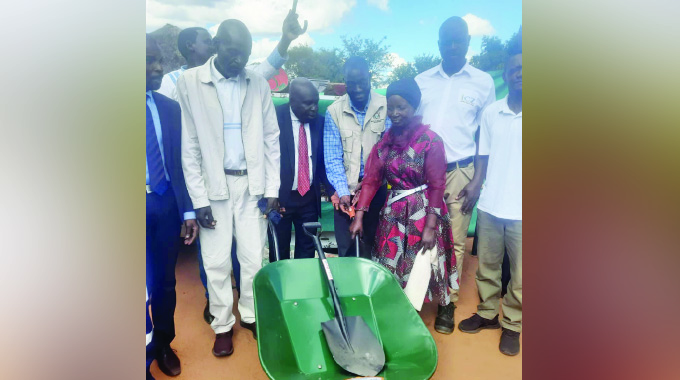
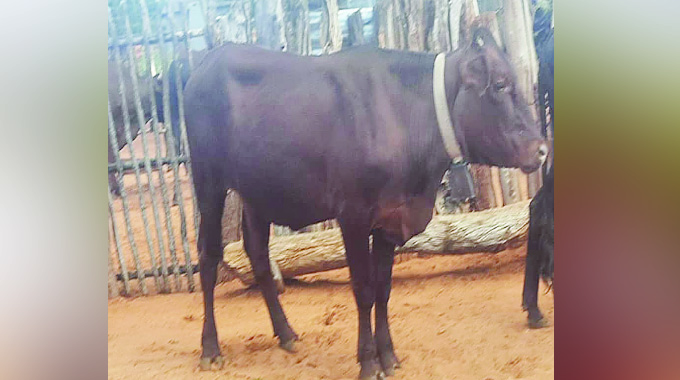
In recognition of their exemplary efforts, the couple were awarded a heifer, a wheelbarrow and a shovel.
Other participating farmers also received prizes such as goats, hoes and shovels, with the Insurance Council of Zimbabwe (ICZ) sponsoring the awards.
Bulilima District Development Coordinator, Mr Onesimo Zogara, who was the guest of honour, encouraged farmers to practise Intwasa/Pfumvudza, highlighting it as a Government-supported programme aimed at increasing food production and security for smallholder farmers at household level, as well as promoting sustainable agriculture practices that reduce environmental degradation.
“Bulilima lies in agro-ecological region four, which is characterised by low rainfall, prolonged dry spells, and frequent seasonal droughts, making it a serious challenge for crops like maize to survive under such harsh conditions.
“I therefore recommend and encourage farmers in this region to practise agro-ecological matching. They should grow small grains such as pearl millet (inyawuthi), sorghum, and other drought-tolerant crop cultivars, which are ideal for natural region four due to their ability to thrive in areas with little or low rainfall.
“More so, I would like to encourage farmers to practise Intwasa/Pfumvudza, a Government-supported programme which aims at increasing food production and security for smallholder farmers at household level, while promoting sustainable agriculture practices that reduce environmental degradation,” said Mr Zogara.
Mr Zogara also expressed his appreciation for the support received from ICZ and other stakeholders, noting that insurance plays a vital role in the agriculture sector by providing financial protection to farmers against various risks and uncertainties such as natural disasters like drought and floods.
Turning to their partnership with farmers, which included sponsoring prizes at field days, ICZ Head of Operations, Mr Nicholas Sayi, urged smallholder farmers to prioritise agricultural insurance, emphasising its crucial role in providing relief to communities increasingly vulnerable to climate-related risks.
“Having implemented this programme, we are working symbiotically with the Ministry of Lands, Agriculture, Fisheries, Water and Rural Development through its architects’ division.
“We noted that to gain the trust of the farmers and dispel any doubts surrounding insurance, we partnered with these architects to participate in the field days they conduct. These field days are structured around a competition — a criterion used to select a farmer who has performed exceptionally well,” said Mr Sayi.
“Subsequently, a field day is held at the winning farmer’s homestead, serving as a demonstration of their successful agronomic practices for other farmers.
“We actively participated in all these field programmes, and our focus was on providing prizes. The decision regarding the prizes was to offer items that are meaningful and relevant to the farmers.
“The most prestigious prize we award is a heifer to the farmer who has demonstrated the best performance. Additionally, we provide various other agricultural-related inputs such as fertiliser, ploughs, and wheelbarrows based on the needs identified by the architects’ officers,” he said.