Online Reporter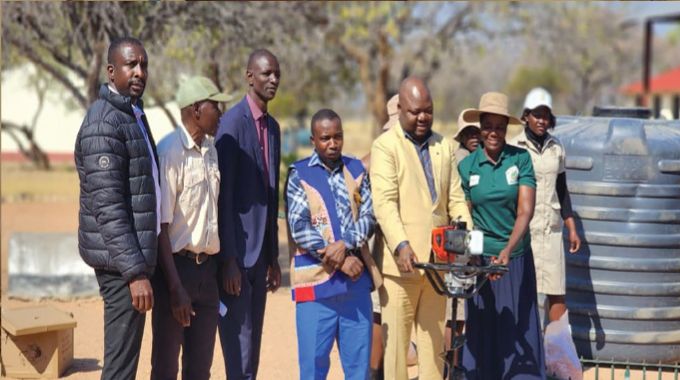
Mthabisi Tshuma, [email protected]
CLIMATE change is no longer a future threat in Bulilima District. It is a reality farmers are living with every day. From shorter rainy seasons and longer dry spells to rivers drying up months earlier than they used to, communities across the district are being forced to rethink how they farm and survive.
For decades, many households in the district relied on maize production and livestock farming. Good rains meant good harvests, full granaries and healthy cattle. But when the rains failed, the consequences were severe. Crops withered in the fields, grazing lands deteriorated, livestock succumbed to drought and families struggled to meet basic needs.
Today, however, a quiet transformation is taking place across the district.
Rather than waiting for droughts to strike before seeking assistance, farmers are embracing new ways of working the land.
They are diversifying crops, adopting climate-smart farming methods and learning how to make better use of limited water resources.
That spirit of adaptation and resilience was on full display at the recent Bulilima Agricultural Expo held at Madlambudzi Centre.
Held under the theme, “Building resilience in the advent of climate change”, the two-day event brought together farmers, Government departments, development partners, businesses and community leaders to showcase practical solutions to the challenges facing agriculture in one of Zimbabwe’s driest districts.
Unlike many agricultural gatherings that focus largely on speeches and policy discussions, the expo provided farmers with a platform to demonstrate what is already working on the ground.
More than 150 farmers from the district’s 22 wards participated in the event, while Government departments and various organisations mounted exhibitions and shared information on climate adaptation, farming innovations and business opportunities.
Among the exhibitors were Agritex, the Department of Veterinary Services, the Zimbabwe Parks and Wildlife Management Authority, Bulilima Rural District Council, the National University of Science and Technology, the Forestry Commission, NetOne and the Zimbabwe Electoral Commission (ZEC).
A total of 1 263 exhibits were displayed during the expo.
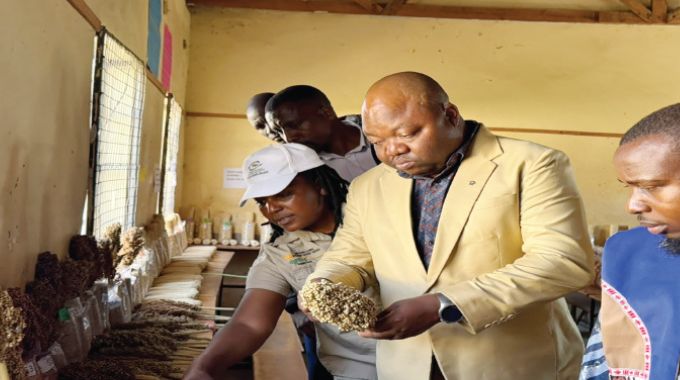
The displays ranged from maize and small grains to pulses, bakery products and crafts.
Perhaps the most significant takeaway from the exhibition was the growing shift away from dependence on maize alone.
More farmers are now embracing drought-tolerant crops and diversified farming systems that are better suited to the district’s changing climate.
The variety of exhibits reflected a community that is gradually adapting to a new agricultural reality.
For many visitors, the event demonstrated that success is possible even under difficult climatic conditions when farmers embrace innovation and adopt appropriate technologies.
The expo also provided an opportunity to celebrate excellence among farmers who have excelled despite facing numerous challenges.
Top honours went to Ms Sikhulekile Dube, who was named the overall winner. She received a 2 000-litre water tank and a soil auger as recognition of her achievement.
Ms Ineaty Ndlovu finished in second place and received an ox-drawn plough and a knapsack sprayer.
Other award recipients included Ms Reginah Maduke, who received an ox-drawn harrow; Ms Beauty Tshuma, who was awarded a soil auger; and Ms Jelina Maketho, who received a wheelbarrow and knapsack sprayer.
Ms Ottilia Ncube won a wheelbarrow, while Silobile Ndebele received 10kg of maize seed.
Ms Elizabeth Moyo, Ms Promise Ncube and Tjinoda Joko completed the top 10 performers.
Beyond recognising achievement, the prizes were designed to help farmers further improve productivity, conserve water and manage soil resources more effectively.
Addressing farmers during the event, guest of honour and Bulilima Constituency legislator, who is also Deputy Minister of ICT, Postal and Courier Services, Cde Dingumuzi Phuti, stressed the importance of treating agriculture as a commercial venture.
“I am pleased with what I have seen being displayed. One important aspect of national security is food security. A hungry person is a dangerous person,” he said.
“We thank you, farmers, for complementing Government efforts in ensuring the food basket is full. Let us take farming as a business.”
His message resonated with many farmers who are increasingly viewing agriculture not only as a source of food but also as a way of generating income and improving household livelihoods.
With climate change placing increasing pressure on traditional farming systems, experts say farming must become more efficient, productive and market-oriented if rural communities are to thrive.
Bulilima District Agricultural Business Advisory Officer Mr Jonathan Makaranga said the strong turnout at the expo was encouraging and showed that farmers were responding positively to calls for climate resilience.
“We are happy with the turnout at this year’s expo as all wards were represented. This is a sign that farmers are heeding the call to become resilient in light of climate change,” he said.
For Mr Makaranga, the participation of all wards demonstrated growing awareness among farmers that climate change is not a challenge that can be ignored.
Instead, it requires practical responses that strengthen communities and protect livelihoods.
Political and community leaders also commended farmers for their efforts.
Zanu-PF Bulilima District Secretary for Transport and Social Welfare, Cde Philasande Mandla Malinga Ndlovu, praised farmers for their commitment to improving food production while contributing to local economic development.
“It is evident that this year our people took farming seriously. We thank the Second Republic for the hard work shown. Employees from ARDA took a leading role in educating our farmers,” said Cde Ndlovu.
“We also thank His Excellency, President Cde Dr ED Mnangagwa for the Village Business Units (VBUs) which have changed our lives. I urge every Bulilima villager to fully utilise these for socio-economic benefits.”
Across Bulilima, signs of change are becoming increasingly visible.
Farmers are investing more in small grains, improving livestock management practices and exploring irrigation systems that enable production even during prolonged dry periods.
Community members are also placing greater emphasis on conserving natural resources and adopting farming methods that help retain moisture in the soil.
While climate change continues to pose serious challenges, the mood among many farmers is no longer one of despair.
Instead, there is growing confidence that with the right knowledge, technologies and support systems, communities can adapt and continue producing food under changing conditions.
The Bulilima Agricultural Expo served as a reminder that resilience is built not through words but through action.
In a district where climate change has become a daily reality, farmers are proving that adaptation is possible, and that the future of agriculture lies not in resisting change, but in learning how to thrive despite it.