admin
admin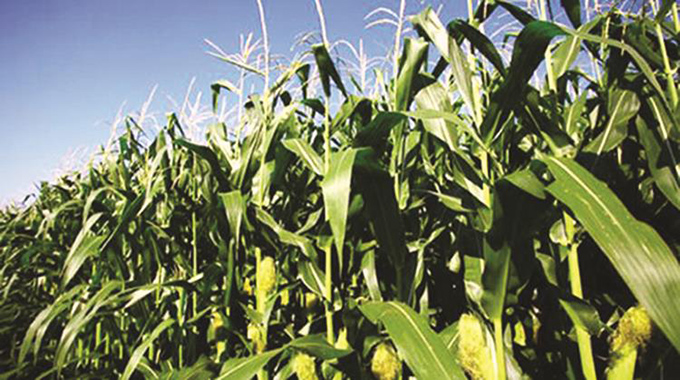
Obert Chifamba
Agric-Insight
PLENTEOUS rains and bountiful yields! That is the most befitting synopsis of the 2020/21 cropping season that saw farmers scoring mega harvests from different crops, thanks to the above normal rains that fell and the steadfast support mechanisms from various programmes and institutions.
These abundant harvests must provide the footing to jump-start life for many other components of the economy and most importantly empower farmers significantly to start preparations for the next season after selling their produce and getting their earnings.
Of course the earnings may not go all the way to exhaust the entire preparatory work but they should leave a mark and see farmers requiring reasonable levels of intervention or even none so that they produce free crops.
This means that farmers should be able to fund part or most of their cropping options without seeking contracts or governmental assistance, which will allow them to make big earnings at the end of the season.
Such a development will also relieve Government of the pressure of rolling out programmes for farmers every season and channel those resources to other sectors of the economy crying out for help.
Farmers must bear in mind that gone are the days when some of them used to make headlines for the wrong reasons at the end of each marketing season with men going AWOL immediately after receiving their payments for cotton in areas such as Sanyati in Mashonaland West, Gokwe in Midlands and Muzarabani in Mashonaland Central to just name a few, and only resurfacing after exhausting everything on binge drinking and women.
Today’s farmers should act like the business women and men that they are who always remember that revenue generated from the sale of produce should anchor investments for future business initiatives. For now, they should use what they earned to take care of those pressing domestic needs but spare something to help finance next season’s preparations. It is no rocket science that the majority of all productive farmers scored bumper harvests in one or more crops and should have various revenue streams backing them this time around. Those farmers that produced tobacco last season had by Day 84 of the 2021 tobacco marketing season managed to breach the projected yield target of 200 million kilogrammes earning US$558, 6 million in the process, which is 25 percent more than the 178 million kilogrammes valued at US$446 million sold during the same period last year.
The writing is on the wall for this one. Farmers made good earnings especially with the firm prices that prevailed throughout the season. On the one hand, revelations that the Cotton Company of Zimbabwe (Cottco) had by last week received 82 189 tonnes of cotton worth $4, 6 billion, which is 55 percent of this year’s targeted deliveries are enough to give a hint at the successful nature of the season.
Cottco has since paid $690 million and US$1, 3 million to farmers with their payments scheduled to come in three tranches, Grade A getting $85 per kilogramme and Grade D $56 per kg with farmers receiving $34 per kg immediately upon delivery.
They will also be paid an additional official $22 a kilogramme upon the final grading of their cotton with all the cotton that goes into grade B and A attracting another premium. Last season the country witnessed a 90 percent rise in cotton production pushed by the success of the Presidential Cotton Input Scheme.
Some of the farmers who happened to have outstanding payments from last season have also started receiving them, which although coming belatedly, should also be deployed astutely unless they had pending issues to settle from last season.
That money can still make a lot of impact to next season’s preparations for those farmers that managed to fill up gaps from the season in question using funds from elsewhere.
Under the grains category farmers had by last week been paid $14 billion for produce they delivered to the Grain Marketing Board (GMB) amid revelations that Government is currently mobilising more funding to pay the outstanding balance of $9, 4 billion. This was confirmed by Information, Publicity and Broadcasting Services Minister Senator Monica Mutsvangwa in her post cabinet media briefing last Tuesday when she disclosed that farmers had delivered 629 000 tonnes in just 16 weeks thereby confirming the success of the 2020/21 summer cropping season.
Maize quantities that have so far been delivered to the GMB have already surpassed the country’s strategic grain reserve (SGR) requirement with more than 600 000 tonnes now in stock.
Zimbabwe was projected to achieve a record harvest of 2, 7 million tonnes of maize last season following the above normal rains that fell on the back of various Government programmes such as the Pfumvudza/Intwasa and the Presidential Input Support Scheme.
The Pfumvudza/Intwasa programme on its own has left farmers richer, as it allowed them to produce maize on two plots one of which went to Government for loan repayment, while the other was for their own uses. Under the programme farmers were expected to deliver a tonne to the GMB from all the yields generated under it so those that managed many tonnes from their plots benefited enormously and had enough for food and even some to even sell and make money.
It is also emerging that wheat farmers have planted 66 435, 86 hectares of wheat for the 2021 season, the third highest since independence that has only been beaten by plantings in 2004 (70 585 ha) and 2005 (67 261 ha) with all indications pointing towards a potential bumper harvest and more earnings too.
This will be a surmountable feat given that the farmers have so far not been affected by brutal load shedding like what used to happen in the past while there is also plenty of water for irrigation in most reservoirs.
The area put under wheat this season is 50 percent above last year’s hectarage and constitutes 78 percent of the initial national target of 85 000 hectares that unfortunately could not be met because of various constraints.
The wheat was planted under the Presidential Inputs Scheme, National Enhanced Agricultural Productivity Scheme (NEAPS)/Command/CBZ Agro-Yield and private sector schemes.
Harvesting of the wheat is expected to commence in September with the bulk of the early planted crop reported to be in good condition and at different vegetative stages across the country.
This means that farmers can also use earnings from the crop to consolidate their preparations for next season.



 Online Reporter