

 admin
admin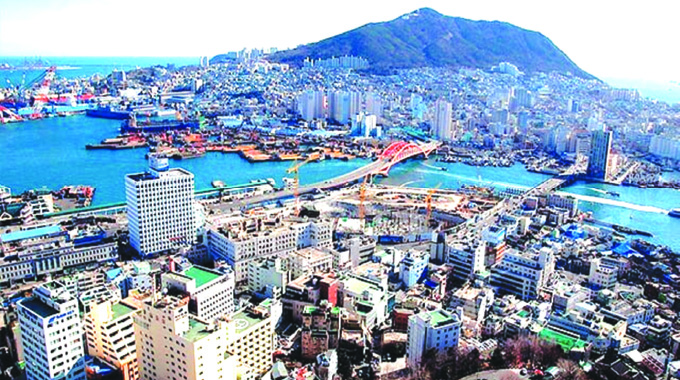
Dr Christopher Hokonya Correspondent
World Expos, officially known as International Registered Exhibitions, are an international gathering of nations exhibiting around a theme aimed at inspiring innovations that lead to solutions of life’s real challenges.
As per regulations established by the Bureau International des Exhibitions (BIE) and its member states, the large-scale World Expos take place five years and run for six months.
Specialised expos, which run three months and are smaller in size, are held between the larger events.
Four countries are officially competing for the opportunity to host the 2030 World Expo and they are South Korea (Busan), Italy (Rome), Saudi Arabia (Riyadh) and Ukraine (Odessa).
The four countries had until September 7, 2022 to submit the project in the form of a candidature dossier, after which the BIE will set up enquiry missions to assess the feasibility and viability of each candidature project submitted.
The host country of World Expo 2030 will then be elected by BIE Member States, who will gather in a General Assembly set to take place in late 2023, on the principle of one country, one vote.
The Republic of Korea’s candidature is based on the theme “Transforming Our World, Navigation toward a Better Future”.
If successful, the Expo would take place in the city of Busan during 1 May to 31 October 2030.
About the city of Busan in South Korea
Busan, with a size of 770.07km2 (four-fifths of Harare), is the second largest city in South Korea.
Its deep harbour and gentle tides have allowed it to grow into the largest container handling port in the country and the sixth largest in the world.
Busan is also a major cultural nexus in the Asia Pacific region.
It is a city of festivals, arts, and film, continuing to successfully host a variety of events such as the Busan International Film Festival (BIFF), the Busan Fireworks Festival, the One Asia Festival, a global K-pop music festival, and the Busan Biennale, a biennial contemporary art exhibition.
Why Busan
Well-developed Busan has played a crucial role in Korea’s path from being a recipient of economic assistance into a donor country within half a century.
Busan is playing a leading role in the transformation process amidst the Fourth Industrial Revolution.
On July 23, 2019, Busan was designated as a regulation-free industry and Busan Eco Delta Smart city is becoming a logistics hub of Northeast Asia.
Well-placed Busan is a transportation and logistics hub, and a connecting passageway from the Eurasian continent to Asia-Pacific.
It offers easy access to well-equipped infrastructure such as airports, high-speed railways and top-edged ports.
Busan is a much loved city, attracting over 40 million tourists from around the globe.
Whilst it is a thriving metropolis, it also offers a captivating natural environment emanating from its harmony with the sea.
Well-experienced, the municipality has an extensive experience of holding large-scale international events such as the Asian Games in 2022 and the APEC (Asian Pacific Economic Cooperation) Summit in 2005.
Meaningful events it has hosted include; the 2011 Busan World Development Institute General Assembly; 2014 ITU (International Telecommunication Union) Plenipotentiary Conference; 2014 and 2019 ASEAN-the Republic of Korea Commemorative Summit; the 2015 IDB (International Development Bank) Annual Meeting; and the international Federation of Freight Forwarders Associations (FIATA) World Congress in 2022.
An opportunity for Zimbabwe
Zimbabwe joined BIE in 2021 and during the same year ratified the Bilateral Investment Promotion and Protection Agreement (BIPPA) with the Republic of Korea.
These are significant strides as the Government is making concerted effort towards achieving a Prosperous and Empowered Upper Middle Income Society by 2030.
Among the four countries bidding to host the 2030 World Expo, only Korea has signed and ratified BIPPA with Zimbabwe, thus instilling confidence in investors.
The Busan World Expo will not only create a good opportunity for Zimbabwe to draw more investment, but also expand trade and open prospects for technical skills transfer and sharing development experience with Korea.
South Korea is an industrial and technological powerhouse with a lot to offer to developing economies seeking to leapfrog and transform many critical sectors of the their economies for a better future for their citizens.
It is among the leaders in electronics, telecommunications, ship building, chemicals, and high quality infrastructural technology, to name a few.
Zimbabwe will undoubtedly benefit from supporting the hosting of the 2030 World Expo in Busan. The Busan World Expo is an opportunity for Zimbabwe to establish new business relationships with South Korea and enhance existing ones through participation in the Busan World Expo.
Dr Christopher Hokonya studied and worked in South Korea between 1984 and 1998. He is a keen observer of South Korean politics, government policy implementation, and private sector business performance.


 Online Reporter