


 Online Reporter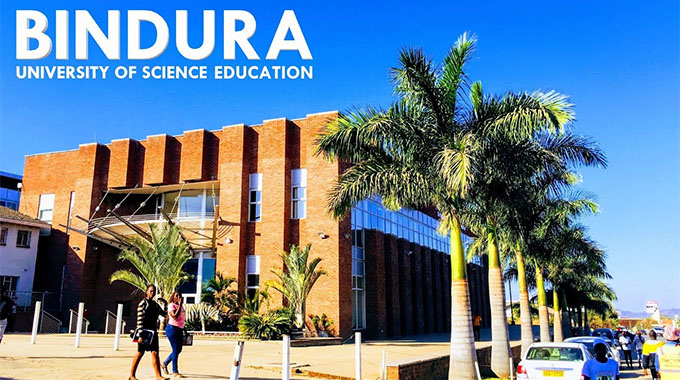
Mashonaland West Bureau
BINDURA University of Science Education (BUSE) is stepping up efforts to establish a modern campus in Kadoma, a move expected to accelerate the city’s transformation into a major education and innovation hub in Mashonaland West province.
The university is presently offering lectures at the Cotton Training Centre complex, which is located a few kilometres north of the city, along the Kadoma-Patchway road.
Technical teams from BUSE and the City of Kadoma are expected to soon come up with detailed planning stages, including site mapping, infrastructure design and feasibility studies, ahead of construction works anticipated to begin as early as May.
The proposed BUSE campus is poised to significantly reshape Kadoma’s socio-economic landscape, complementing other major higher education investments earmarked for the city.
Chinhoyi University of Technology (CUT) has already secured 40 hectares to establish an engineering campus that will not only train students but also manufacture laboratory equipment for schools, in line with the country’s industrialisation thrust.
Further cementing Kadoma’s emerging status, the Auxilia Mnangagwa School of Nursing at Muduvuri Pan-African Hospital is set to enrol its first intake of trainee nurses next month under a pilot programme aimed at boosting the health sector’s human capital.
The city already hosts a campus of the Women’s University in Africa in Rimuka.
Kadoma Mayor Councillor Nigel Ruzario recently formalised the BUSE project through a memorandum of understanding (MoU) signed with the university’s Vice Chancellor Professor Eddie Mwenje.
Cllr Ruzario described the agreement as a landmark development in the city’s long-term vision.
“This MoU is a turning point for Kadoma. A permanent university means our young people can acquire critical STEM (Science, Technology, Engineering and Mathematics) skills without leaving home, and it positions our city as a serious player in Zimbabwe’s development agenda,” he said.
He revealed that the campus will sit on a 50-hectare piece of land that will also accommodate the planned Kadoma Polytechnic, creating an integrated education zone.
“Beyond the lecture rooms, this project will create jobs in construction, services and housing. We are building an ecosystem that supports both education and the local economy,” said Cllr Ruzario.
The presence of multiple tertiary institutions, he added, would spur demand for student accommodation, retail services, transport networks and digital infrastructure, thereby stimulating small to medium enterprise growth and attracting private sector investment.
Prof Mwenje said the development aligns with the Government’s decentralisation agenda, which seeks to spread higher education opportunities across provinces while driving innovation-led economic growth.
“BUSE’s mandate is to produce science-led solutions for national challenges. By establishing a campus in Kadoma, we are taking that mandate directly to the communities that need these skills most,” he said.
He also said the university’s expansion would reduce the need for students to relocate to traditional academic centres such as Harare and Bindura, easing the burden on families while improving access to tertiary education.
“Our presence here will spark research and innovation partnerships with local industry, especially in mining, agriculture and environmental management. Kadoma has unique opportunities and a science campus will help unlock them,” Prof Mwenje added.
The project also feeds into the Government’s Education 5.0 model, which emphasises teaching, research, community service, innovation and industrialisation as pillars of tertiary education.



