Online Reporter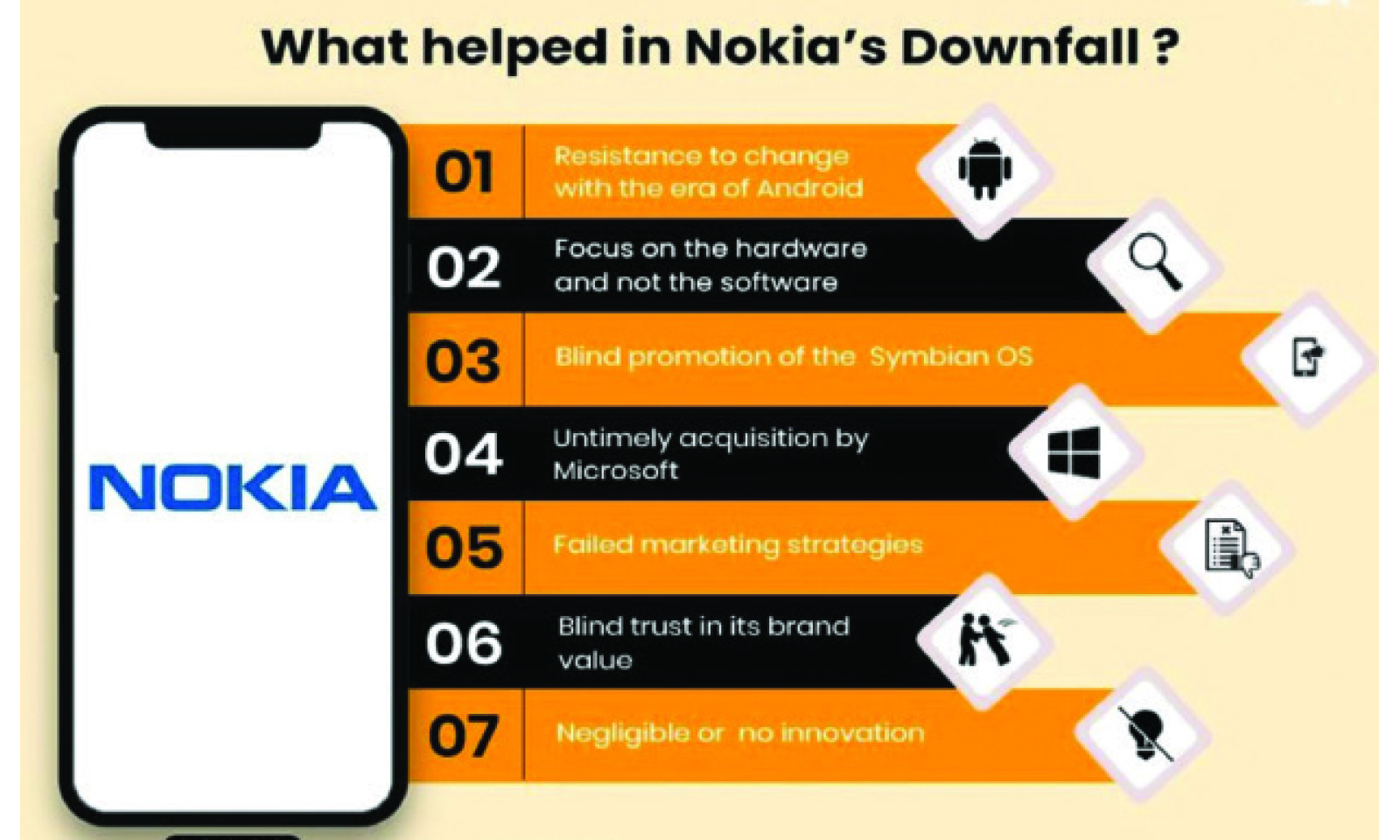
Arthur Marara
Point Blank
In the fast-paced arena of business, there are few narratives as cautionary as the rise and fall of Nokia.
Once lauded as a titan in the mobile phone industry, Nokia’s decline serves as a stark reminder that even the most successful companies can falter if they neglect to adapt to shifting market dynamics and technological advancements.
Tragedy of demise
Despite its illustrious history, dating back to 1865 with roots in forestry, rubber, and cable manufacturing, Nokia failed to forecast the seismic shifts occurring within its own industry.
Change is relentless
If you do not develop yourself to stay in business, you will be at the mercy of those who developed themselves.
The dominant narrative surrounding Nokia’s downfall centres on its inability to keep pace with a dynamic and evolving marketplace that outstripped the strategic foresight of its leaders.
Competitors such as Apple and Google emerged as formidable adversaries, capitalising on consumer desires for smartphones that offered more than just traditional features.
The rapid advancement of technology and the paradigm shift towards mobile computing rendered Nokia’s business model obsolete. This reality reflects the broader state of today’s business landscape, where change is relentless and new competition is constantly emerging. Even legacy companies can swiftly reinvent themselves and reclaim market share if they remain innovative.
The failure by businesses to adapt is in the inability to recognise the changing terrain and environment around you. This oversight leads to missed opportunities not only to capitalise on emerging trends but also to ensure the company’s survival in a competitive market.
Nokia made numerous critical errors. In an environment characterised by rapid change, sluggishness can be fatal. Complacency can no longer afford a seat at the table; being innovative is not optional, but a necessity.
Technology is in a perpetual state of flux, and companies cannot afford to remain stagnant, expecting that profits and customer loyalty will hold steady despite inertia.
The data speaks volumes—Nokia should have embraced change rather than resisted it.
This slow adaptation is vividly illustrated in Nokia’s ill-fated attempts to develop its own operating system, following initial missteps with software partners.
Despite funnelling millions into these projects, the company failed to produce a competitive platform capable of rivalling Apple’s iOS or Android. This inability to pivot and innovate serves as a poignant reminder that stagnation will inevitably lead to being eclipsed by more agile competitors.
In today’s hyper-competitive business landscape, the mantra “doing the right things” has evolved; businesses must consistently think differently and be vigilant.
Consider the analogy of navigating through a jungle: to survive, one must either eat or be eaten. Continuous evolution and self- improvement provide businesses with the agility to pivot and seize opportunities.
Change should not be something that organisations react to in response to external pressures; instead, they should proactively drive change to maintain relevance and competitiveness.
As renowned authors James Belasco and Ralph Stayer have articulated, “Change is hard because people overestimate the value of what they have and underestimate the value of what they may have to gain by giving that up.”
Many individuals and organisations yearn for change, yet remain reluctant to confront the discomfort associated with transformation.
They seek the benefits of innovation while hesitating to navigate the inconveniences inherent in the process.
Nokia’s downfall stands as a powerful testament to the critical importance of adaptation and innovation in an ever-evolving business environment.
It underscores the perils of complacency and stagnation, revealing that an unyielding reliance on past successes can lead to disaster. To navigate the complexities of today’s marketplace effectively, businesses must commit to continuous learning, improvement, and transformation.
By embracing change rather than shying away from it, companies can not only survive, but thrive in a world where the only constant is change.
Understanding that innovation is crucial to longevity can empower organisations to harness emerging opportunities and fend off potential threats, ensuring their place at the forefront of their industries for years to come.
The lesson is clear: in the ruthless arena of business, those who fail to innovate risk extinction. The mantra for success must be “Innovate or die.”
Arthur Marara [LLB(Hons) (UZ), LLM (UZ)] is a corporate law attorney, keynote speaker, peak performance and corporate strategy speaker. He duly admitted by the High Court of Zimbabwe to practice law as an Attorney, Notary Public and Conveyancer. He is a seasoned corporate Law Attorney. Known for his in-depth understanding of corporate legal matters he offers comprehensive counsel tailored to the unique needs of businesses. His unwavering commitment to providing strategic counsel and delivering favourable outcomes has earned him a stellar reputation in the industry.
Feedback:[email protected] or +263772467255