

 Sidumisile Mabena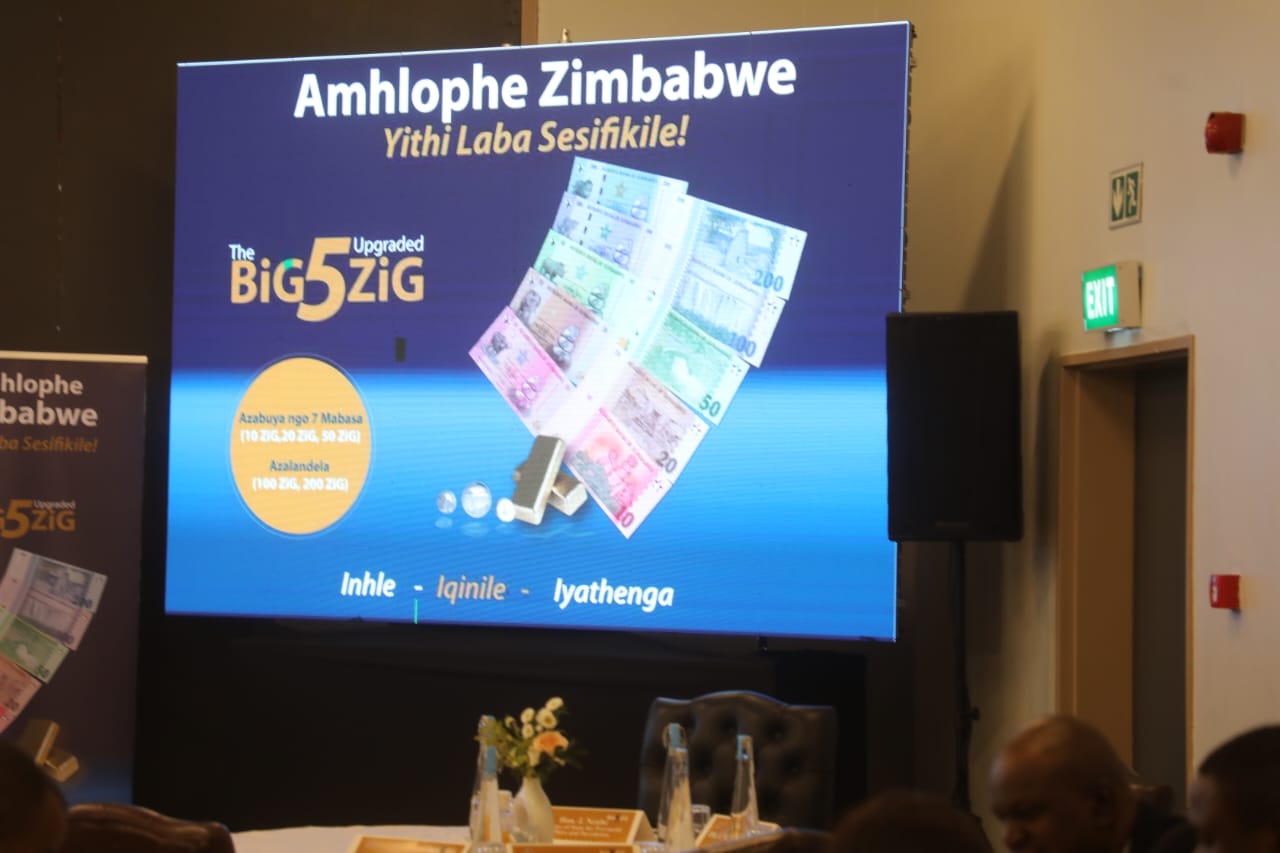
Judith Phiri
The business community, industrialists and various stakeholders have gathered at a local hotel in Bulawayo where the Reserve Bank of Zimbabwe (RBZ) Governor, Dr John Mushayavanhu, is set to present the 2026 Monetary Policy Statement.

The Monetary Policy Statement, which was initially presented in Harare on Friday, outlines measures aimed at deepening the use of the local currency and consolidating macroeconomic stability.
Issued in terms of Section 46 of the Reserve Bank of Zimbabwe Act [Chapter 22:15], the 2026 Monetary Policy Statement builds on the central bank’s commitment to maintaining a prudent monetary policy stance that entrenches price, currency and exchange rate stability without compromising economic growth.

The RBZ said the policies outlined in the statement are designed to strengthen the use of the domestic currency across the economy and consolidate price, currency and exchange rate stability as part of key steps towards the transition to a mono-currency regime.
Since the introduction of ZiG in 2024, the economy has recorded significant milestones towards meeting the critical Conditions Precedent (CPs) necessary for the effective transition to the exclusive use of the local currency for domestic transactions.

Notably, the country has experienced a sustained disinflation trend, with annual ZiG inflation declining sharply from a peak of 95.8 percent in July 2025 to low single-digit levels of 4.1 percent in January 2026.
The drop in annual local currency inflation to single-digit levels marks a significant milestone, achieved for the first time in over three decades.
The central bank noted that maintaining low inflation remains a critical condition precedent for safeguarding the stability of the domestic currency.
Going forward, the RBZ projects that annual ZiG inflation will remain within single-digit levels, supported by prudent monetary policy measures and complementary fiscal policy interventions.
The prevailing monetary and financial conditions, the central bank added, have significantly boosted confidence in the ZiG as a unit of account, store of value and medium of exchange.



 Bongani Ndlovu
 Online Reporter