Online Reporter
Tapiwanashe Mangwiro, Zimpapers Business Hub
ZIMBABWE’S leading business member organisations (BMOs) yesterday called for accelerated business reforms to ease regulatory bottlenecks, improve access to credit, and strengthen national energy security.
The BMOs raised the pressing issues affecting businesses with Industry and Commerce Minister Mangaliso Ndlovu during the Third Strategic Engagement, which itself reflected the Government’s willingness to listen and respond to the challenges.
This comes as Finance, Economic Development and Investment Promotion Minister Professor Mthuli Ncube announced in his 2025 mid-term budget review that the Government would establish committees to examine regulatory issues, fees, and levies across various sectors.
He stated that the review would begin with the agriculture sector and gradually extend to other key areas, including retail, tourism, transport, manufacturing, and energy—sectors he noted have a significant impact on economic growth.
Several representatives from BMOs—including the Zimbabwe National Chamber of Commerce (ZNCC), the Confederation of Zimbabwe Industries (CZI), the Business Council for Sustainable Development Zimbabwe (BCSDZ), the CEO Roundtable, the Tourism Business Council of Zimbabwe, and the Confederation of Zimbabwe Retailers (CZR) — attended the engagement meeting.
The meeting underscored a shared belief that dialogue between the State and the private sector is now positively influencing policy decisions.
According to the lobby groups, access to affordable financing remains the most urgent issue for companies struggling to maintain supply chains.
“Businesses require concessionary credit windows tailored to their realities. Without that relief, firms are squeezed out of the formal economy and forced to scale back,” said ZNCC president Mr Tapiwa Karoro.
Minister Ndlovu acknowledged the concern and said the Government, through the Reserve Bank of Zimbabwe, had introduced financing arrangements such as the Targeted Financing Facility (TFF) to make working capital more accessible.
However, industry leaders noted that interest rates under these facilities remain high, making it difficult for credit-reliant businesses to remain viable. Another major concern centred on over-regulation.
BCSDZ managing director Mr Dingane Sithole said it was time to fast-track reforms that have long been proposed.
“Double and triple taxation is a problem and discourages formalisation. A construction company may face up to three fees of the same nature from different regulatory boards. This discourages compliance and pushes entrepreneurs into informality,” Mr Sithole said.
In February 2025, during his first Cabinet meeting of the year, President Mnangagwa called for a comprehensive review of regulations to reduce the cost and bureaucracy of doing business in Zimbabwe. He emphasised that unnecessary fees, licences, and permits should not hinder economic growth.
The lobby groups called for a one-stop digital licensing system to reduce the cost and complexity of doing business.
Minister Ndlovu responded that streamlining regulations is already a key component of the Government’s ease-of-doing-business reform agenda, and assured the meeting that Cabinet pronouncements on these issues would be made soon.
The CEO Roundtable stressed that Zimbabwe cannot achieve competitiveness without reliable energy.
“Every outage means lost stock, higher costs, and diminished consumer confidence. We urge the Government to offer stronger incentives for renewable energy, including tax breaks and recognition of large solar projects as national priorities,” said CEO Roundtable chairman Mr Oswell Binha.
On taxation, the CZI highlighted the Intermediated Money Transfer Tax (IMTT) as a barrier to digitalisation.
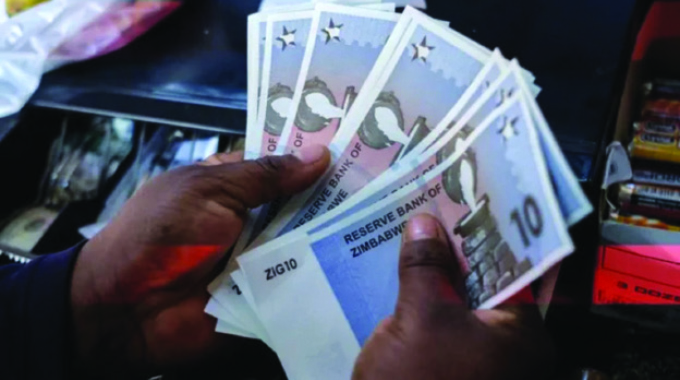
“The IMTT remains one of the heaviest burdens on formal firms. Reducing it to one percent on US dollar transactions and removing it on ZiG payments would encourage digital transactions and restore confidence,” said CZI chief executive officer Ms Sekai Kuvarika.
Following the engagement, the BMOs said the minister had taken note of their proposals and indicated that the Treasury had already been tasked with exploring options ahead of the next budget review.
The CZR expressed concern over the recent wave of tuckshop closures in Harare’s central business district by city authorities.
“While order is important, abrupt closures undermine livelihoods and shake investor confidence. We need structured dialogue that balances compliance with survival,” said CZR president Mr Denford Mutashu.
The CZR also echoed concerns about over-regulation, noting that up to 30 licences are required to start operations in the retail sector.
At the conclusion of the dialogue, Minister Ndlovu said, “These engagements are not talk shows; they must translate into measurable progress.
Government is committed to easing the cost of doing business, consolidating multiple licences into fewer streamlined systems, and creating space for private-sector investment in energy. We are also reviewing tax policies such as the IMTT to balance revenue needs with competitiveness.”
He added that the President has made it clear that local investment must be respected and supported.
“That is why we are intensifying structured dialogue with BMOs, ensuring feedback mechanisms and involving other ministries where necessary. I want to assure the private sector that your voices are reaching the highest levels of
Government, and that every proposal raised here will be consolidated, tracked, and acted upon. Our goal is to ensure Zimbabwe’s formal economy not only survives, but thrives under Vision 2030,” he added.
The BMOs said such engagements are increasingly vital as Zimbabwe pursues its Vision 2030 targets, which aim to achieve upper-middle-income status.
While acknowledging the challenges, the BMOs also highlighted opportunities for growth — provided the right policy support is in place.
For its part, the Minister appeared to signal that partnership, rather than confrontation, will guide future policy decisions.
As Zimbabwe works to expand its productive base and stabilise its economy, the meeting suggested a new chapter may be opening — one in which business and Government walk closer together, tackling shared obstacles with a common goal of growth.