Online Reporter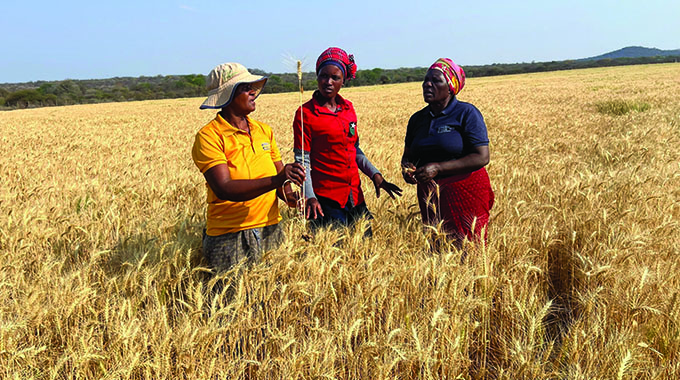
Sukulwenkosi Dube-Matutu, [email protected]
THE adoption of a business model approach has transformed Midlo Irrigation Scheme in Matobo District through improved yields and enhanced operations, which promotes sustainability.
Farmers at the scheme have also established an Irrigation Management Committee (IMC) and four other committees to ensure smooth and effective operations.
The irrigation scheme has been rehabilitated and expanded by Government in collaboration with development partners as part of efforts to boost production and increase incomes.
The upgrade works were done under the Building Climate Resilience of Vulnerable Agricultural Livelihoods in Southern Africa programme, implemented by the Ministry of Lands, Agriculture, Fisheries, Water and Rural Development in partnership with the Green Climate Fund and the United Nations Development Programme (UNDP).
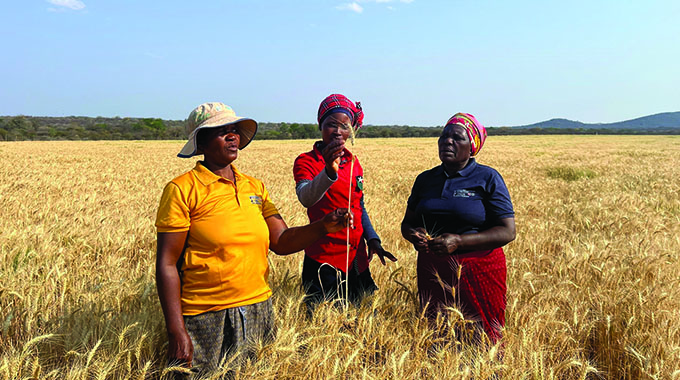
The rehabilitation expanded the scheme from eight hectares to 20 hectares. Eight hectares are now under winter wheat and three hectares on maize. The scheme also has horticulture crops.
Midlo Irrigation Scheme chairperson, Ms Dolly Moyo, said the creation of committees has helped improve their operations.
“Our operations are now being guided by proper and thorough planning just like any business would do. We have various committees, and they are doing their duties to ensure that our enterprise becomes a success. We are now operating professionally,” she said.
“We have eight hectares under wheat, which is ready for harvesting. We sat down as farmers and agreed that we should hire a combine harvester. As members of the scheme we agreed to make some contributions towards paying for the combine harvester.
“Upon harvesting our wheat we will send to GMB while the rest we will share among ourselves as farmers.”
Ms Moyo said their planning involves selection of the right varieties for seed as well as assessing the cost of production and how much they would have produced and proceeds generated.
Secretary for marketing, Ms Lubelihle Dube, said upon harvesting of the maize crop they produce to the local community and share some among themselves.
“We no longer just select just any crops to plant but first conduct research on what is on demand and identify gaps that we can tap into. It’s no use to just produce and not have takers for your produce as this leads to losses,” she said.
Climate smart agriculture expert, Dr Nelson Chanza, said having working committees is part of the sustainability plan for the rehabilitated irrigation scheme.
He said this also helps to ensure that farmers are involved in the day-to-day running of their scheme.
“We have 21 irrigation schemes that the Green Climate Fund project is working with to support farmers with resilience building. One of the critical pillars that the project is working on is the issue of capacity building,” said Dr Chanza. “We need to capacitate our farmers through their Irrigation Management Committees. Farmers have established various committees. We also have production committees that are responsible for the production aspect of the scheme.
“We also have operation maintenance committees, which are responsible for the irrigation infrastructure,” he said.
The irrigation scheme has 46 members, 32 of them being women. Youths and the elderly as well as people with disability are also part of the project.
Midlo Irrigation Scheme was established in 2019. As part of rehabilitation works a solar power plant has been installed at the irrigation scheme to power the pumping of water from Midlo Dam while a centre pivot has been installed to irrigate 15ha.
The Government is working closely with partners to rehabilitate irrigation schemes that have been lying idle in Matabeleland South to improve food and nutrition security and ensure the attainment of Vision 2030. — @DubeMatutu