admin
admintransformational processes that achieve a paradigm shift in workplace attitudes, and value systems.
Everyday we are reading and hearing about ethical challenges in different sectors of the economy.
Negative perceptions generated by organisational scandals have thus brought to the fore the need to formally manage ethical behaviour in our organisations.
Organisations that all along, have tended to ignore or downplay the importance of ethical considerations now recognise that the well being of their organisations is tied to the ethical grounding of their staff.
They now understand the need to train employees on business ethics. This means company leaders should move into the mode of integrating ethical values into business structures and operations by sending staff for business ethics training and implementing formal ethics management programmes.
Organisations become embroiled in scandals because their staff members decided to lie, steal, abuse their positions, and cover up crimes.
A shared purpose, clear company values, and a trusting atmosphere anchored on a sound ethical culture create a high performance climate as employees become more committed, work harder, and act responsibly.
Organisational transformation leveraged on formalised ethics management processes significantly increases the survival of companies in today’s highly competitive global business environment.
Apparently business ethics is now at the heart of determining the competitiveness of a firm at the global market place.
Companies now have to prove adherence to best ethical practices to become acceptable players on the international market.
Zimbabwean firms should embrace business ethics training and implement formal ethics management programmes as means to curtail misconduct, improve company performance, and avoid being left out in the rat race of the global economy.
Because of the harsh business environment prevailing in the country, companies are facing a number of challenges, which in some cases are forcing firms to downsize or enter into mergers.
Such a business environment requires leaders to ensure their organisations are constantly and properly aligned with the new global business realities.
It is up to the business astuteness of company leaders to anticipate change and adjust accordingly before the new changes become a threat to their firms.
When a company leader ignores unavoidable business realities, he/she exposes his/her company to needless risks, and increases its chances of falling into oblivion.
Change is a natural process and it is important for the development of workers as well as the organisation itself.
All well-intentioned business leaders should embrace change. Without change people and organisations perish.
Attempting to maintain the status quo is counter productive and inhibits the evolution of people and organisations.
Business ethics is the new cutting edge for competitive advantage.
It is naive for our company leaders to think that they can move their organisations forward without infusing in their operational processes managed ethics programmes anchored on international standards and best
practices, as has become the trend the world over.
Business ethics management adds to the firm’s bottom line.
Research has proven that organisation-based ethics processes improve company performance when they are trained, practiced, reinforced, audited, and evaluated.
Put generally, transforming something means altering its very nature or essence and, producing fundamental and long-lasting positive change.
In one of his famous quotes, Steven Covey says, “the goal of transformational leadership is to transform people and organisations in a literal sense, to change them in mind and heart, to enlarge vision, insight, and understanding, to clarify purposes, make behaviour congruent with beliefs, principles, or values, and to bring about changes that are permanent, self-perpetuating, and momentum building”.
Bringing in new ethical processes in an organisation is not synonymous with paying lip service to ethical issues, which may be characterised by CEOs speaking eloquently about ethics in-group meetings without putting in place infrastructure that ensures that it is practiced.
Propagating organisational ethics entails a paradigm shift in the way value systems are managed.
It goes beyond looking at business ethics as a peripheral issue, and demands that genuine practical effort is exerted to grow ethical cultures and translate ethical conduct into measurable performance variables in the work place.
Companies that aim at properly positioning themselves on the highly competitive global market must place business ethics at the heart of their growth and development.
Company strategies anchored on a sound ethical footing must drive individual decisions, interpersonal relationships, and group interactions within the firm.
Ethically transformed organisations go beyond the limitations of legal requirements to invoke the spirit of self-regulation in their staff members.
They make ethics part of every decision and operation in the organisation.
They have reward systems that promote ethical behaviour, and they show high concern for their stakeholders, including the communities in which they do business and the natural environment.
Focusing on implementing positive change leveraged on sound ethical considerations should become a primary goal of every business leader in the country.
The overall objective should be to groom a highly stimulated, committed, and ethical staffer, and employ workers, managers, and leaders who have one goal in mind, which is to produce and deliver innovative and high quality products and services in order to satisfy customers’ needs.
Organisations should form purposes that go beyond making profit to inspire employees to be ethical and do more for the organisation.
Managers are the unavoidable cog or agents that should implement organisational change premised on raising the bar on ethics.
Doing that requires managers to be knowledgeable and skilled ethically. They should possess strategies and tactics to put these processes to work.
Managers need to be ethically equipped by going through business ethics training that should form the basis for their knowledge and ethics reasoning.
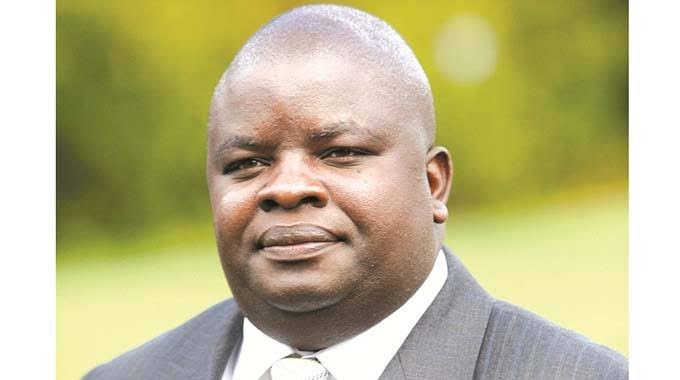
- Bradwell Mhonderwa is the Managing Consultant of Business Ethics Centre. Phone 04-293 2948, 0772 913 875, or email [email protected]


 Online Reporter