admin
admin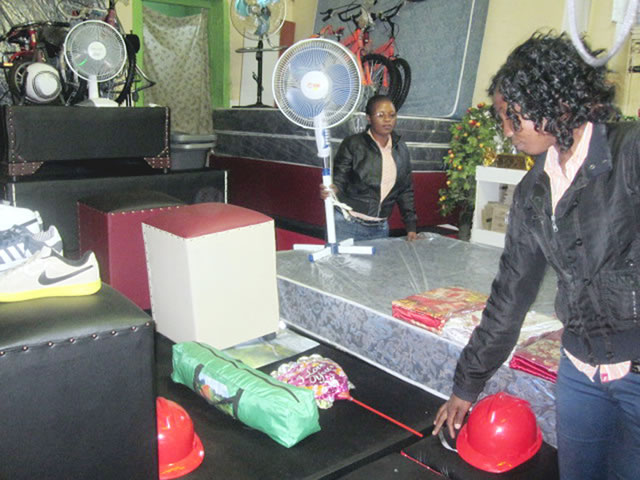

LEAVING one’s source of livelihood and pursuing other interests whose benefits and rewards are unknown is a risk that needs enough courage for one to plunge headlong into.However, the proprietor of Stanslous Executive Galore, Stanslous Mupundu, took the decision in pursuit of his ambition and childhood dream of becoming a successful businessman.
Today, Mupundu through his trading company, Stanslous Executive Galore, owns three retail outlets in the city of Bulawayo and continues to dream big.
The former civil servant owns a departmental store, Gold Sun Wholesale and two of the most popular gift shops in the Central Business District, which operate under the banner, Great Expectations.
“I have always dreamt of becoming a businessman and for me getting employed formerly as a civil servant was a stepping stone towards achieving my dream as an entrepreneur.
“Leaving work to start my own business wasn’t a risk at all. I just followed my instincts and it has since turned out to be the best decision I have made towards fulfilling my self esteem and bettering my livelihood and that of my family,” Mupundu said.
He stands out as one of the few indigenous businesspersons in Bulawayo that can testify that one can start successful business enterprises with limited capital.
Mupundu’s journey to success started in 2007 and it was not all rosy as he had to endure being cramped in one huge building which used to be a departmental store together with hordes of other small to medium enterprises.
At that time, Mupundu used to sell household electrical components. Through his astute business acumen he began to take up more space at the gigantic building as fellow entrepreneurs’ businesses folded.
“It doesn’t need one to have large sums of money to start a successful business but one can just find any product which is in demand on the market and start providing it.
“Upon obtaining substantial income then one can start to diversify. Once you do that, it’s an indication that your business is growing and with proper business management skills, the sky will be the limit,” Mupundu said.
The youthful entrepreneur has managed to weather the storm which has seen most indigenous retail shops that sprouted when the country started trading in multiple currencies in 2008 closing shop.
Retail was the only remaining robust sector in Bulawayo following the closure of various companies in the manufacturing and textile industries.
The most affected retail businesses were new shops and supermarkets owned by indigenous people.
“Most of the people that opened shops during the introduction of multiple currencies concentrated on selling groceries. Of course there was a shortage of food in the country prior to that but if one is business oriented, they should have taken note that the market will flood and eventually they will crumble due to competition.
“As a result my business strategy was premised on providing goods that most of the people thought didn’t yield fast returns such as furniture, luxurious ornaments, children’s toys, among others. This move paid dividends as I have managed to keep my entities afloat to date,” Mupundu said.
He, however, said there was a need for government to introduce legislation which encourages the growth of indigenous businesspeople.
“There is a need for government to come up with legislation that promotes a conducive business environment for locals. For instance, we are suffering from unfair competition from foreigners especially those from Asia.
“Most of these come into the country purporting to be investors but many a time you find that they bring in goods for resell at their own shops or wholesales. It shouldn’t be like that because such a scenario will leave the locals without any form of business to pursue,” Mupundu said.
Despite government reserving 51 percent of the retail sector for locals under the indigenisation policy, a number of them continue to operate clandestinely.
According to the Indigenisation and Economic Empowerment Act, the other reserved sectors of the economy include agriculture, transportation, estate agencies, and tobacco grading and packaging. The other sectors are tobacco processing, advertising agencies, milk processing, provision of local arts and crafts, and marketing and distribution.
“If you go into most of the shops owned by these foreigners you will find that they don’t pay anything to the Zimbabwe Revenue Authority and in most cases their goods will have been under declared at the point of entry into the country.
“Local businesses are made to endure exorbitant tariffs by service providers such as local authorities, Zimra and the Zimbabwe Electricity Supply Authority. To make things worse, the banks have stringent regulations that discourage or are discriminatory to indigenous or aspiring businesspeople,” Mupundu said.
Despite the numerous challenges being faced by local businesses, Stanslous Executive Galore has set its sights on spreading its tentacles throughout the Matabeleland region.
“It’s a fact that the performance of Bulawayo’s industry is at its lowest ebb with a number of companies having shut down but I haven’t lost hope that one day the city will come out of the woods.
“Of course due to the effects of de-industrialisation, it means there is low disposable income for people to spend but if you are operating in such an environment, it brings your business management skills to test because you will have to be innovative to survive,” Mupundu said.
He said due to the liquidity crunch being faced by the country, Stanlous Executive Galore had introduced a number of specials and promotions to cushion the pockets of its clients.
“We offer flexible hire purchase and lay-bys for selected products because we are quite aware that our clients’ buying power is limited due to lack of cash and meagre salaries.
“We import most of our products from countries such as China and Dubai as well as South Africa because we are quite aware that these countries are pacesetters when it comes to technology and various ornaments thus we want locals to stay abreast with times as well.
“We also have local products in stock and by so doing we are also promoting our local manufacturing firms. We are now producing beds and headboards on our own and we get all the material from local suppliers,” Mupundu said.


 Online Reporter