admin
admin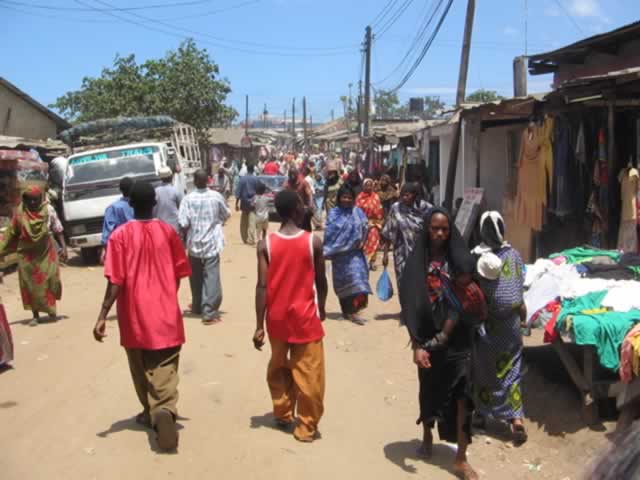
Lovemore Meya Features Writer
IT all started when I mooted the idea to add a few United States dollars to the salary I earn.
I was taking my cue from Government’s efforts to empower its people.
As I retired to bed before embarking on the over 2 400 kilometres journey, I thought that Government was “encouraging people to be more resourceful and this is what they call indigenisation”.
I undertook to go to South Africa, then Zambia before I finally made it to Tanzania to buy clothes, popularly known as “stuff”, for resale.
The experience was bad enough that I realised that being a “cross-border” calls for someone with nerves of steel.
The fear, uncertainty and harassment, all bundled into one, need someone with a strong spirit.
For one to think that cross-border trading is a stroll in the park you really need to think twice.
Risking life while travelling on speeding buses and enduring fatigue for both pregnant women and single mothers in their effort to fend for the family has become a daily routine.
A number of successful businesswomen and men have made it in life through doing business beyond our borders.
I took my journey to experience, first hand, what a day of a Zimbabwean cross-border trader is like.
And this is an account of my experiences as a first-time cross-border trader that started on September 26, 2013.
My first port of call was Harare’s Roadport, the place where all Zimbabweans travelling to South Africa, Zambia, Tanzania, and Namibia among other countries converge.
The place is always a hive of activity with people going out of the country or coming in.
This was the beginning of my six-day-long journey that started at around 9am with more than 50 passengers on board going either to do shopping or collecting their cars.
We left for Chirundu One-Stop Border Post and arrived around 3pm.
As is it said that “speed thrills”, but travelling in such high-speed buses on dangerous steep curved roads in Zambia and Tanzania everyone will be praying to get to their destinations safely.
The bus arrived at Inter-City Station in Lusaka, Zambia, where dealers dashed to our bus to sell yellow fever immunisation cards to travellers.
“Brother, here is the yellow fever card, give me US$20”, he said, but I refused unbeknown to me and my two other acquaintances trouble awaits us later at the other border.
Some passengers seized the opportunity to avert harassment at the border and as we started off from Lusaka the man seated next to me expressed shock at the way people tried to swindle others for the cards.
“These guys are crooks, how come they charge exorbitant prices on government property,” he chuckled.
He added: “I bought it for US$6.”
From Lusaka we drove for the whole night to Tunduma Border Post and, surprisingly, some men could he heard proposing love to any young- looking woman on the bus.
On our way, we stopped for breaks, which the Tanzanian conductor referred to as “short go”.
Men would just turn their backs to women and help themselves while women could do the same.
This kind of recess was done regularly as we drove through places like Kabwe, Kapiri, Mkushi, Serente, Mpika, Chinsali, Isoka and Nakonde.
Trouble started at Tunduma when we stepped out to the check-in point to have our passports stamped.
Most of the passengers in possession of the cards walked in freely save for the three of us.
We were whisked away from the queue by a guy who works for the vaccination department to a room where we ended up paying US$50 for the vaccination.
A Zimbabwean-based in South Africa argued with the two other men in the room.
“This is daylight robbery. How could you charge us huge amounts for this useless card?” he fumed.
The short answer was; “My friend if you do not want to be vaccinated, we can simply deport you.”
On sensing danger, we hurriedly paid the money and got vaccinated as our bus was about to leave.
Being my first time to be that side of the country, I left the place in a huff to find our bus and failed to notice the Tanzanian check point which seemed hidden.
I left the border without my passport being stamped at around 11am when the bus puffed a cloud of smoke going west.
While in Mbeya, an immigration officer jumped onto our bus and started checking every passenger’s passport.
When I handed him mine, he smiled and oblivious of his sarcastic smile, I looked at ease not knowing that he had confiscated it.
He chuckled: “My friend, do you know that you have committed a serious offence?”
To solve the matter, I fished out US$20 and handed it him over to him.
Without wasting time he dropped off as we proceeded with our journey spending a night driving past Makambako, Kitonga, Ilinga and Mulogolo.
After negotiating our way through an eight-kilometre mountainous road we reached Dar-es-Salaam around 2am on Sunday.
Everyone hurriedly took taxis to different hotels and in the morning, we could meet at the hotel restaurants for our breakfast.
And as always the norm, most of the men were at the Dar City Hotel where most of them could be seen demanding for sex from hotel housekeepers.
Of interest is how Tanzanian nationals would laugh at you after asking for something in English.
“Please no Swahili, no talk.”
In most cases we ended up communicating using sign language, thereby compromising everything.
Sadza is “ugali” in Swahili and if you can’t ask for it in the local language you risk getting the wrong order, and it’s take or leave it.
Going through the markets to buy clothes was a nightmare, as you would sometimes get lost in the busy streets.
However, fatigue, boredom and fear become the order of the day for someone new in a foreign land.
The only thing to do is pray that both car buyers and some of us in Tanzania for clothes get home safely after such dangerous journeys.



 Online Reporter