Online Reporter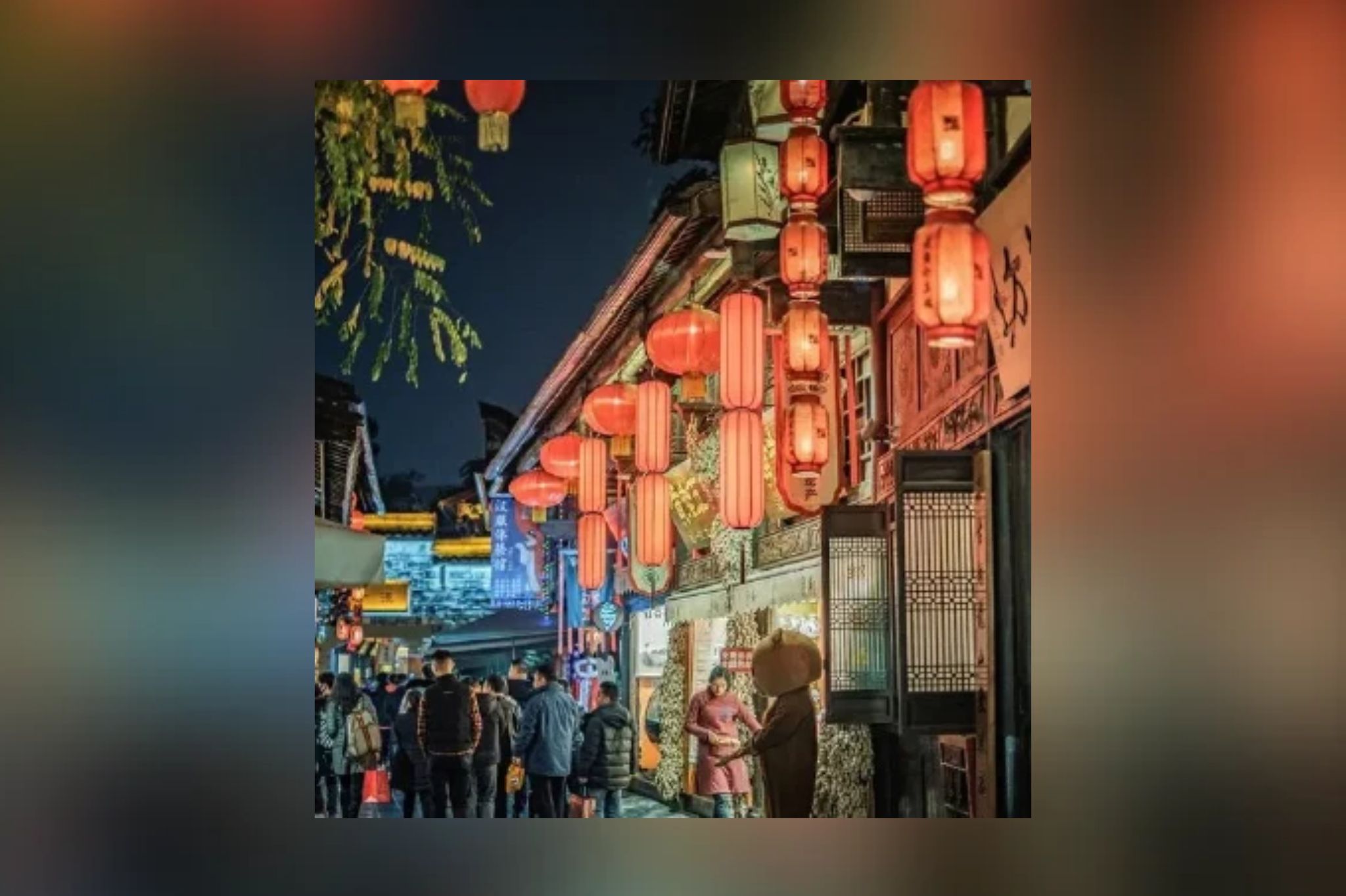
Vusumuzi Dube recently in CHENGDU, China
WHEN the sun goes down in Chengdu, the Chinese city does not go to sleep.
At Jinli Ancient Street, darkness marks the start of another commercial shift. Lanterns come alive, restaurants fill up, food vendors prepare for the evening rush, craft sellers display their wares and performers take to the streets.
The narrow pedestrianised streets become a theatre of commerce.
People come to eat, shop and watch, but they also come for the experience and importantly, they spend.
Walking through Jinli as part of a recent Zimbabwean delegation’s visit to China, it was difficult not to think about Bulawayo’s own struggle with informal trading, particularly the increasingly contentious business of trading after dark.
Zimbabwe’s vending debate is usually framed around control: clear pavements, remove illegal traders, ease congestion and restore order.
Jinli suggests another question: What if some of the activity cities spend so much energy trying to remove could instead be planned, regulated and turned into an organised part of the urban economy?
That is the most useful lesson from Jinli.
Jinli is not simply an ancient street preserved in amber.
Its present-day form has been deliberately developed as a cultural and commercial tourism destination, combining traditional market lanes, cultural courtyards and leisure areas with restaurants, tea houses, theatres, craft outlets and cultural attractions.
The old is not merely being preserved. It is being made to earn.
That matters for Zimbabwe, where informal trading is both an urban-management challenge and a source of livelihood for thousands of people.
Government has been pushing formalisation and designated trading spaces. The difficult part is making those spaces commercially viable.
A market does not succeed because it has stalls. It succeeds because people want to go there.
Jinli gets that equation right. The space has an identity, lighting, food, entertainment, culture and organised trading areas and, crucially, customers.
The street itself becomes part of the product.
Bulawayo does not have to look thousands of kilometres away for the beginnings of such an experiment.
It has Fifth Avenue.
For years, Fifth Avenue has been associated with informal trading, particularly fresh produce. It has at different points been closed or partially closed to vehicular traffic, with trading bays introduced as the city attempted to balance commerce, pedestrian movement and traffic.
That history should prompt a different conversation.
What if Fifth Avenue were viewed not simply as a street with a vending problem, but as a piece of urban real estate with economic potential?
Pedestrianisation alone does not create a night economy.
Design, programming, lighting and good management do.
Imagine Fifth Avenue after 5PM: produce traders alongside food vendors, designers, craft makers, musicians and small businesses, all operating within a clearly managed environment.
The city controls the number of traders, trading hours and standards.
Stalls are numbered. Trading is licensed. Waste is collected. Toilets are available. Lighting is adequate. Security is visible. Emergency access is protected.
Suddenly, what was regarded as a vending nuisance starts looking like an economic district.
This does not mean allowing traders to occupy every pavement.
It means identifying specific spaces where commerce can happen legally and productively, then investing in them.
A trader repeatedly chased from one location will return if that is where the customers are.
A trader offered a secure, affordable and visible stall with electricity, sanitation, storage and predictable hours has an incentive to stay within the formal system.
That is where technology can help.
Bulawayo’s proposed digital vendor-management systems could link traders to specific stalls, record payments and compliance and give council better visibility over who is operating where.
The objective would shift from removing traders to managing traders.
Jinli’s greatest lesson may not actually be about vending.
It is about culture.
Its architecture, food, crafts and performances create a distinctly Chengdu experience. People are not simply buying goods; they are buying an evening out.
Bulawayo has its own raw material: music, food, fashion, crafts, history and a distinctive cultural identity.
What is missing is the deliberate packaging of these assets into a single evening experience.
A visitor could move from a food market to live music, from a craft stall to a cultural performance and then to a local restaurant.
One evening supports several businesses.
The farmer supplies the food. The vendor sells it. The musician performs. The designer sells clothing. The transport operator takes customers home. The city collects revenue.
The night economy becomes bigger than the individual trader.
Formalisation does not have to make a market lifeless.
Jinli is carefully managed, but it remains vibrant.
For Zimbabwean cities, that means creating designated night-economy areas with clear rules on trading hours, products, waste, food safety, security and emergency access.
These are not merely policing questions. They are town-planning questions.
The success of such a model would depend on more than providing stalls. Food, entertainment, lighting, security, transport and cleanliness all have to work together to create a destination.
Zimbabwe cannot simply copy Chengdu.
Its economy, culture, municipal systems and urban challenges are different.
The transferable principle is simpler: Take an existing economic activity, give it a defined space, provide the infrastructure, make it attractive, regulate it and make the rules work.
That is very different from repeatedly clearing traders without creating an alternative capable of attracting the same customers.
A defined section of Bulawayo’s Fifth Avenue could become a pilot night-economy zone.
It would need proper lighting, toilets, drainage, waste collection, security, emergency access and clearly marked trading spaces. It would also need strict standards and consistent enforcement.
But it would need something often missing from formalisation programmes: investment in the customer experience.
The city could work with businesses, tourism operators, cultural institutions, financial institutions and trader associations to create a destination rather than simply another row of stalls.
During the day, Fifth Avenue could continue serving its established commercial function. After selected hours, it could transform into a food street, craft market, cultural corridor or night market.
That would require creative town planning, not just enforcement.
Zimbabwe’s informal trading problem is real.
Cities need clean and accessible pavements. Motorists need functioning roads. Residents need order and safety. Traders need livelihoods.
These interests do not necessarily have to remain in permanent conflict.
Jinli offers a different way of thinking about the problem.
The question is not simply: How do we get traders off the streets?
It is: Which streets can we deliberately turn into safe, attractive and productive economic spaces?
For Bulawayo, Fifth Avenue is an obvious place to explore that question.
The city has already experimented with pedestrian space and organised vending there. The next step could be to connect that commercial activity with culture, tourism, entertainment and technology.
That is the real lesson from Jinli: Do not simply clear the street. Design it to work.
With imagination and investment, a street that once represented an urban problem could become part of Bulawayo’s economic solution.