

 admin
admin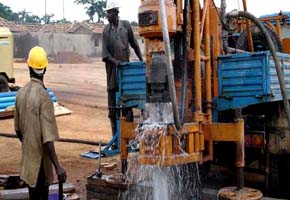
has appealed to the Ministry of Energy and Power Development to spare Cowdray Park from power cuts to ensure continuous pumping of water from Nyamandlovu Aquifer.
In a recent interview, Minister Nkomo said he had secured about $1,4 million to rehabilitate 26 boreholes at Nyamandlovu Aquifer to boost daily output from the aquifer from about 5 000 cubic metres of water a day to about 30 000 cubic metres.
The funds also include rehabilitation of 65 borehole pumps in the city.
He said the project would not be successful if the reservoir at Cowdray Park was subjected to load shedding as pumping would have to stop when there was no electricity.
“Another solution might be for the Ministry of Energy and Power Development to prioritise Cowdray Park in the installation of pre-paid meters to eliminate power cuts in the area. If all this is not possible, then we have to look at erecting a dedicated power line to the Rochester and Cowdray Park stations, that would be exempted from shedding,” said Minister Nkomo.
He said the Australian and German governments had committed themselves to fund the aquifer project, while the United Nations Children’s Fund (Unicef) undertook to fix the pumps.
Minister Nkomo said work on the aquifer was expected to be completed in four months from the date of commencement of the project.
“The total cost for rehabilitating 26 boreholes is estimated at $991 750.
“The dedicated power supply for the two booster stations; Rochester and Cowdray Park, in order to avoid load shedding, would cost $277 300,” said Minister Nkomo.
He said Bulawayo has 350 boreholes of which 65 had non-functional hand pumps while 45 motorised pumps were also not working.
Minister Nkomo said the cost of rehabilitating 65 hand pumps was $40 000 and $115 000 for all the non-functional motorised pumps.
“Hence the total cost of revamping all broken down pumps is estimated to be $155 000,” said the Minister.
Bulawayo started a water shedding schedule of 72 hours per week for all suburbs.
wo dams have been decommissioned to date, Umzingwane and Upper Ncema. The two dams have a total capacity of 62 901 200 cubic metres when full.
This leaves the city with three supply dams, Inyankuni, Lower Ncema and Insiza with the bulk of the water coming from Insiza.
The local authority anticipates that Inyankuni and Upper Ncema might be decommissioned by December.


 Online Reporter