Online Reporter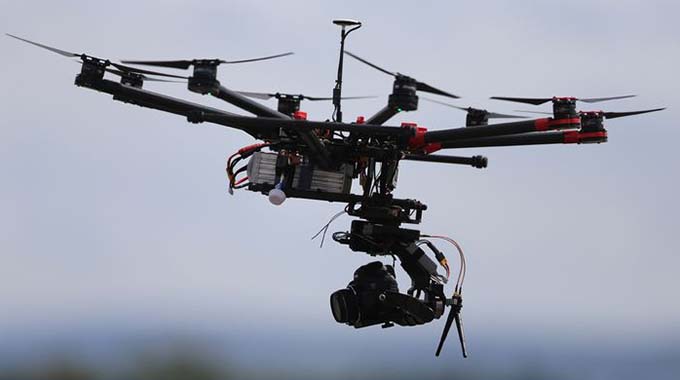
Sifelani Tsiko-Fact Check Editor
The Civil Aviation Authority of Zimbabwe (CAAZ) has licensed Drone University, a local drone institute, to conduct drone maintenance training in the country.
This institute became the first institution in Zimbabwe and Africa to attain the maintenance training license known as the Remotely Piloted Aircraft Maintenance Training and the Approved Training Organisation (RMT ATO).
Over the past few years, the Civil Aviation Authority of Zimbabwe (CAAZ) has licensed over 400 drone pilots and certified more than 15 companies to use drone technology.
“This speaks to a belief in ourselves as Zimbabweans, which has led us to challenge the status quo and to set standards not yet attained on the continent,” said Jeremiah Musabayana, chief executive officer for Drone University.
“As Drone University, we acknowledge CAAZ for taking this initiative and collaborating with us to break new ground.”
In Zimbabwe, there is growing interest in the application of drone technology across various sectors of the economy, including agriculture, healthcare, construction and mining.
Drone University was the first drone training school to be fully licensed by CAAZ to provide training in 2021 and offers drone pilot training courses.
The theory classes are carried out at their Emerald Hill offices, with the practical classes at Drone Farm along Mutoko Road.
The training school also made history in 2022, by becoming the first to offer drone pilot courses in Beyond Visual Line of Sight (BVLOS) as well as Aeroplane Category.
BVLOS enables pilots to fly a drone without direct visual contact, while Aeroplane category training provides training to fly fixed-wing drones.
Drone University has trained close to 700 professional drone pilots across Zimbabwe ever since it was established.
These licensed drone pilots are transforming industries ranging from agriculture, mining, to infrastructure inspection and emergency response.
To obtain a drone licence in Zimbabwe, approved training schools must meet the standards set by CAAZ.
This ensures that the training aligns with the international guidelines.