Rutendo Nyeve
Victoria Falls Bureau
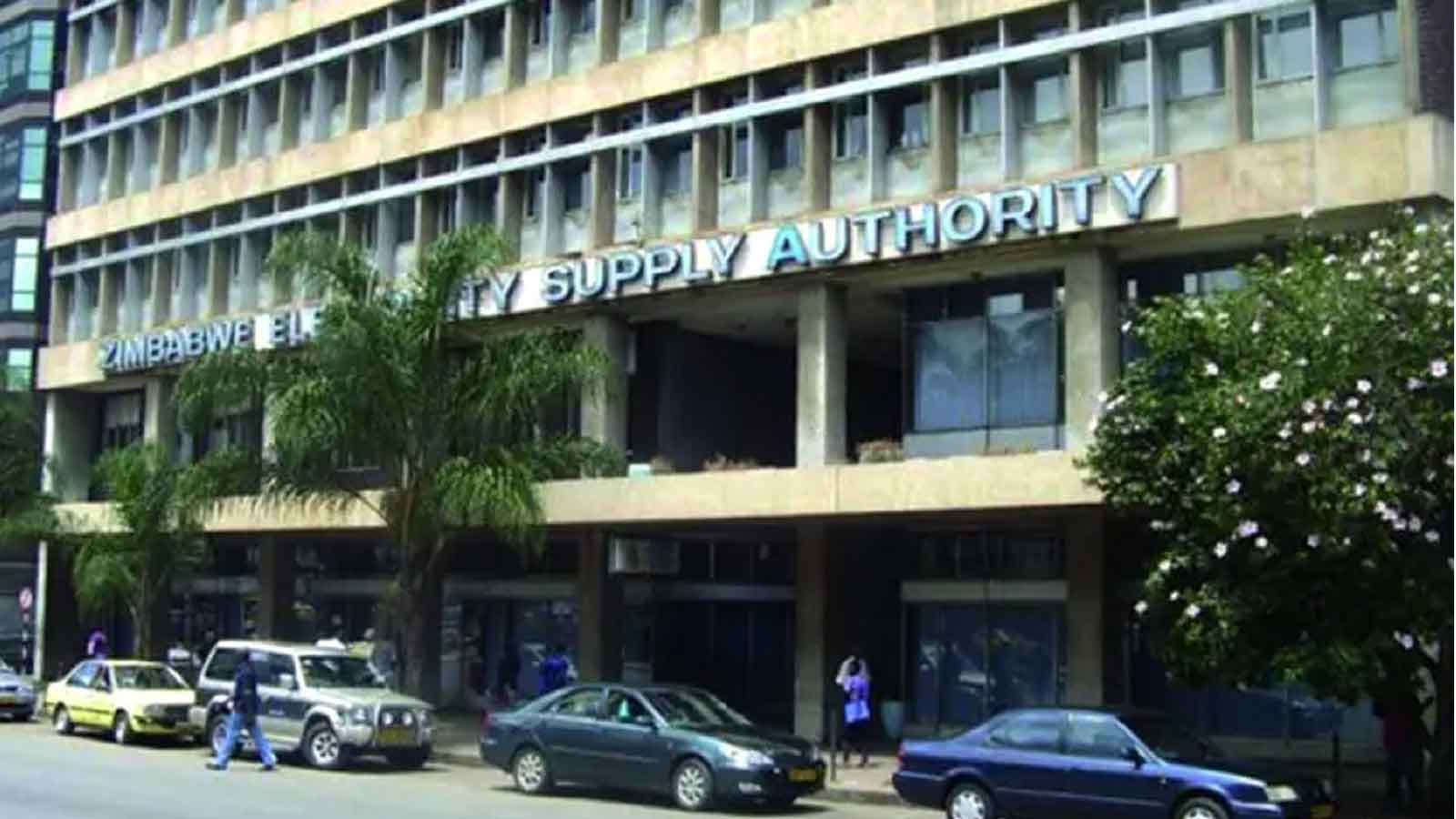
ZESA Holdings has reduced selected electricity connection fees and levies by up to 73 percent as the power utility moves to lower the cost of doing business and attract fresh investment into generation, mining and manufacturing.
The reforms include deferring connection fees, incorporating those for net-metering, halving Grid Impact Assessment (GIA) fees and reducing generator connection application charges by up to 73 percent.
The utility has also cut demand connection application fees by up to 61 percent and administration fees on transmission connections by 20 percent, in measures expected to ease the financial burden on businesses seeking access to the national electricity grid.
Speaking at the 2026 Zimbabwe Institute of Strategic Thinking (ZIST) Annual Conference in Victoria Falls recently, ZESA senior manager for electricity trading and operations, Engineer John Diya, said the changes were part of efforts to create an enabling environment for investment in line with Vision 2030 and the National Development Strategy 2 (NDS2).
The utility, he said, was also introducing technological improvements to make its services more accessible and responsive to customers.
These include a self-service portal, Geographic Information System (GIS) tools and a 24-hour fault-reporting and response service through its 704 Contact Centre.
Eng Diya said ZESA had made progress in stabilising electricity supply and was working to sustain the gains made in reducing load shedding.
“In terms of self-assessment, whether we are happy or whether we are on course or not, I would declare that we are on course to meet Vision 2030 expectations guided by the NDS2. I think it is quite evident we are on course on different plans,” he said.
“The first and foremost one was to do with load shedding. That one I think we have made very significant strides in eliminating load shedding. We are going to continue to reinforce the action plans that we are running to ensure that we maintain that position.”
The fee reductions are also part of a broader strategy to attract independent power producers (IPPs) and other private investors by improving ZESA’s capacity to purchase and evacuate electricity generated by private players.
Eng Diya said the utility was facilitating private-sector participation through power purchase agreements, use-of-system agreements, banking arrangements and virtual net metering, while also supporting direct mine-owned generation and providing access to the national grid.
He said years of under-investment had left the country’s electricity transmission and distribution infrastructure in need of substantial rehabilitation and expansion.
Eng Diya attributed part of the infrastructure deterioration to a period when electricity tariffs were denominated in local currency but were not adjusted in time to keep pace with inflation, eroding the utility’s ability to finance maintenance and upgrades.
He said tariffs had declined from about 9,8 US cents to roughly two US cents per kilowatt-hour, leaving the utility operating at a loss and limiting its capacity to maintain the network.
A ZESA assessment has established that about US$2,4 billion is required to rehabilitate and strengthen the electricity grid, including replacing ageing infrastructure and introducing redundancy where the network currently depends on single transmission lines.
“We have done an assessment of the status of the electricity grid. We have taken note of where we had redundancy and redundancy is no longer there. Where we need two lines and we just have one line. Where poles are falling and so on. We require about US$2,4 billion to actually spruce up the network in that regard,” said Eng Diya.
He said improved confidence in ZESA’s payment record was encouraging more independent power producers to consider selling electricity to the national utility.
Eng Diya cited the proposed Hwange-Mukuni interconnection line between Zimbabwe and Zambia, which is expected to be financed by a local bank, as an example of growing confidence in the utility’s ability to meet its financial obligations.
The project is expected to strengthen regional electricity connectivity and improve the capacity to move power across the network.
On electricity supply, Eng Diya said ZESA had recorded 324 days without load shedding as at November 10, while the country had experienced 342 days with less than two hours of load shedding.
He said internal generation stood at approximately 2 100MW, with electricity supplied by the Zimbabwe Power Company, independent producers and other sources, supplemented by imports.
However, demand is projected to rise as mining, manufacturing and other productive sectors expand. The existing electricity system, largely developed in the 1960s, faces growing pressure, with future demand from mining and industrial projects estimated at an additional 860MW.
The utility is also targeting electricity connections for 467 000 currently unconnected households, with an annual connection target of 320 000 under the Energy Compact.
ZESA said it would continue pursuing strategic interventions that include debt restructuring, smart metering, prepaid electricity platforms, improved credit control and participation in the Southern African Power Pool.
The reforms form part of broader efforts to strengthen electricity infrastructure, improve access to power and support the expansion of productive sectors under NDS2 and the country’s Vision 2030 development agenda.