

 admin
admin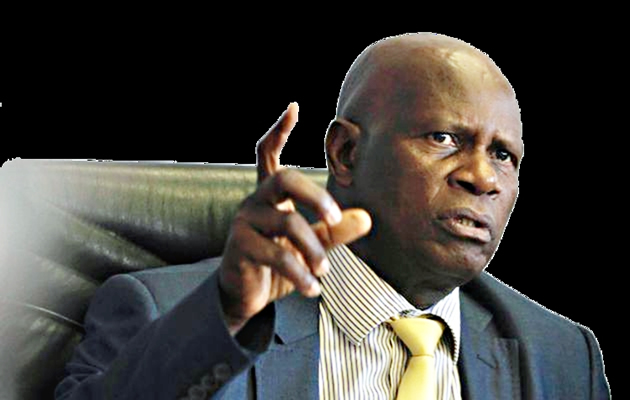
Pamela Shumba Senior Reporter
FINANCE and Economic Development Minister, Cde Patrick Chinamasa, has said the government will first seek broad consensus from interested parties before it implements a strategy to reduce the public wage bill.
He said Cabinet acknowledges that the civil servants’ wage bill is unsustainable and is working on reducing it.
He said the government will continue engaging representative bodies and relevant government ministries in its bid to reduce the wage bill.
The minister said 92 percent of revenue was going to recurrent expenditure and Cabinet mandated the Public Service, Labour and Social Welfare Ministry and Finance portfolios to recommend ways of remedying this.
“A strategy was adapted to first build consensus from concerned sectors in the country. I’m happy to say that the consensus has been achieved and Cabinet has accepted that the civil service salary wage bill is not sustainable,” said Cde Chinamasa in an interview.
“If 92 percent of the budget goes to salaries, this means that there’s little money left for other operations and it cripples most government programmes,” he said.
Cde Chinamasa said Cabinet has since mandated his ministry and the Ministry of Public Service, Labour and Social Welfare to try and come up with strategies to reduce the wage bill.
He could not be drawn into revealing how exactly the wage bill would be reduced, arguing the process was still in its initial stages.
“It’s too early for me to say how we’re going to reduce the wage bill because we’ve just started discussions. It’s a process that requires serious engagement.
“It’s not just a wage bill we’re talking about. It’s money that we’re paying and not coming back to us,” said Cde Chinamasa.
He said civil servants’ associations should accept that there’s a problem.
“We need to basically have a frank discussion among ourselves and my strong view is that we can never borrow money to sustain our institutions.
“From a fiscal point of view, our bloated bureaucracy is not sustainable. We’ve so many projects which all need to be funded from treasury,” said Cde Chinamasa.
Last month Public Service, Labour and Social Welfare Minister, Prisca Mupfumira ruled out the possibility of a salary increase, saying there was little productivity in the economy to justify higher pay.
In his Monetary Policy Statement recently, Reserve Bank Governor, John Mangudya called for a salary freeze this year as the country’s economy cannot sustain any wage increases.
Zimbabwe Revenue Authority (Zimra) Commissioner-General, Gershom Pasi also called for a wage reduction for government employees, arguing that the state erred when it made the initial salary adjustments after the adoption of multi-currencies in 2009.
He said the figures were “artificially high” to be sustained by a struggling economy.
The Zimbabwe Congress of Trade Unions has, however, rejected the proposals and alleged there was a conspiracy among top government officials to trample on workers’ rights.



 Online Reporter