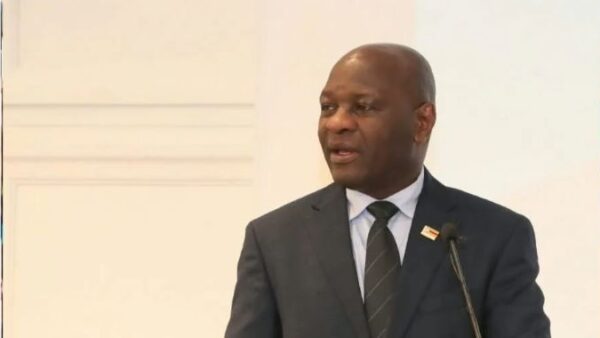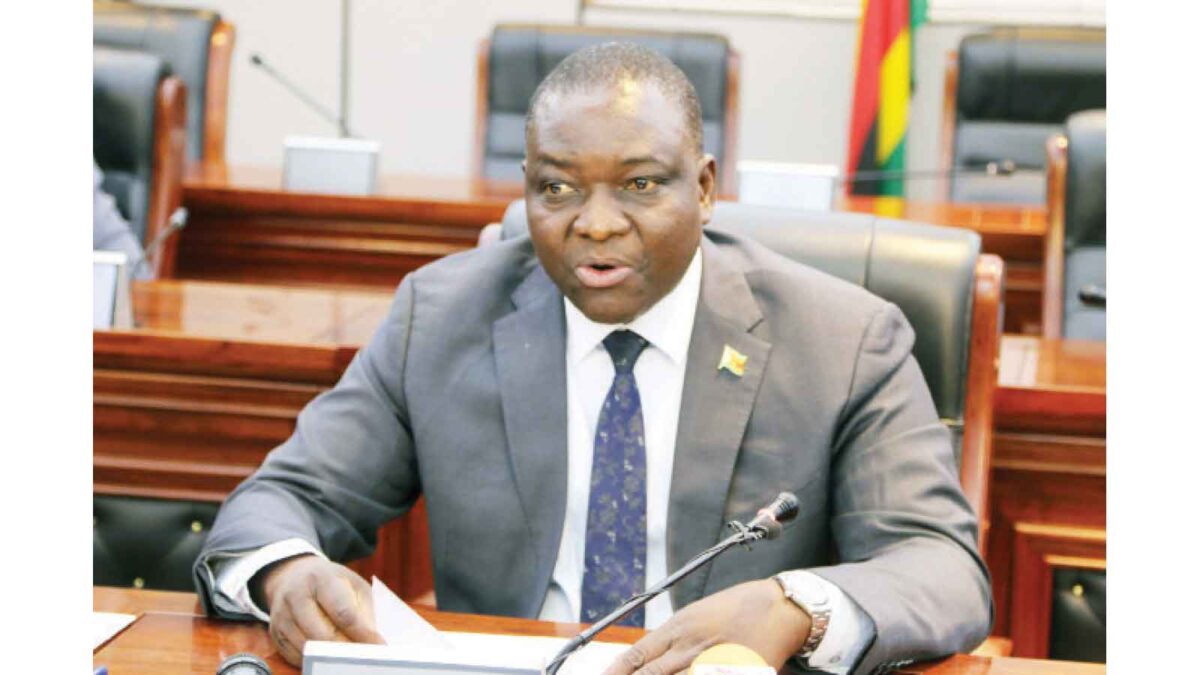
We publish here the 35th post Cabinet media briefing presented by Information, Publicity and Broadcasting Services Minister Dr Zhemu Soda, in Harare yesterday.
1.0 THE FINANCIAL SECTOR DEVELOPMENT STRATEGY: 2026-2030
In line with the Government’s thrust to transform Zimbabwe’s financial sector into a robust, inclusive, and competitive financial engine for economic growth, Cabinet considered and approved the Financial Sector Development Strategy: 2026-2030, as presented by the Minister of Finance, Honourable Prof. M. Ncube.
The nation is being informed that the financial sector, encompassing banking, insurance, pension, and capital markets, remains safe and sound, underpinned by adequate capitalisation and low non-performing loans.
Key indicators reveal notable progress in the banking sector under the Second Republic, including increased bank deposits from about US$2 billion in 2017 to about US$7 billion in 2026.
Confidence building in the financial sector will continue to be advanced to effectively support the country’s national development agenda through, among other initiatives: fostering financial sector deepening; improving financial sector efficiency; enhancing financial stability; strengthening financial infrastructure; promoting the growth of capital markets; enhancing financial inclusion; promoting financial literacy; enhancing financial innovation; and maintaining policy consistency.
A robust and well-developed financial sector becomes critical in the facilitation of economic growth, investment, and job creation. The Financial Sector Development Strategy: 2026-2030 will, therefore, foster financial sector deepening, build stability, enhance resilience, promote inclusion and a well-regulated financial system capable of mobilising long-term savings, channelling national savings to productive sectors and supporting sustained economic growth towards the attainment of Vision 2030.
2.0 REVIEW OF THE ZIMBABWE SCHOOL EXAMINATIONS COUNCIL EXAMINATION FEE SUBSIDY FRAMEWORK AND EXAMINATION FINANCE MODEL
Cabinet considered and approved the Review of the Zimbabwe School Examinations Council Examination Fee Subsidy Framework and Examination Finance Model which was presented by the Minister of Finance, Honourable Prof. M. Ncube, as Chairman of the Cabinet Committee on National Development Planning.
Government has, over the years, consistently demonstrated its commitment to promoting equitable access to education and mitigating socio-economic challenges faced by households through the provision of examination fee subsidies for pupils sitting national examinations administered by the Zimbabwe School Examinations Council (ZIMSEC).
The subsidy was introduced in 2020, on a cost-sharing arrangement comprising 53% Government support and 47% parental contribution, which was subsequently raised to 55% for Government, while parental contribution was reduced to 45% in 2021.
However, Government notes that the current universal examination fee subsidy does not adequately distinguish between vulnerable pupils who genuinely deserve subsidy support and those pupils whose households have the financial capacity to pay examination fees independently.
The programme has also become increasingly unsustainable, given prevailing fiscal constraints and competing national priorities for Government, hence the imperative to review the current model and safeguard the integrity, security and continuity of Zimbabwe’s national examinations system that is financially sustainable.
Under the phased review of the Zimbabwe School Examinations Council Examination Fee Subsidy Framework and Examination Financing Model, pupils in primary and secondary schools located in rural areas (P3 and S3); satellite schools; and those under the Basic Education Assistance Module (BEAM) will benefit in 2027; while only those under BEAM will continue to be supported in 2028.
3.0 REPORT ON THE 25TH COMESA SUMMIT OF HEADS OF STATE AND GOVERNMENT: 22ND OCTOBER, 2026
Cabinet noted the Report on the 25th COMESA Summit of Heads of State and Government hosted by Zimbabwe on October 22, 2026, as presented by the Minister of Foreign Affairs and International Trade, Honourable A. Murwira.
The main thrust of the host nation, Zimbabwe, was to advance economic diplomacy and position Zimbabwe as a strategic trade and investment hub, promote industrialisation and regional value chains in line with Section 12(2) of the Constitution which provides for the promotion of regional and Pan-African cooperation and the doctrine ‘Zimbabwe is Open for Business’.
These efforts are contributing to improved livelihoods for the people of Zimbabwe. As one of the key milestones for Zimbabwe, His Excellency the President assumed the COMESA Authority Chairmanship, signalling the commencement of Zimbabwe’s one-year Chairmanship of the COMESA Authority.
Zambia was elected Vice-Chair, while Kenya assumed the role of Rapporteur. Overall, Zimbabwe’s successful hosting of the Summit and assumption of the Chairmanship enhanced the country’s influence on the regional community and also advanced its economic diplomacy and investment promotion objectives.
4.0 REPORT ON THE THIRD RUSSIA-AFRICA SUMMIT: MOSCOW: 25-29 OCTOBER, 2026
Cabinet noted a Report on the Third Russia-Africa Summit which was held in Moscow, Russia from October 24 – 30, 2026 which was attended by His Excellency President Mnangagwa, as presented by the Minister of Foreign Affairs and International Trade Professor Amon Murwira.
His Excellency the President attended the Summit in two capacities, as the President of the Republic of Zimbabwe and as the Chairperson of the Common Market for Eastern and Southern Africa (COMESA) to advance economic diplomacy, promote African integration and to consolidate relations with Russia and the international community.
The Summit was co-chaired by President Vladimir Putin of the Russian Federation and Evariste Ndayishimiye, President of Burundi and Chairperson of the African Union.
In his address at the Summit, His Excellency President E. D. Mnangagwa called for mutually beneficial partnerships pairing Africa’s natural resources, youthful population and expanding markets, with Russia’s scientific and industrial capabilities.
The President stressed that the cooperation should deliver tangible economic gains that improve the livelihoods of the peoples of Africa and the Russian Federation. In addition, His Excellency reaffirmed Zimbabwe’s commitment to the United Nations Charter, the peaceful settlement of disputes and a fairer international order, in line with the Common African Position on United Nations Security Council reform as set out in the Ezulwini Consensus and the Sirte Declaration. The major outcomes of the Russia-Africa Summit were the adoption of three documents including the Declaration of the Third Russia-Africa Summit; the Declaration on Cooperation in the Civil Use of Artificial Intelligence Technologies; and the Russia-Africa Partnership Forum Action Plan for 2027 to 2029.
Together, these documents strengthen the resolve for a political framework for cooperation, open a structured dialogue on civilian artificial intelligence, and set a medium-term roadmap for implementation.
His Excellency President Mnangagwa held several high-level engagements with President Putin and the leaders of the African regional organisations, where he presented Zimbabwe as a platform for regional production and trade, linking investment to wider markets and the value chains of COMESA, SADC and the African Continental Free Trade Area.
The President participated in the Economic and Humanitarian Forum which carried the Summit’s message of a results driven partnership, and showcased industrial and scientific exhibitions.
He held meetings with Russian institutions, including PSB Bank, and visited the Patriot Park and Russia’s K7 Hospital where he witnessed modern technology in health care, infrastructure and service delivery.
The nation is being informed that His Excellency President E.D. Mnangagwa held a meeting with Zimbabwean students studying in the Russian Federation. He urged the students to pursue academic excellence, acquire practical skills and apply their knowledge to Zimbabwe’s scientific, technological and development needs.
5.0 REPORT ON ZIMBABWE’S PARTICIPATION IN THE LEADERS’ SUMMIT OF THE SEVENTEENTH CONFERENCE OF PARTIES TO THE CONVENTION ON BIOLOGICAL DIVERSITY (CBD COP17): YEREVAN, ARMENIA: 16TH OCTOBER, 2026
Cabinet noted the Report on Zimbabwe’s Participation in the Leaders’ Summit of the Seventeenth Conference of Parties to the Convention on Biological Diversity (CBD COP17) held in Yerevan, Republic of Armenia on 16th October, 2026, as presented by the Minister of Environment, Climate and Wildlife, Honourable E. Ndlovu.
The Leaders’ Summit convened Heads of State and Government, the United Nations Secretary-General, Ministers and Senior representatives of International Organisations to re-affirm high-level political commitment to biodiversity conservation and to accelerate implementation of the Kunming-Montreal Global Biodiversity Framework (KMGBF).
His Excellency the President was represented by the Minister of Environment, Climate and Wildlife.
The Summit underscored the growing recognition that biodiversity is a strategic national asset underpinning sustainable economic development, food and water security, climate resilience, employment creation and the well-being of present and future generations.
Calls were made for urgent and decisive action to address biodiversity loss, close the financing gap and translate political commitments into concrete action. Of strategic importance to our nation will be the implementation of Zimbabwe’s Biodiversity Economy Initiative; sustenance of Zimbabwe’s advocacy for equitable access to international biodiversity financing; technology transfer and capacity-building; implementation of the National Biodiversity Finance Plan; and implementation of the National Biodiversity Strategy and Action Plan (NBSAP3).
I THANK YOU